Princess Sirivannavari of Thailand Visits Praewa Silk Cooperative Celebrating Thai Textile Heritage in Kalasin Province

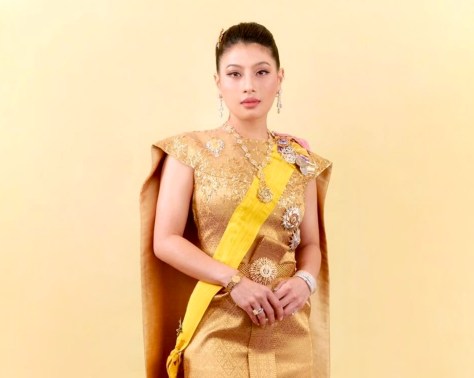
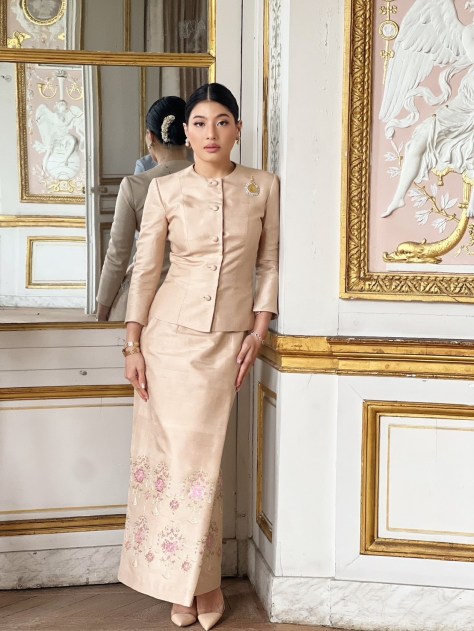
This afternoon, Her Royal Highness Princess Sirivannavari of Thailand visited an exhibition highlighting Thai textile heritage and community handicrafts at the Praewa Silk Weaving Arts and Crafts Centre Cooperative of Ban Phon in Kalasin Province.

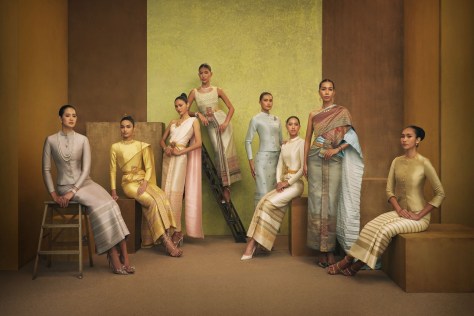
The cooperative was originally established under the royal initiative of the late Queen Sirikit, the Queen Mother of Thailand, in order to preserve the traditional Praewa silk weaving of the Phu Thai community. Praewa silk, long associated with northeastern Thailand, is widely regarded as one of the most refined regional textile traditions of the country. Historically worn as ceremonial shawls, the textiles are distinguished by intricate supplementary weft patterns created through highly skilled hand-weaving techniques passed down through generations.

The royal patronage of local crafts formed a central component of the late Queen Sirikit’s cultural initiatives during the 20th century. Through programs associated with the SUPPORT Foundation, rural weaving traditions across Thailand were documented, preserved, and adapted for contemporary markets. These initiatives helped transform village handicrafts into sustainable economic activities while safeguarding regional cultural identities.

During her visit to Ban Phon, the Princess viewed the work of 30 artisan groups presenting Thai textile traditions and community handicrafts. Many of the groups specialized in Praewa silk weaving and other regional textiles produced in Kalasin and neighboring communities.

The Princess also visited local weaving households within the community, where artisans demonstrated the production process, from silk preparation to the weaving of complex decorative patterns. These demonstrations highlighted both the technical sophistication of the craft and its deep connection to the cultural heritage of the Phu Thai people.

In recent years, Princess Sirivannavari has actively promoted initiatives encouraging the wider use of Thai textiles through contemporary fashion design and sustainable production practices. These initiatives emphasize the integration of traditional craftsmanship with modern design, as well as environmentally responsible methods such as natural dyeing and the cultivation of mulberry trees for silkworm farming.

At the end of the visit, the Princess attended a cultural performance presented by community groups and students from several educational institutions. The performance celebrated the artistic traditions of the Phu Thai people and reflected the enduring influence of royal patronage in sustaining Thailand’s regional textile heritage.

The Princess of Wales to Confirmed to Attend Irish Guards’ St Patrick’s Day Parade in Aldershot

Portrait courtesy of Kensington Palace/Matt Porteous

Kensington Palace announced this morning that Her Royal Highness The Princess of Wales, as Colonel of the Irish Guards, will attend the regiment’s annual St Patrick’s Day Parade at Mons Barracks in Aldershot on March 17, 2026.

During the ceremony, the Princess will join the parade and present the traditional sprigs of shamrock to the officers and guardsmen of the regiment. The shamrock will then be distributed along the ranks, including to the Irish Wolfhound, the regimental mascot. The parade will conclude with a royal salute and march-past, during which the Princess will take the salute in her role as Colonel of the Irish Guards.

Following the parade, the Princess will present long service and good conduct medals to members of the regiment. She will also meet representatives of the Irish Guards Regimental Association, as well as the “Mini Micks,” a group of junior cadets from Northern Ireland. The Princess will then join the official Officers’ and Sergeants’ Mess photographs.

The Princess will later visit the Sergeants’ Mess to meet soldiers of the regiment and their families, recognising the support they provide to members of the Armed Forces.

The Irish Guards serve both as frontline infantry soldiers and as part of the ceremonial Household Division, acting as the monarch’s personal bodyguard and frequently performing duties at royal residences, including Buckingham Palace and Windsor Castle.

In recent years, the regiment has also contributed to training programs supporting the Armed Forces of Ukraine and continues to develop modern operational capabilities, including the United Kingdom’s evolving drone warfare capacity.

Queen Mathilde of the Belgians Visits Major Renaissance Art Exhibition at Brussels’ Palais des Beaux-Arts

Portrait courtesy of La Monarchie Belge

In Brussels, Her Majesty Queen Mathilde of the Belgians visited the Palais des Beaux-Arts this afternoon to view the exhibition Bellezza e Bruttezza: Beauty and Ugliness in the Renaissance.

The exhibition examines how artists in Italy and Northern Europe during the 15th and 16th centuries explored contrasting ideals of beauty and ugliness in their work. Through paintings, drawings, and other artworks, the exhibition traces how artistic representations evolved from the late 15th century through the end of the 16th century, a period of significant cultural and artistic transformation in Europe.

During the Renaissance, standards of beauty increasingly became a subject of social interest, reflected in the growing number of 16th century publications offering advice on cosmetics, appearance, and personal care. At the same time, artists also experimented with depictions of ugliness and the grotesque, presenting exaggerated or unconventional features in ways that reflected both humor and social commentary.

The exhibition brings together works by several major Renaissance artists, including Sandro Botticelli, Titian, Tintoretto, Leonardo da Vinci, Michelangelo, Lucas Cranach the Elder, and Quentin Massys, among others.

Bellezza e Bruttezza: Beauty and Ugliness in the Renaissance is on display at the Palais des Beaux-Arts in Brussels until June 14th, 2026.

King Maha Vajiralongkorn and Queen Suthida of Thailand to Pay a State Visit to Laos, The First Royal Visit in 32 Years

In Bangkok, it was announced that Their Majesties King Maha Vajiralongkorn and Queen Suthida of Thailand will undertake a three-day state visit to the Lao People’s Democratic Republic from March 16th to 18th, 2026, at the invitation of the President of the Lao People’s Democratic Republic, Mr. Thongloun Sisoulith.

The Ministry of Foreign Affairs of the Kingdom of Thailand noted that the visit will further strengthen the longstanding friendship and close relations between the Kingdom of Thailand and the Lao People’s Democratic Republic.

The visit will mark the first visit to Laos by a Thai monarch in 32 years, since the late King Bhumibol Adulyadej and Queen Sirikit of Thailand paid a state visit to the Lao People’s Democratic Republic on April 7th and 8th, 1994.

Relations between the Kingdom of Thailand and the Lao People’s Democratic Republic are rooted in shared historical, cultural, and religious traditions, reflecting centuries of interaction among the peoples of the Mekong region. 

Diplomatic relations between the two countries have developed further in the decades following the establishment of the Lao People’s Democratic Republic in 1975, with cooperation expanding in economic development, regional connectivity, and cultural exchange.

Cooperation between the two countries has also included royal development initiatives associated with the late King Bhumibol Adulyadej, whose agricultural and rural development projects in the Kingdom of Thailand served as models for regional cooperation in sustainable farming and water management. 

In the Lao People’s Democratic Republic, the Huayxone–Huayxua Agricultural Development Service Center in Vientiane was established as the first royal development project in the country under the initiative of the late Thai monarch, reflecting efforts to share agricultural knowledge and promote sustainable rural development.

The state visit follows the commemoration in 2025 of the 75th anniversary of the establishment of diplomatic relations between Thailand and the Lao People’s Democratic Republic.

His Highness Fahd bin Mahmoud Al Said, Senior Omani Royal and Deputy Prime Minister, Dies at 85

In Muscat, the Diwan of the Royal Court of the Sultanate of Oman announced that His Highness Sayyid Fahd bin Mahmoud Al Said passed away on the morning of Thursday, March 12, 2026, corresponding to the twenty-second day of Ramadan 1447 AH. He was 85 years old.

His Highness was a senior member of the royal family of Oman and served for decades as Deputy Prime Minister for the Council of Ministers, making him one of the longest-serving and most prominent officials in the Sultanate’s modern government.

In its statement, the Diwan of the Royal Court paid tribute to his long life of service to the nation, noting that he devoted decades to the Sultanate with sincerity and dedication during the era widely known in Oman as the Blessed Renaissance, the period of national development that began in 1970.

The Diwan of the Royal Court concluded its announcement with prayers for God’s mercy upon the deceased and extended condolences to his family and loved ones.

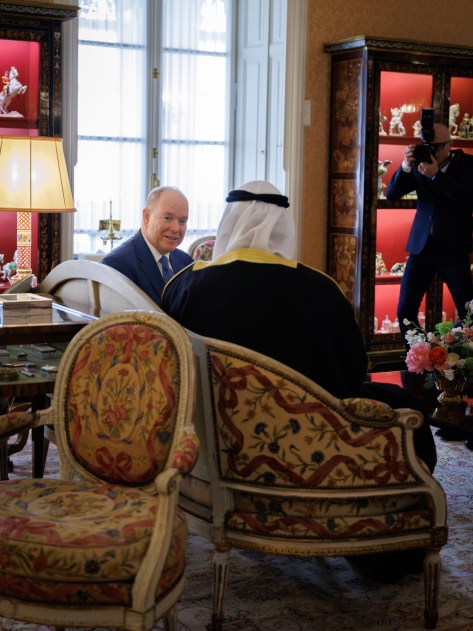
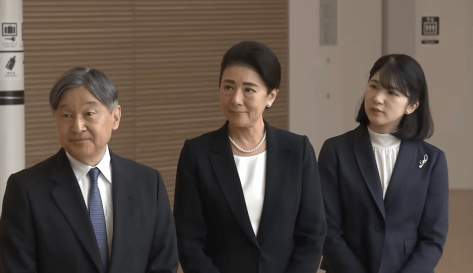
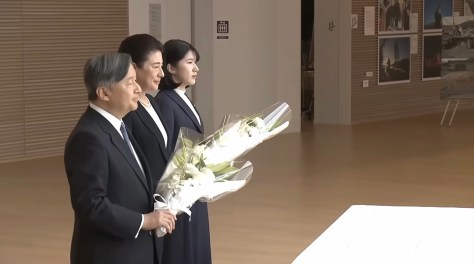
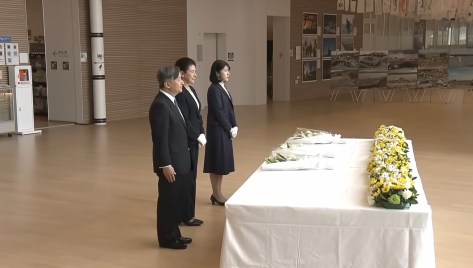
King Willem-Alexander and Queen Máxima of the Netherlands to Host State Visit by Emperor Naruhito and Empress Masako of Japan

In Den Haag, it was announced that Their Majesties King Willem-Alexander and Queen Máxima of the Netherlands will host an incoming state visit from Their Imperial Majesties Emperor Naruhito and Empress Masako of Japan in the second half of June 2026.

The Rijksvoorlichtingsdienst (RVD) noted that the visit will reaffirm the longstanding relationship between Japan and the Kingdom of the Netherlands. The state visit will focus on cooperation in areas including security, innovation, defense, economic resilience, and international law.

The relations between the two countries date back to 1600, when the Dutch ship De Liefde arrived in Japan. The ship’s pilot, William Adams, later entered the service of the Tokugawa shogunate and became one of the first Western advisers to the shogun.

In 1609, the Dutch East India Company established a trading post in Hirado. After Japan restricted most foreign contact in the seventeenth century, the Dutch remained the only Western traders permitted to operate in the country, relocating their commercial station in 1641 to the island of Dejima in Nagasaki.

Dutch merchants continued to operate from Dejima until 1859, when Japan reopened to international trade at the end of the Tokugawa period. The Dutch presence was maintained in part because their activities were primarily commercial, and they did not pursue missionary work in Japan.

During this period of limited international contact, exchanges between Japanese scholars and Dutch merchants and physicians contributed to the development of Rangaku, through which European scientific and medical knowledge entered Japan.

Modern diplomatic relations continue to reflect this historical connection. In 2000, Their Majesties Emperor Akihito of Japan and Empress Michiko of Japan paid a state visit to the Netherlands, marking the 400th anniversary of relations between the two countries.

In October 2014, Their Majesties King Willem-Alexander and Queen Máxima paid a state visit to Japan. In October 2019, the King and Queen attended the enthronement ceremonies of Emperor Naruhito in Tokyo. In May 2025, His Majesty King Willem-Alexander visited Japan to attend World Expo 2025 in Osaka.

Relations between the Royal Family of the Netherlands and the Imperial Family of Japan reflect the longstanding diplomatic relationship between the two countries.

King Frederik X of Denmark Presides Over Royal Life Guards Parade and Presentation of the Kongens Ur

Photo courtesy of Dennis Stenild, Kongehuset ©

In Copenhagen, His Majesty King Frederik X of Denmark presided over the Royal Life Guards parade and the presentation of the Kongens Ur at the barracks of Den Kongelige Livgarde at Rosenborg Slot.

The parade forms part of the concluding ceremonies marking the completion of service for a company of the Royal Life Guards, during which the sovereign traditionally reviews the unit and presents the Kongens Ur, known in English as the King’s Watch.

The distinction is awarded to the guardsman judged by the Guard Company to have distinguished himself most notably during his period of service. In selecting the recipient, superiors and fellow guards place particular emphasis on exemplary military conduct, reliability in duty, and the individual’s contribution to the cohesion and morale of the unit.

The tradition of presenting the Kongens Ur was established in 1970 during the reign of King Frederik IX of Denmark. Since that time, the watch has been awarded annually at the conclusion of a guardsman’s service to the soldier regarded by his comrades and commanders as the most distinguished of his intake.

Den Kongelige Livgarde itself is among the oldest institutions of the Danish armed forces, having been established in 1658 by King Frederik III of Denmark. The regiment serves both as a ceremonial guard to the Danish monarch and as an operational infantry unit of the Danish Army.

This year, the Kongens Ur was awarded to Guardsman Frederik G. Nielsen.

In a statement, Den Kongelige Livgarde noted that Guardsman Nielsen received the distinction in recognition of his “great maturity,” observing that he “has established a natural authority among fellow guards on duty and those serving alongside him, and his strong relationships with colleagues make that authority credible.”

The regiment further noted that Guardsman Nielsen is attentive to his colleagues and strives to ensure a positive social environment within the guard unit.

All the latest news and events from monarchies around the world.