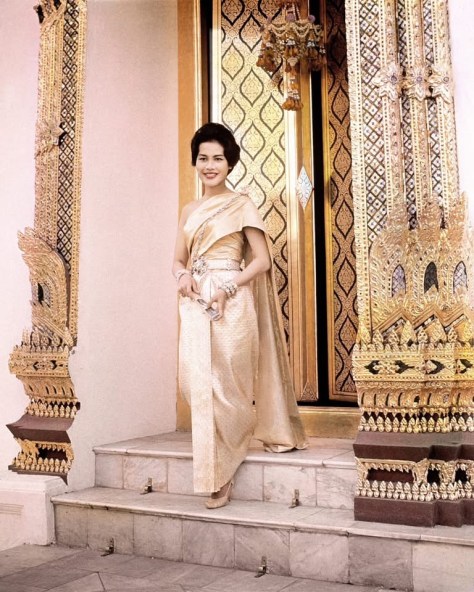
Photos courtesy of the Musée des Arts Décoratifs/Queen Sirikit Museum of Textiles
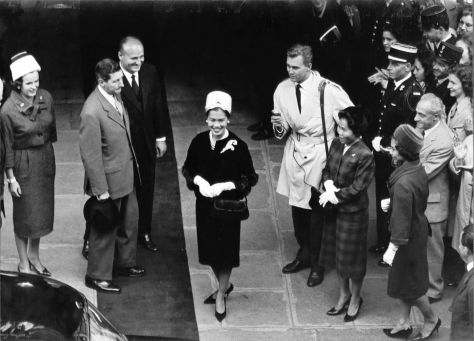
Photo courtesy of the Musée des Arts Décoratifs/Queen Sirikit Museum of Textiles
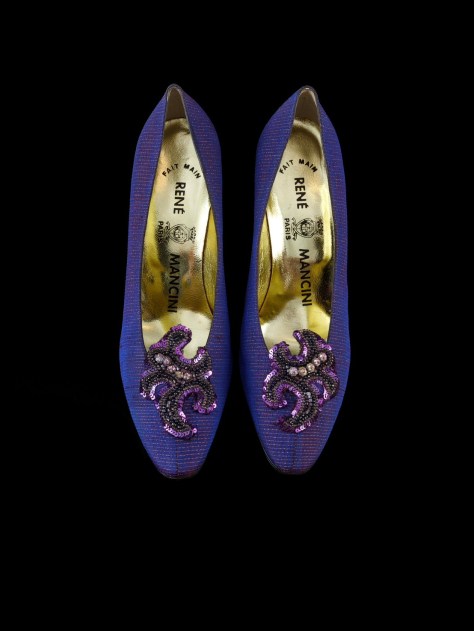
Photo courtesy of the Musée des Arts Décoratifs/Queen Sirikit Museum of Textiles
Photo courtesy of the Musée des Arts Décoratifs/Queen Sirikit Museum of Textiles
Photo courtesy of the Musée des Arts Décoratifs/Queen Sirikit Museum of Textiles
Photo courtesy of the Musée des Arts Décoratifs/Queen Sirikit Museum of Textiles
Photo courtesy of the Musée des Arts Décoratifs/Queen Sirikit Museum of Textiles
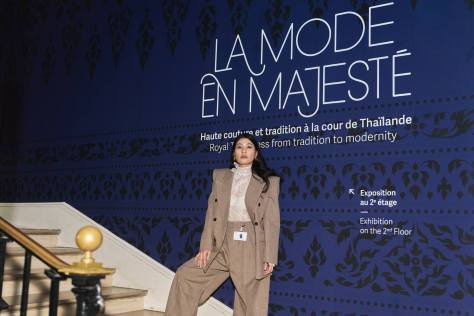
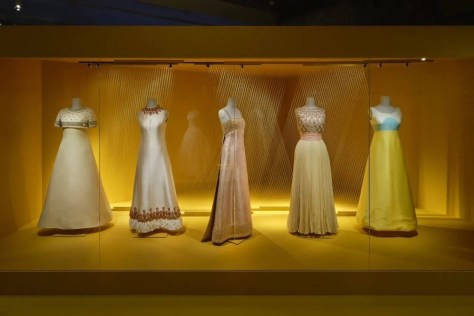
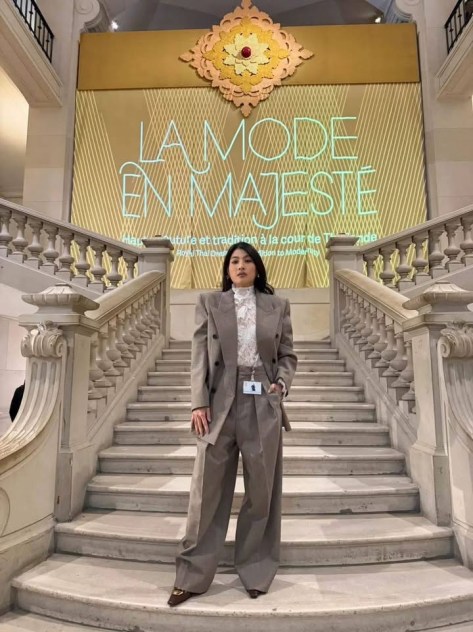
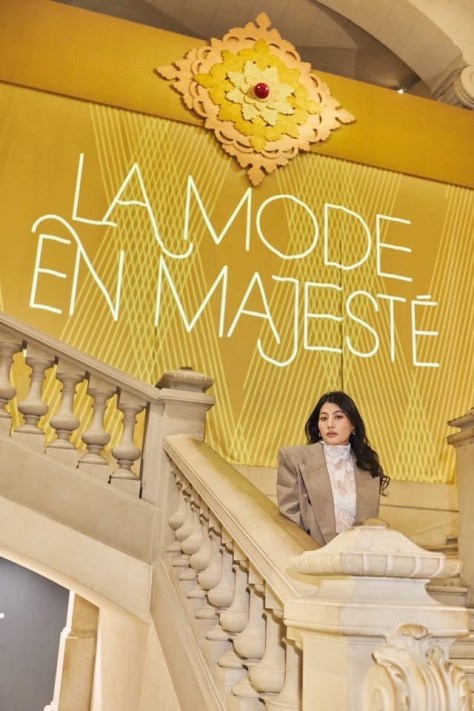
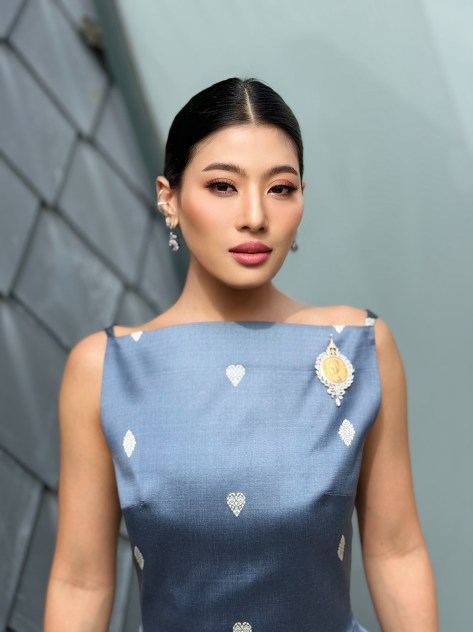
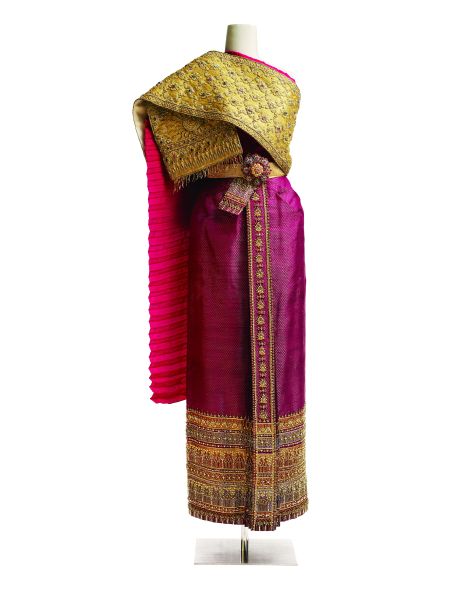
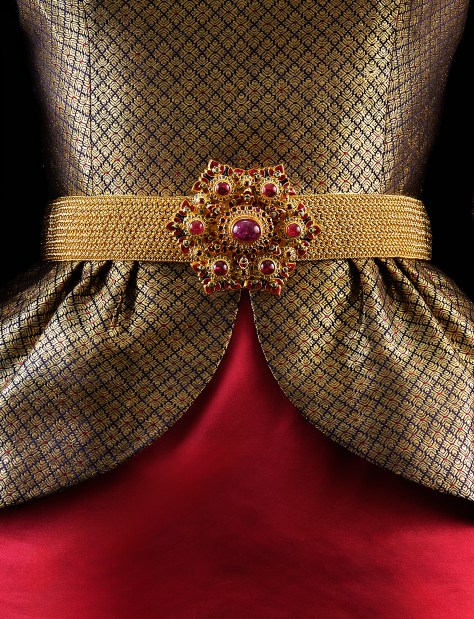
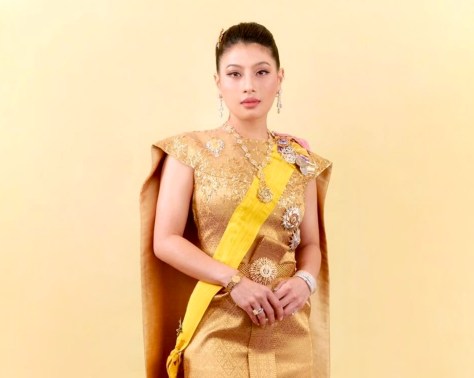
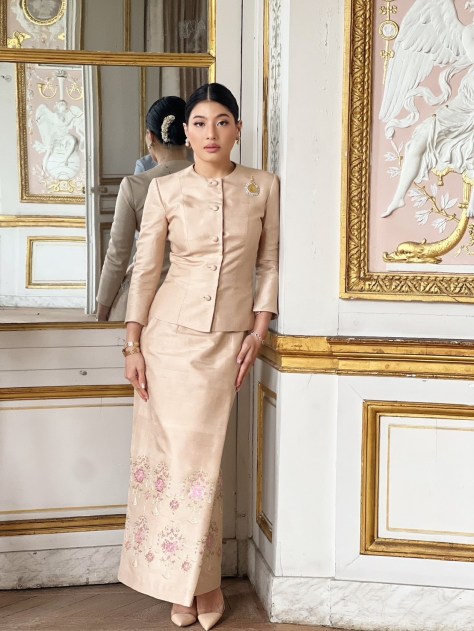
Her Royal Highness Princess Sirivannavari of Thailand has arrived in Paris ahead of the official opening of the exhibition La Mode en Majesté: Royal Thai Dress From Tradition to Modernity at the Musée des Arts Décoratifs.
As patron of the exhibition, the Princess joined members of the curatorial and organizational teams to review final preparations prior to the exhibition’s opening on May 13th.
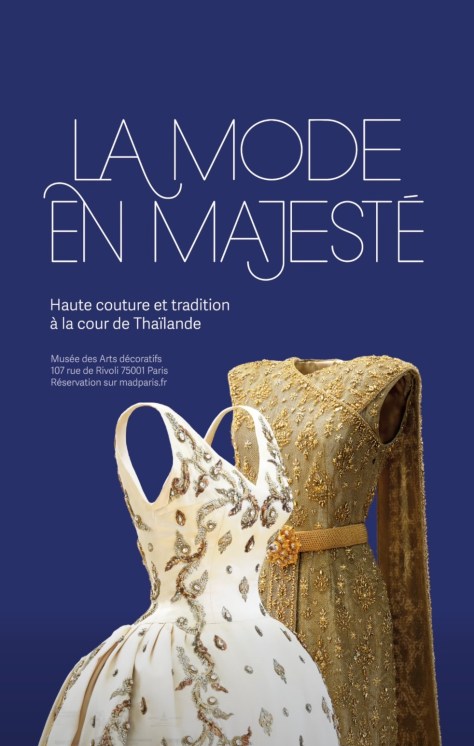
The exhibition, which runs through November 1st, 2026, explores the evolution of Thai royal dress and textile traditions from historical court attire to contemporary interpretations of national costume and couture design.
Organized through a collaboration between the Queen Sirikit Museum of Textiles, the Support Arts and Crafts International Centre of Thailand, and the Musée des Arts Décoratifs in Paris, the exhibition forms part of celebrations marking both the 340th anniversary of relations between the Kingdom of Thailand and the French Republic and the 170th anniversary of formal diplomatic ties between the two countries.
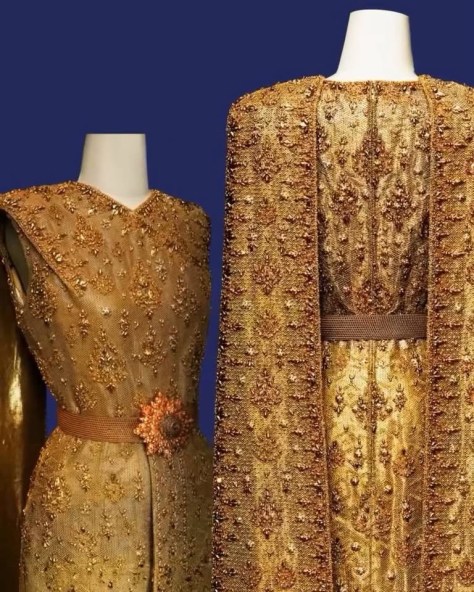
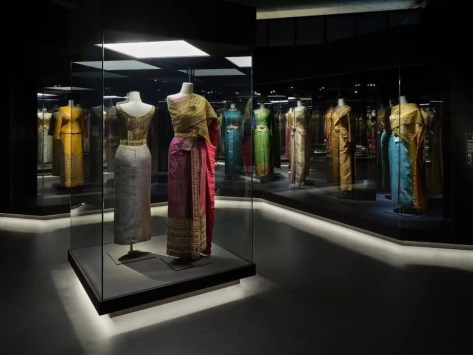
More than 200 garments and related objects are expected to be displayed, including royal attire associated with the late Queen Sirikit, the Queen Mother of Thailand, alongside contemporary interpretations of traditional Thai dress.
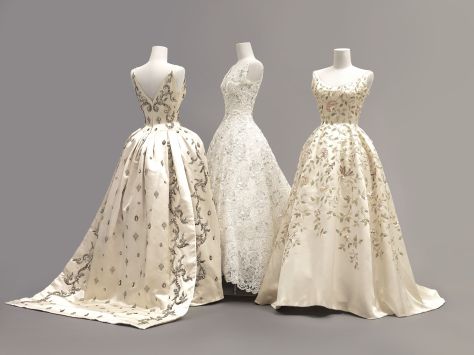
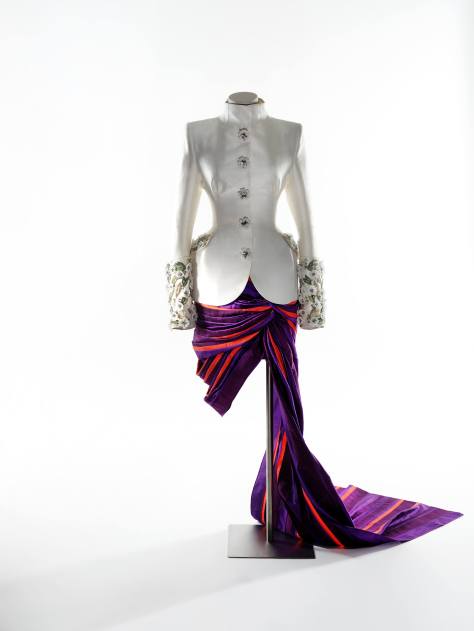
The exhibition also examines the longstanding relationship between members of the royal family of Thailand and French haute couture, including designs created by the French fashion house Balmain for the late Queen Sirikit, with embroidery by Maison Lesage.
Princess Sirivannavari has played an active role in preparations for the exhibition. Earlier this year, the Princess conducted research within the Balmain archives in Paris as part of the curatorial development process.
The exhibition additionally aligns with Thailand’s ongoing effort to secure UNESCO recognition for Chut Thai, also spelled Chud Thai, the royally endorsed Thai national costume, as part of the Representative List of the Intangible Cultural Heritage of Humanity.
Photo courtesy of H.R.H. Princess Sirivannavari of Thailand
Photos courtesy of the Ministry of Foreign Affairs of the Kingdom of Thailand
Photos courtesy of the Ministry of Foreign Affairs of the Kingdom of Thailand
Photos courtesy of the Ministry of Foreign Affairs of the Kingdom of Thailand
Photos courtesy of the Ministry of Foreign Affairs of the Kingdom of Thailand
Photos courtesy of the Ministry of Foreign Affairs of the Kingdom of Thailand
Photos courtesy of the Ministry of Foreign Affairs of the Kingdom of Thailand
Photos courtesy of the Ministry of Foreign Affairs of the Kingdom of Thailand
On Friday, Her Royal Highness Princess Sirivannavari Nariratana Rajakanya of Thailand concluded a three-day visit to the Kingdom of the Netherlands, where she presided over a series of engagements focused on Thai national dress and textile traditions.
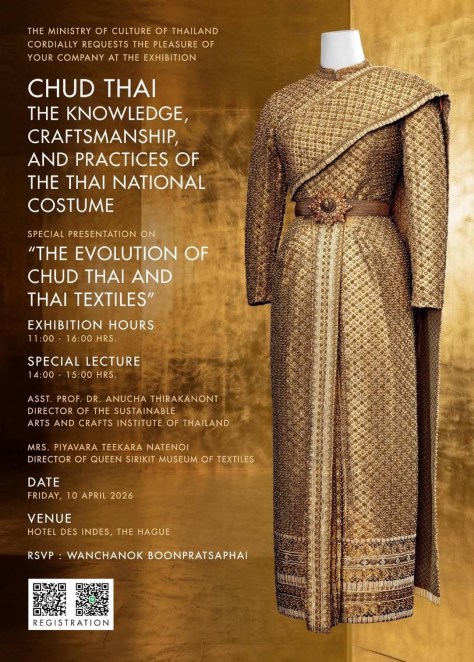
The program included the opening of the Thailand Gallery at the Royal Thai Embassy, a lecture on the development of Thai traditional dress and textiles, and the inauguration of the exhibition Chud Thai: Knowledge, Craftsmanship and Practices of the Thai National Costume at Hotel Des Indes in Den Haag.
Following these engagements, the Princess, as Patron, is preparing for the forthcoming exhibition, La Mode en Majesté: Royal Thai Dress: From Tradition to Modernity, to be held from May 13th to November 1st, 2026, at the Musée des Arts Décoratifs in Paris, France.
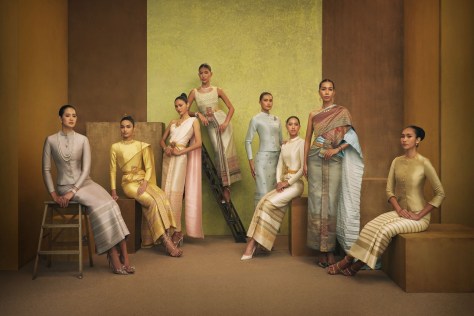
More than 200 garments and related items will be presented, including royal dress, accessories, and textile works associated with the late Queen Sirikit, the Queen Mother of Thailand, alongside contemporary interpretations of traditional design. It will also include all eight recognized forms of Chud Thai Phra Ratcha Niyom, the royally endorsed national costume.
The exhibition focuses on the development of Thai court dress over time, with particular attention to the role of the late Queen Sirikit in shaping its modern form. Garments created by the French fashion house, Balmain, for the Queen, with embroidery by Maison Lesage, are included as part of the exhibition material.
In January 2026, in preparation for the exhibition, Princess Sirivannavari visited the archives of the House of Balmain in Paris, where she researched hundreds of couture garments designed and created by Balmain for the late Queen Sirikit. The research supported the curation of the exhibition, which explores the relationship between Thai royal tradition and haute couture, particularly the long-standing collaboration between the late Queen Sirikit and the House of Balmain.
The exhibition is being presented to mark the 170th anniversary of diplomatic relations between the Kingdom of Thailand and the French Republic and aligns with Thailand’s ongoing submission of Chud Thai for inscription on the Representative List of the Intangible Cultural Heritage of Humanity maintained by UNESCO, with consideration expected in 2026.
Portrait courtesy of the office of H.R.H. Princess Sirivannavari of Thailand
This morning, it was announced that Her Royal Highness Princess Sirivannavari Nariratana Rajakanya of Thailand is scheduled to undertake a series of cultural engagements from April 9th to 10th, 2026, in Den Haag, Netherlands, centered on the international presentation of Thai national costume and textile heritage.
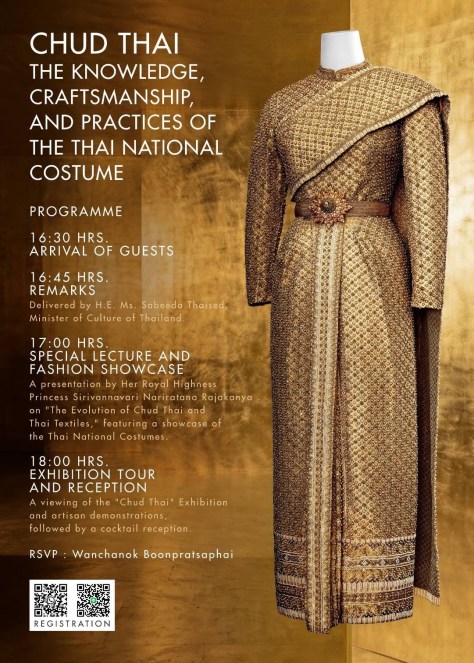
At Hotel Des Indes, the Princess will deliver a lecture titled The Evolution of Thai Traditional Dress and Thai Textiles on April 9th, as part of an academic forum focused on Thai royal costume and the transmission of related knowledge. The lecture will be accompanied by presentations illustrating the eight recognized forms of Chud Thai, placing their development within the broader historical context of Thai design and craftsmanship.
The following day, the Princess will preside over the opening of the exhibition Chud Thai: Knowledge, Craftsmanship and Practices of the Thai National Costume, organized by the Ministry of Culture of the Kingdom of Thailand. The exhibition brings together both ceremonial and contemporary interpretations of Thai dress, including pieces from the Princess’s own collection, alongside works by master artisans representing key textile traditions such as Mudmee, Prae Wa, and Yok brocade, as well as weaving practices associated with the Kingdom of Thailand’s highland communities. Demonstrations of traditional techniques will also form part of the program.
The lecture and exhibition form part of a broader state-supported initiative to promote Thai cultural heritage internationally. The program builds on the long-standing efforts of the late Queen Sirikit, the Queen Mother of Thailand, to preserve and promote Thai national dress, while reflecting the Princess’s continued role in bringing Thai textiles to a global audience.
The initiative also aligns with the Kingdom of Thailand’s ongoing efforts to secure inscription of Chud Thai on UNESCO’s Representative List of the Intangible Cultural Heritage of Humanity, with consideration expected in 2026. In this context, the Thai national costume is presented not only as a historical tradition but as a living cultural form that continues to evolve.
Photos courtesy of the Ministry of Culture of the Kingdom of Thailand
Photos courtesy of the Ministry of Culture of the Kingdom of Thailand
Photos courtesy of the Ministry of Culture of the Kingdom of Thailand
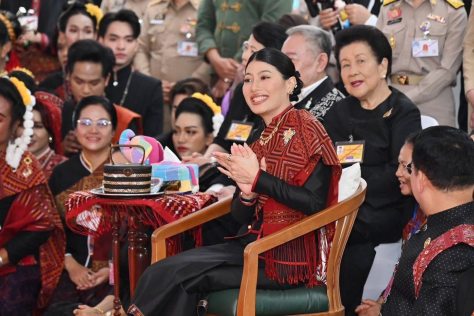
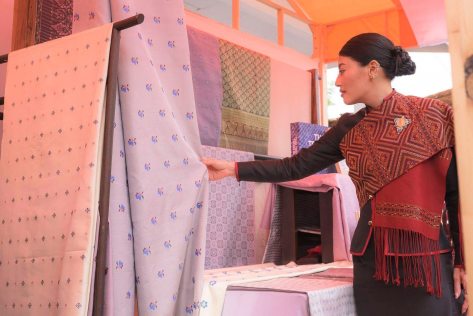
This afternoon, Her Royal Highness Princess Sirivannavari of Thailand visited an exhibition highlighting Thai textile heritage and community handicrafts at the Praewa Silk Weaving Arts and Crafts Centre Cooperative of Ban Phon in Kalasin Province.
The cooperative was originally established under the royal initiative of the late Queen Sirikit, the Queen Mother of Thailand, in order to preserve the traditional Praewa silk weaving of the Phu Thai community. Praewa silk, long associated with northeastern Thailand, is widely regarded as one of the most refined regional textile traditions of the country. Historically worn as ceremonial shawls, the textiles are distinguished by intricate supplementary weft patterns created through highly skilled hand-weaving techniques passed down through generations.
The royal patronage of local crafts formed a central component of the late Queen Sirikit’s cultural initiatives during the 20th century. Through programs associated with the SUPPORT Foundation, rural weaving traditions across Thailand were documented, preserved, and adapted for contemporary markets. These initiatives helped transform village handicrafts into sustainable economic activities while safeguarding regional cultural identities.
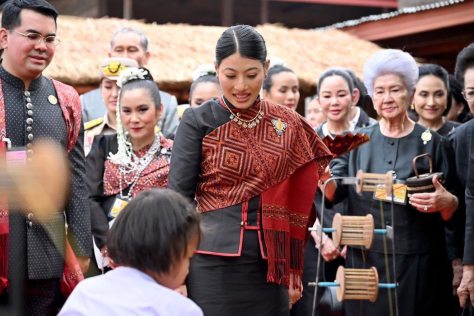
During her visit to Ban Phon, the Princess viewed the work of 30 artisan groups presenting Thai textile traditions and community handicrafts. Many of the groups specialized in Praewa silk weaving and other regional textiles produced in Kalasin and neighboring communities.
The Princess also visited local weaving households within the community, where artisans demonstrated the production process, from silk preparation to the weaving of complex decorative patterns. These demonstrations highlighted both the technical sophistication of the craft and its deep connection to the cultural heritage of the Phu Thai people.
In recent years, Princess Sirivannavari has actively promoted initiatives encouraging the wider use of Thai textiles through contemporary fashion design and sustainable production practices. These initiatives emphasize the integration of traditional craftsmanship with modern design, as well as environmentally responsible methods such as natural dyeing and the cultivation of mulberry trees for silkworm farming.
At the end of the visit, the Princess attended a cultural performance presented by community groups and students from several educational institutions. The performance celebrated the artistic traditions of the Phu Thai people and reflected the enduring influence of royal patronage in sustaining Thailand’s regional textile heritage.
Photo courtesy of the Bureau of the Royal Household
In Bangkok, the Bureau of the Royal Household announced that Her Majesty Queen Sirikit, The Queen Mother of Thailand, passed away peacefully at 9:21 p.m. on October 24, 2025, at Chulalongkorn Hospital. She was 93 years old.
Per a press release from the Bureau of the Royal Household:
“According to the medical team providing treatment to Her Majesty Queen Sirikit, the Queen Mother, they requested royal permission for Her Majesty to be admitted to Chulalongkorn Hospital of the Thai Red Cross Society on 7 September 2019 to monitor various health conditions.
During Her Majesty’s stay at Chulalongkorn Hospital, she experienced several periods of illness. The medical team discovered various abnormalities in multiple systems, which required continuous medical care.
On 17 October 2025, Her Majesty Queen Sirikit, the Queen Mother, developed sepsis (a bloodstream infection). Although the medical team provided treatment with the utmost effort, Her Majesty’s condition gradually worsened.
On Friday, 24 October 2025, at 9:21 p.m., Her Majesty passed away peacefully at Chulalongkorn Hospital, Thai Red Cross Society, at the age of 93.
His Majesty the King has issued a Royal Command for the Royal Household Bureau to arrange the funeral rites with the highest honors in accordance with royal tradition. Her Majesty’s body will be enshrined at Dusit Maha Prasat Throne Hall in the Grand Palace.
His Majesty has also graciously ordered members of the Royal Family and officials in the Royal Court to observe a period of mourning for one year, beginning from the date of Her Majesty’s passing.”
Her Majesty Queen Sirikit, The Queen Mother of Thailand, was born Mom Rajawongse Sirikit Kitiyakara on August 12, 1932, in Bangkok. She was the daughter of His Highness Prince Nakkhatra Mangkala, Prince of Chanthaburi II, a senior diplomat who served as the Ambassador of the Kingdom of Thailand to the United Kingdom and later to the French Republic, and Mom Luang Bua Snidvongs.
During her father’s diplomatic postings in Europe, Sirikit was educated in England and France, and briefly attended a finishing school in Lausanne, Switzerland. While living in Paris, where her father was serving as the Ambassador of the Kingdom of Thailand to the French Republic, she met His Majesty King Bhumibol Adulyadej of Thailand, who had acceded to the throne in 1946 following the death of his elder brother, His Majesty King Ananda Mahidol of Thailand, also known as King Rama VIII, but continued his studies in political science and law at the University of Lausanne. The two became engaged in July 1949, while the King was recovering from a car accident in Lausanne.
On April 28, 1950, Sirikit married His Majesty King Bhumibol Adulyadej of Thailand, also known as His Majesty King Rama IX of Thailand, at the Boromarajonani Hall of Sra Pathum Palace in Bangkok. The following week, on May 5, 1950, His Majesty King Bhumibol Adulyadej was crowned in a grand coronation ceremony at the Grand Palace, during which Sirikit was formally invested as Her Majesty Queen Sirikit of Thailand.
The royal couple had four children: Her Royal Highness Princess Ubolratana Rajakanya Sirivadhana Barnavadi of Thailand, born on April 5, 1951, His Royal Highness Crown Prince Vajiralongkorn of Thailand, born on July 28, 1952, now known as His Majesty King Maha Vajiralongkorn Phra Vajiraklaochaoyuhua of Thailand, King Rama X, Her Royal Highness Princess Maha Chakri Sirindhorn of Thailand, born on April 2, 1955, and Her Royal Highness Princess Chulabhorn Krom Phra Srisavangavadhana of Thailand, born on July 4, 1957.
In 1956, King Bhumibol temporarily entered the Buddhist monkhood at Wat Phra Sri Rattana Satsadaram. This was not unusual in Thai tradition, as it is customary for Thai men, including monarchs, to be ordained as monks for a brief period as an act of merit-making and devotion to Buddhism.
During his two-week ordination at Wat Bowonniwet Vihara, Queen Sirikit was appointed Regent of Thailand, the first woman in modern Thai history to serve in that capacity.
Throughout her life, Queen Sirikit was deeply involved in charitable and cultural work. She served as President of the Thai Red Cross Society from August 12, 1956, and was known for her work supporting rural communities and traditional Thai craftsmanship. In 1976, she established the Foundation for the Promotion of Supplementary Occupations and Related Techniques (SUPPORT) to promote handicrafts, weaving, and sustainable rural livelihoods across Thailand.
Queen Sirikit was widely regarded as a symbol of Thai culture and national identity. Her elegant style and dedication to preserving Thai textiles and traditional arts earned her recognition both at home and abroad.
Following the death of King Bhumibol Adulyadej of Thailand on October 13, 2016, she was thereafter known as Her Majesty Queen Sirikit, The Queen Mother.
Her Majesty Queen Sirikit, The Queen Mother, leaves behind a legacy of compassion, cultural preservation, and dedication to her nation. Her lifelong devotion to the Kingdom of Thailand and its people continues to be deeply felt today.
Photo: Bureau of the Royal Household
Photo courtesy of the Bureau of the Royal Household.
Photo: Henry Clarke, VOGUE
Photo courtesy of the Bureau of the Royal Household.


 The Royal Correspondent