Photo courtesy of Kunsthalle München/Robert Haas,2026/Haus Bayern
Photo courtesy of the Kunsthalle Muenchen
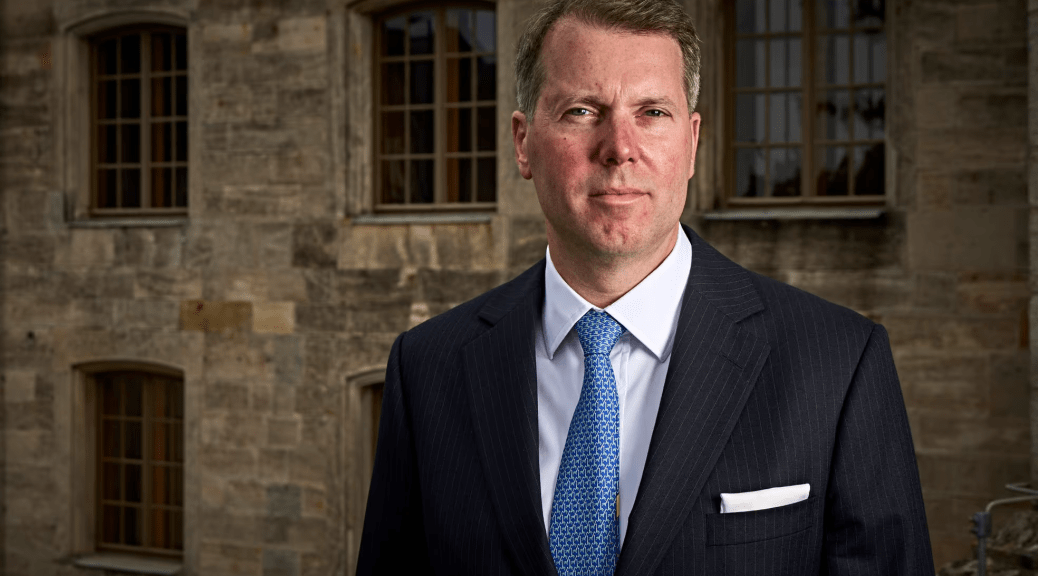
In Munich, His Royal Highness Duke Franz of Bavaria attended a preview of the exhibition titled HAIR: Stories of Power and Passion at the Kunsthalle München.
The visit took place both in connection with the Duke’s longstanding interest in art and cultural institutions and in his capacity as Honorary Chairman of the Board of Trustees of the Kunsthalle.
Curated by Ms. Juliane Auwärter and Mr. Roger Diederen, the exhibition brings together approximately 200 works drawn from major international collections, including the Museo del Prado, the Louvre, and the Rijksmuseum.
Conceived as a cross-cultural and historical study, the exhibition examines the cultural and social significance of hair as an expression of identity, belonging, and self-representation, while also addressing its symbolic and political dimensions. Through objects ranging from antiquity to the present, it considers the extent to which hair has been associated with questions of beauty, power, gender, and social norms across different historical contexts.
Presented across a range of media, including painting, sculpture, photography, and design, the exhibition further addresses the symbolic and political dimensions of hair, including its function as an indicator of transformation, protest, and individual self-determination.
The exhibition also includes several works associated with the Wittelsbach collections, including sculptures from the Staatliche Antikensammlungen and the Glyptothek, a painting from the Bayerische Staatsgemäldesammlungen, and an object from the Staatliches Museum Ägyptischer Kunst. These works have been held by the Wittelsbacher Ausgleichsfonds since 1923.
HAIR: Stories of Power and Passion is open to the public from March 20th to October 4th, 2026, at the Kunsthalle München.
Photos courtesy of the Maison du Grand-Duc/Sophie Margue
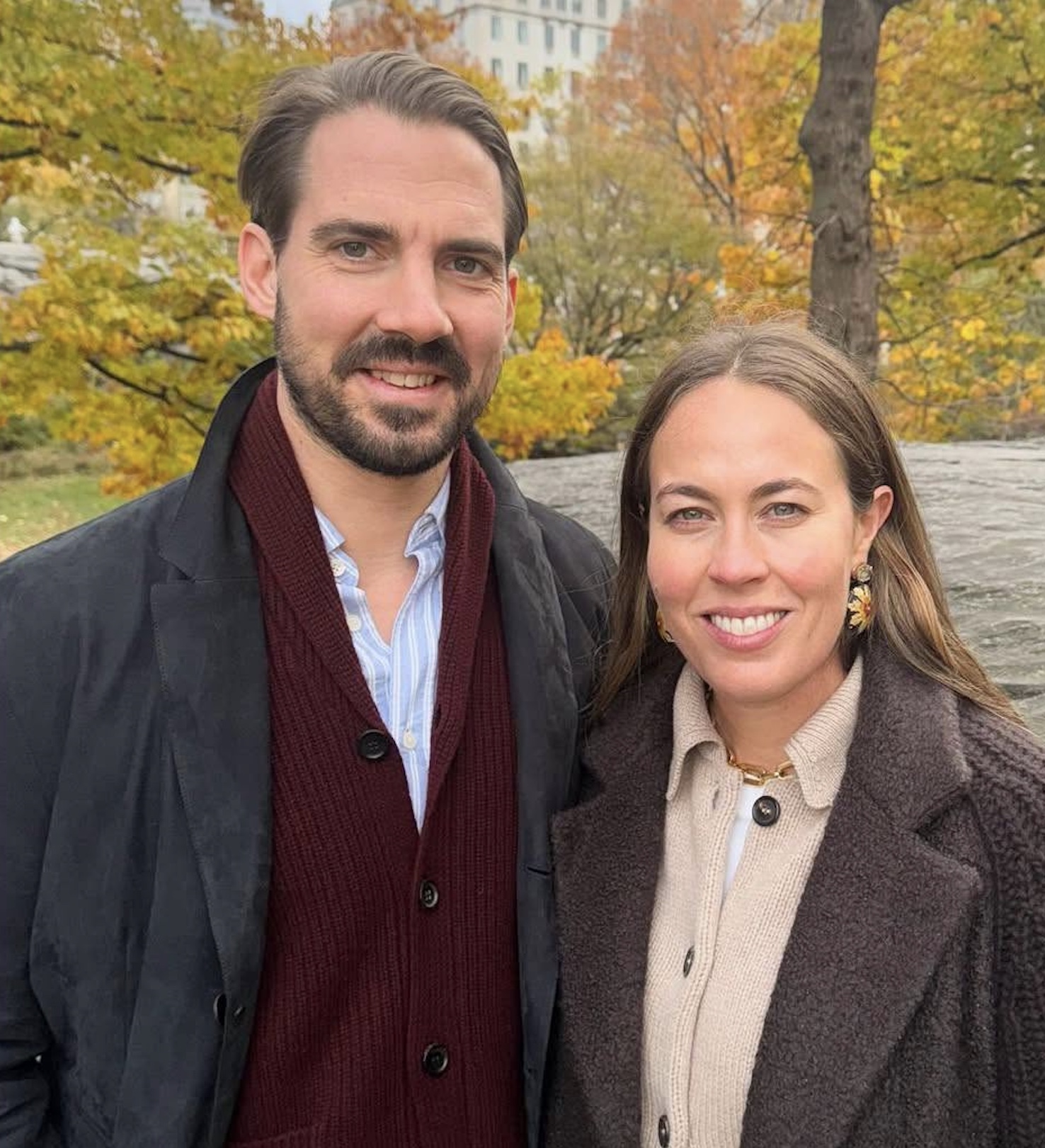
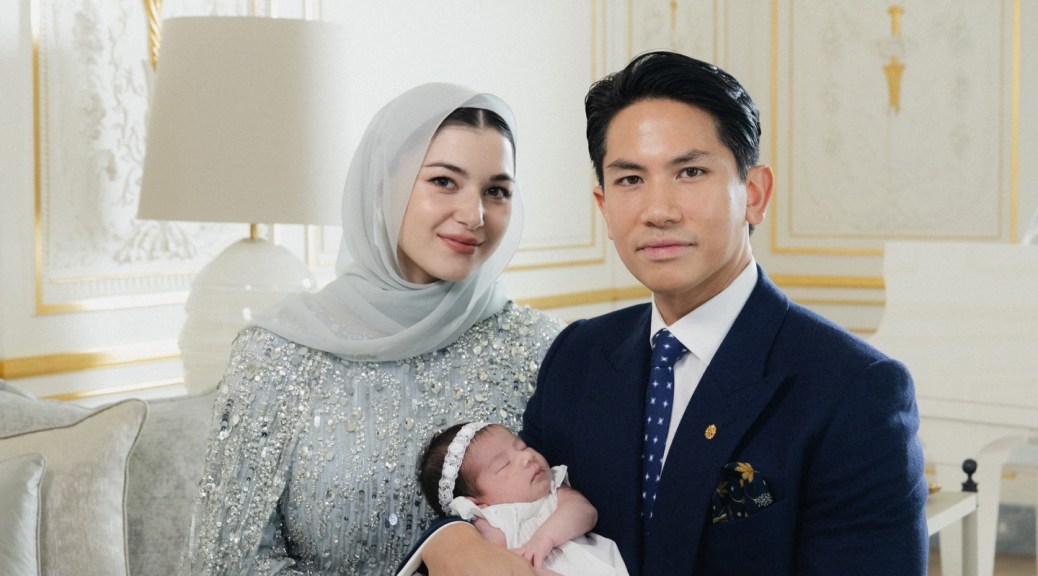
In Luxembourg City, the Maison du Grand-Duc has released new portraits of His Royal Highness Prince François of Luxembourg on the occasion of his 3rd birthday.
Born Prince François Henri Luis Marie Guillaume at the Maternité Grande-Duchesse Charlotte on March 27th, 2023, he is the second child of Their Royal Highnesses Grand Duke Guillaume and Grand Duchess Stéphanie of Luxembourg. He is currently second in the line of succession to the Grand Ducal throne, following his elder brother, His Royal Highness Prince Charles of Luxembourg.
The portraits were taken by photographer Ms. Sophie Margue at Château de Fischbach, the private residence of the Grand Ducal family.
In a communiqué issued by the Maréchal de la Cour on July 17th, 2024, it was announced that the Grand Ducal couple plans to establish a new private residence on the grounds of Château de Berg in Colmar-Berg, the official residence of the Sovereign.
The planned residence, intended for family use, is to be privately financed, while Château de Berg will retain its institutional and representational functions.
The release of the portraits of Prince François forms part of the Maison du Grand-Duc’s customary practice of marking significant milestones within the Grand Ducal family.
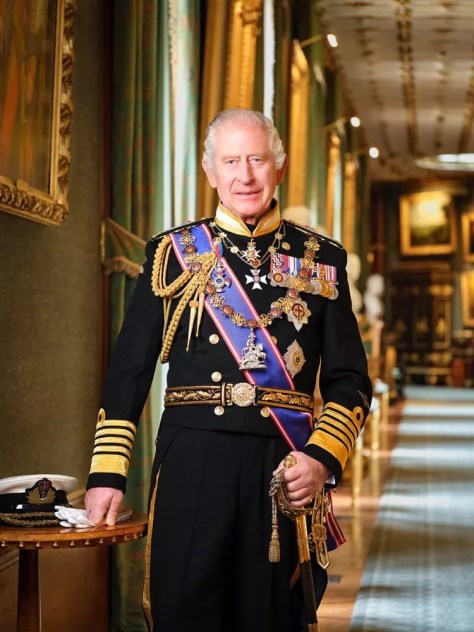
Official portrait courtesy of Buckingham Palace/Millie Pilkington, 2025
Last Thursday, in East Sussex, His Majesty King Charles III of the United Kingdom presided over the inauguration of the King Charles III England Coast Path and formally opened the Seven Sisters National Nature Reserve.
The inauguration comes as part of a wider program to create or expand 25 National Nature Reserves following His Majesty’s Coronation, with the project now reaching its halfway point.
According to Buckingham Palace, the King Charles III England Coast Path is a 2,700-mile National Trail and the longest continuous managed coastal walking route in the world, connecting well-known landmarks with lesser-visited areas and opening sections of England’s coastline to the public for the first time.
The route follows the entirety of England’s coastline, including its inlets and estuaries, contributing to its overall length. It passes through a range of protected landscapes, including chalk cliffs, salt marshes, and ancient woodlands, and is intended to support both physical and mental well-being through access to the natural environment.
The Seven Sisters National Nature Reserve is the 13th to be designated within the King’s Series of National Nature Reserves, which aims to create or expand 25 reserves by 2027.
Its chalk landscape plays a significant role in supplying clean water to nearby towns, including Eastbourne and Seaford, while also supporting surrounding marine ecosystems, including rare species such as the short-snouted seahorse.
For more information on the King Charles III England Coast Path, see the official overview published by the UK Government in the links below:
Photos courtesy of the Palais Princier de Monaco/Michaël Alesi
Ahead of ongoing developments within the Principality of Monaco’s healthcare sector, Their Serene Highnesses Prince Albert II and Princess Charlene of Monaco presided over the inauguration of a new parent–child unit at the Centre Hospitalier Princesse Grace, located in the quartier of La Colle.
The inauguration took place in the presence of the Minister of Social Affairs and Health of Monaco, Christophe Robino, the Director of the Centre Hospitalier Princesse Grace, Benoîte Rousseau de Sevelinges, and the patron of the project, Dmitry Rybolovlev, owner of AS Monaco Football Club.
The new parent–child unit comprises four rooms designed to provide a family-centered environment. Parents are able to remain present at all times, ensuring continuous support for their child throughout hospitalization.
Intended for vulnerable newborns or those requiring specialized monitoring, the facility combines advanced medical care with the preservation of the essential bond between parent and child.
A multidisciplinary team, including pediatric nurses, midwives, childcare assistants, and physicians, supports each family through a coordinated, patient-centered approach.
This initiative forms part of the broader development of the mother–child division at the Centre Hospitalier Princesse Grace and continues a longstanding commitment to care that is both medically advanced and centered on family needs.
It also continues the engagement of Their Serene Highnesses in supporting parents, including first aid training workshops for infants initiated by Princess Charlene in collaboration with the Croix-Rouge Monégasque.
The inauguration marks a further step in strengthening comprehensive, family-focused neonatal care within the Principality.
Photos courtesy of the Palais Princier de Monaco/Michaël Alesi
Photo courtesy of Vatican Media/Palais Princier de Monaco
Press image courtesy of le Diocèse de la Principauté de Monaco
Communiqué de presse Palais Princier de Monaco
Ahead of the forthcoming Apostolic Visit of His Holiness Pope Leo XIV to the Principality of Monaco on Saturday, March 28th, His Serene Highness Prince Albert II of Monaco has given a rare interview addressing the significance of the visit, the role of Roman Catholicism within the Monégasque state, and the balance between faith and public responsibility.
Speaking to the French publication La Croix, the Sovereign Prince described the anticipated visit as both an honor and a moment of historic importance for Monaco. He noted that the invitation had been extended only recently, making the confirmation of the visit all the more significant for the Principality and its population.
The Constitution de la Principauté de Monaco, adopted on December 17th, 1962, states that Roman Catholicism is the state religion, placing the Principality among the small number of European countries where Catholicism retains formal constitutional recognition.
In the interview, the Sovereign Prince emphasized that the faith continues to shape national traditions, public ceremonies, and institutional dialogue, including regular exchanges with the Archbishop of Monaco, Monsignor Dominique-Marie David, on matters such as education and bioethics.
He also addressed the role of his personal faith, describing it as a central element of his identity and a guiding influence in his approach to leadership. While noting that faith does not provide simple answers to complex policy questions, he indicated that it informs a broader sense of responsibility, particularly in striving to ensure that decisions are not only effective but also just and grounded in respect for others.
In addressing contemporary societal issues, including questions of bioethics, he acknowledged the need to balance moral considerations with the responsibilities of governance. He emphasized the importance of safeguarding both human dignity and the natural environment, framing these concerns as interconnected rather than separate.
The interview further addressed the Principality’s international role, particularly in humanitarian and charitable initiatives. While Monaco is often associated with wealth, the Sovereign Prince highlighted the importance of how resources are used, pointing to the country’s contributions to international cooperation and assistance efforts. He noted that this dimension of Monaco’s identity is often less visible, in part due to a cultural preference for discretion.
On the broader relationship between wealth and faith, the Sovereign Prince acknowledged that tensions can arise, but described them as constructive rather than contradictory. He suggested that such challenges can reinforce a sense of ethical responsibility, particularly in ensuring that prosperity is accompanied by solidarity and a commitment to the common good.
The Apostolic Visit of His Holiness Pope Leo XIV is expected to further highlight these themes, marking a significant moment in the contemporary history of the Principality of Monaco.
Official Program Schedule:
The Apostolic Visit of His Holiness Pope Leo XIV will follow a structured program across the Principality of Monaco on Saturday, March 28th, beginning at 8:50 a.m. with the arrival of His Holiness at the Monaco Heliport.
At 9:00 a.m., an official welcome ceremony will take place at the Place du Palais, where His Holiness will be received by Their Serene Highnesses Prince Albert II and Princess Charlene of Monaco. This will be followed by a private audience and official exchanges at the Palais Princier de Monaco.
At 10:00 a.m., the Sovereign Prince will deliver a formal address from the balcony of the Palais Princier, followed by remarks and an Apostolic Blessing imparted by His Holiness Pope Leo XIV to those gathered at the Place du Palais.
At 11:00 a.m., His Holiness will preside over the celebration of the Liturgy of the Hours at the Cathédrale de Monaco in the quartier of Monaco-Ville, including the delivery of a homily. This will be followed at 11:45 a.m. by a meeting with young people and catechumens at the Église Sainte-Dévote in the quartier of La Condamine, which will include a moment of prayer and an address by His Holiness.
The Apostolic Visit will conclude with the celebration of a pontifical Mass at 3:00 p.m. at the Stade Louis-II in the quartier of Fontvieille, observed according to the liturgy for the Saturday of the Fifth Week of Lent.
Live coverage of the Apostolic Visit of His Holiness Pope Leo XIV will be available across several official and religious broadcasters.
In France, the Catholic television network KTO Télévision Catholique will provide comprehensive coverage of the visit, including the arrival of His Holiness in the Principality.
In Monaco, full coverage of the Apostolic Visit, from the arrival at the Monaco Heliport to the departure of His Holiness, will be carried by the official state broadcaster, Monaco Info, as well as the public broadcaster, TVMonaco.
These broadcasts will be available via their respective digital platforms, including YouTube, where international audiences will be able to follow the visit in real time.
Links to the official YouTube channels of KTO Télévision Catholique, Monaco Info, and TVMonaco are provided below.
Official portrait courtesy of Agence Maghreb Arabe Presse
In Washington, D.C., Her Royal Highness Princess Lalla Hasnaa of Morocco represented the Kingdom of Morocco at a high-level summit held at the White House on children’s well-being and digital development, at the invitation of the First Lady of the United States of America, Melania Trump.
The meeting, titled Fostering the Future Together, brought together representatives from approximately 40 countries, alongside technology sector participants, to discuss international cooperation on children’s protection and empowerment in the digital era.
According to Agence Maghreb Arabe Presse, the initiative aims to promote children’s well-being through education, innovation, and access to technology, while addressing emerging challenges linked to artificial intelligence and digital inequality.
In her remarks delivered during the summit, Princess Lalla Hasnaa emphasized that preparing younger generations for the digital age constitutes a shared international responsibility, warning of the risks posed by widening disparities in access to technology.
She also outlined the Kingdom of Morocco’s commitment to strengthening national frameworks for digital protection and expanding programs focused on digital literacy and inclusion. The Kingdom, she said, intends to contribute to international cooperation efforts, including through the sharing of best practices with African partners.
The summit included remarks from several international participants, including representatives from the French Republic, the United Arab Emirates, the Republic of Poland, the Republic of Panamá, the Republic of Sierra Leone, and the Republic of Malawi.
The event concluded with a reception at the White House for the attending delegations.
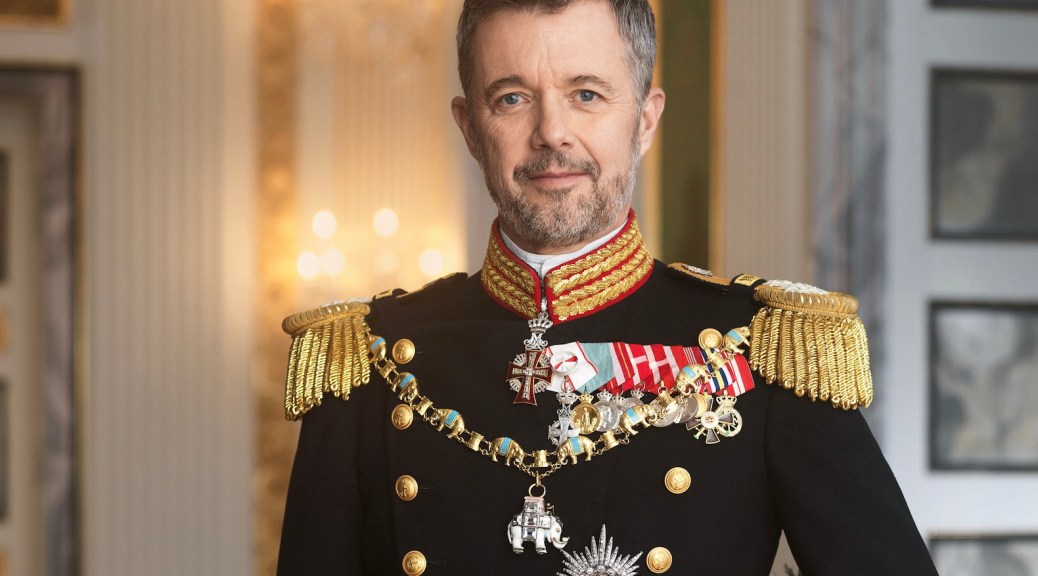
In Copenhagen, His Majesty King Frederik X of Denmark has requested the Prime Minister of the Kingdom of Denmark, Mette Frederiksen, to lead negotiations to form a new government, following consultations with party representatives at Amalienborg after the general election of March 24th, 2026.
Earlier in the day, the Prime Minister formally submitted the resignation of her government to the King, in accordance with Danish constitutional practice. She continues in office in a caretaker capacity pending the formation of a new administration.
Consultations held at Amalienborg brought together representatives of parties elected to the Folketing, who advised the King on the designation of a “royal investigator” (kongelig undersøger) to lead government formation talks.
According to the Royal Household of Denmark, in a statement issued by Hofmarskal, Christian Schønau, parties representing the largest number of seats in the Folketing, recommended that Prime Minister Frederiksen be tasked with leading negotiations. These parties, including Socialdemokratiet, Socialistisk Folkeparti, Enhedslisten, Radikale Venstre, and Alternativet, together account for 84 mandates.
Parties from the liberal and conservative blocs, including Venstre, Liberal Alliance, Dansk Folkeparti, Det Konservative Folkeparti, and Danmarksdemokraterne, representing 73 mandates, proposed Venstre leader, Troels Lund Poulsen, as an alternative candidate to lead negotiations.
The Moderates (Moderaterne), holding 14 seats, recommended their leader, Lars Løkke Rasmussen, as a potential royal investigator to explore the formation of a government across the political center.
Following the consultations, the caretaker Prime Minister Frederiksen advised the King that the parties commanding the largest parliamentary support had indicated her as the preferred leader of negotiations. Acting on this advice, the King formally requested Prime Minister Frederiksen to undertake the task of forming a new government, with a view to a coalition including Socialistisk Folkeparti and Radikale Venstre.
No single bloc commands an outright majority in the 179-seat Folketing, where 90 seats are required. The outcome leaves open the possibility of coalition negotiations across traditional political alignments or the formation of a minority government supported by external parties.
Under Denmark’s constitutional framework, the Sovereign acts based on parliamentary indications and does not exercise discretion in the political selection of a government. The process now enters a negotiation phase, the duration and outcome of which remain uncertain.