
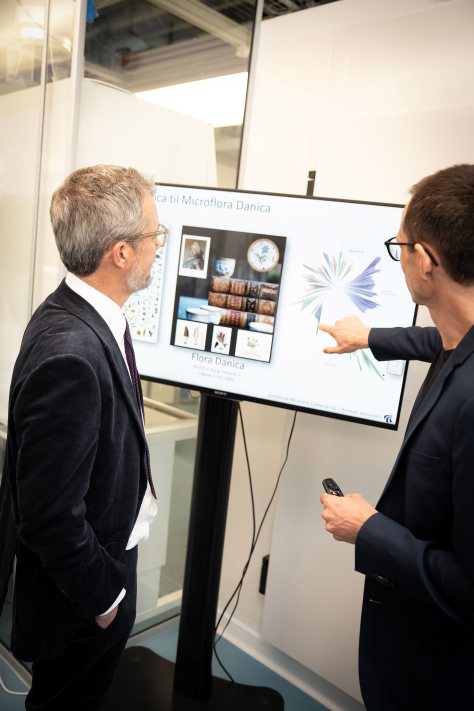
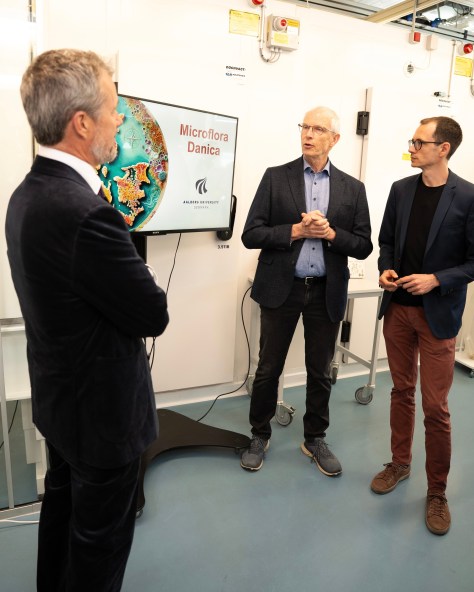
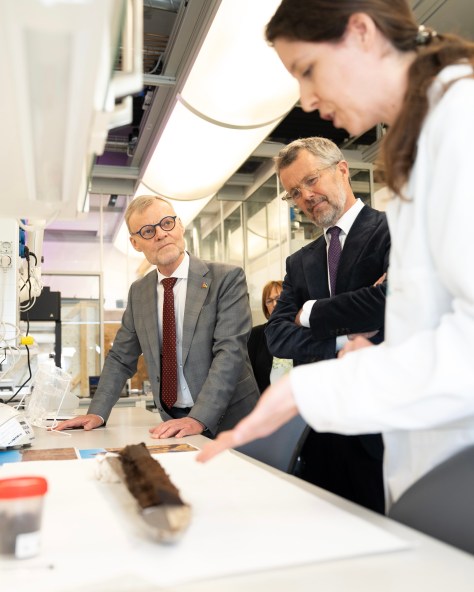
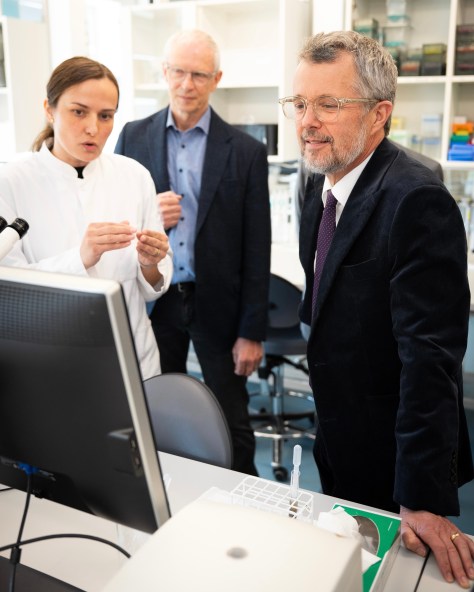

On Friday, His Majesty King Frederik X of Denmark visited Aalborg University as researchers formally concluded the nationwide scientific project Microflora Danica, an extensive study examining the microscopic organisms living within the Kingdom of Denmark’s soil, forests, lakes, coastal regions, and urban environments.
The project, based on more than 10,000 environmental samples collected across the Kingdom of Denmark over six years, sought to map the country’s microbial biodiversity using advanced DNA analysis. Researchers described the initiative as the first large-scale scientific survey of Denmark’s invisible microbial ecosystems.
The title Microflora Danica was intentionally inspired by Flora Danica, the historic botanical survey commissioned under King Frederik V in 1761, documenting the plant life of the Kingdom of Denmark. Researchers at Aalborg University described King Frederik X’s participation in the conclusion of the project as a symbolic continuation of Denmark’s longstanding relationship between scientific discovery and the monarchy.
During the visit, the King officially unveiled the names of four newly identified bacterial species discovered during the project.
Among them was Margrethea Danica, a rare bacterium named in honor of Her Majesty Queen Margrethe of Denmark. According to researchers, the bacterium represents a previously unknown major branch on the scientific “tree of life,” the evolutionary framework used to trace relationships between living organisms. Researchers noted that discoveries representing entirely new branches within the tree of life remain exceptionally rare.
Researchers stated that the naming of Margrethea Danica recognized Queen Margrethe’s longstanding support of scientific, cultural, and academic initiatives throughout her reign.
King Frederik X also approved the names of three additional bacterial species associated with locations connected to the royal family of Denmark and royal history.
The bacterium Graastenia ingridihorti was identified near Gråsten Slot and references the historic castle gardens associated with the late Queen Ingrid of Denmark, the King’s grandmother. Gribskovia venatica, discovered in Gribskov, references Denmark’s historic royal hunting landscapes, while Querciregia multidomus was identified near Kongeegen at Jægerspris Nordskov, one of the oldest known oak trees in Denmark.
According to researchers, the project has provided new insight into microorganisms involved in nitrogen cycles, greenhouse gas formation, and ecosystem development, with potential implications for environmental restoration, agricultural management, and climate research.
The findings from Microflora Danica have been published in the scientific journal Nature Microbiology, while the broader research project has been recognized internationally as one of Denmark’s most significant recent scientific initiatives.

