On January 9, 2013, His Royal Highness Prince Felipe of Asturias held audiences at Palacio de la Zarzuela in Madrid. The prince met with representatives from the Club Financiero Génova, members of the Asociación Española de Fabricantes de Automóviles y Camiones (ANFAC), and met with the recipients of the XI Edición de los Premios Autónomo del Año.
In the afternoon, Prince Felipe along with Her Royal Highness Princess Letizia, met with a “… group of children who won a drawing competition organized to mark the 170th anniversary of the founding of the Obra de la Infancia Misionera…”
His Royal Highness Prince Felipe of Asturias inaugurated the new high-speed rail line from Barcelona to Figueres-Vilafant on January 8, 2013.
According to the Spanish royal court during the trip Prince Felipe toured the “… new train cab and met with the driver …” Once the prince and his delegation, which included Spanish Prime Minister, Mr. Mariano Rajoy, the President Generalitat of Cataluña, Mr. Artut Mas, and the Minister of Development, Ms. Ana Pastor, arrived at Figueres-Vilafant station Prince Felipe unveiled a “…commemorative plaque and mingled with various VIPs in attendance.”
Afterwards, the prince and his delegation hopped on the train which headed toward their final stop Girona. Again, upon their arrival Prince Felipe was warmly greeted by various local officials, and after several handshakes he unveiled yet another commemorative plaque. After his inaugural speech the prince went home.
The day began with a military parade, honors, and a twenty-one gun salute at Plaza de la Armería at the palace. After the national anthem was played the royal family along the Spanish Defense Minister, Mr. Pedro Morenés, the Interior Minister, Mr. Jorge Fernandez Días, the Head of State Staff of Defense, Spanish Prime Minister, Mr. Mariano Rajoy, and dozens of other military personnel proceeded inside the royal palace.
Once inside the Throne Room His Majesty gave a speech stressing:
“… that the National Defense Policy ‘recognizes that the current economic crisis acts as a security threat,’ and therefore ‘it is essential to prioritize the effort to maintain military capabilities to ensure credible deterrence in defense of the interests of Spain. And, hence the need, as loyal servants of the state, we should contribute more actively if possible, to the collective task of bringing up this great nation with effort, generosity and self-sacrifice.’ ”
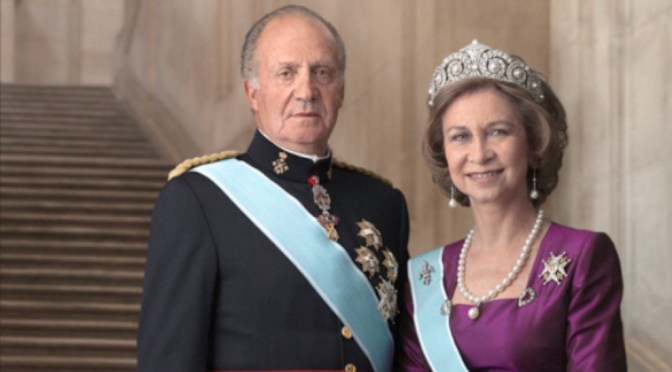
After the speech, Their Majesties King Juan Carlos I and Queen Sofia along with the Prince and Princess of Asturias proceeded to the Sálon de Columnas where they mingled with various guests attending today’s Pascua Militar.
“This traditional celebration of Easter Military allows me meeting you all in the company of the Queen and the Prince of Asturias, something that, as you know, I am very pleased because I can express my closeness and the pride I feel in commanding you.
This past Christmas I asked you to share an emotional homage to our comrades who died in the line of duty during 2012, to which we dedicate our sincere appreciation. For their families, along with our solidarity with their pain, all our affection.
I also want to highlight the work of members of the Armed Forces and Guardia Civil who do their duty away from Spain, always difficult conditions. They give good test of professionalism and efficiency, humanity and rigor, courage and discipline.
With their daily uplift our nation, ensure mutual loyalty between partners and ensure the firmness of the values we share together. I express my gratitude and ask them to persevere in their attitude. Best wishes to all.
My thanks also to the Minister of Defense for his friendly greeting and a statement of the situation and the challenges of the Armed Forces.
I see that you are fully aware of the difficulties and total willingness to address them, as stated in the National Defense Directive I was presented at the National Defense Council held last July 31, which was also attended by the Prince of Asturias.
A few days later I met with the Minister and the new military leadership in the General Staff of Defense, to be informed in detail of the planning process that will help achieve the objectives and develop the guidelines established by this Directive.
It recognizes that the current economic crisis acts as a security threat.
Therefore, it is essential to prioritize the effort to maintain military capabilities to ensure credible deterrence in defense of the interests of Spain.
And, hence the need, as loyal servants of the state, we should contribute more actively if possible, to the collective task of bringing up this great nation with effort, generosity and self-sacrifice.
The Spanish people have full confidence in your ability, initiative and enthusiasm to achieve that goal, knowing that your values and your training will allow you to overcome in the most difficult situations.
That bond between our partnership with the Armed Forces was further strengthened during the past summer, when fires ravaged our territory.
Our soldiers were required then and acted tirelessly. They knew – as always – to fulfill their duties faithfully.
Also in 2012 I have the image of the memorable ceremony in which, as Sovereign of the Royal and Military Order of San Fernando, I was honored to impose collective Laureate Cavalry Alcantara.
The sobriety of the military ceremony and the telling of the events touched us all.
We are excited about the pride of knowing that those were our heroes and their spirit is too. His heroic example forces us to take intimate commitment to become worthy heirs of them, to have them present in every action of our responsibility modest everyday.
The virtues of those riders remain today in the depths of all of you, for you have internalized in the academies and training centers, and you practice every day in the practice of the profession, with intelligence, tenacity and selfless, always thinking Spain.
Finally, with my family, I wish you all and your families peace and joy this year that has just begun, with confidence to the future.
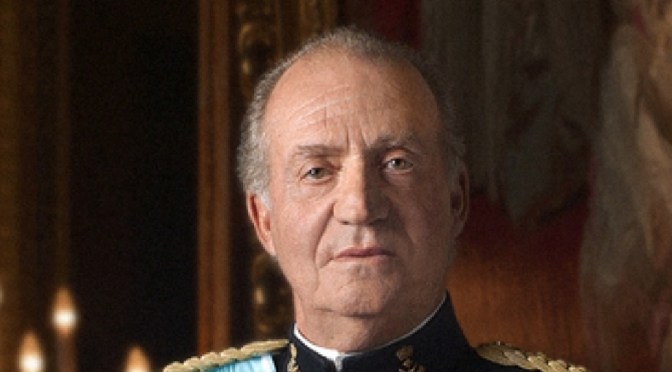
On the eve of his 75th birthday His Majesty King Juan Carlos I of Spain sat down with Spanish journalist, Mr. Jesús Hermida, for an exclusive interview.
In his one on one interview with Mr. Hermida, the old king reflects on the past, present and future of Spain, his legacy, his late father, family, youth unemployment in Spain, and more. A highlight of the interview is when the old king spoke about His Royal Highness Prince Felipe of Asturias with whom he referred to as “… the best prepared [of all the princes of Asturias of the past], a man who has great intellect, and is a very hard worker…”
When asked about his legacy and if he is satisfied His Majesty stated:
“I feel more than satisfied, I feel fortunate that I have put forth, and have produced the Spain we have today. However, I am gravely concerned with the problems that we currently have [I believe he is speaking about the economic crisis in Spain]…”
Okay, enough of that. Now, the big question is why did the old king agree to be interviewed (he rarely gives interviews like this)? My guess: He’s trying to change his and the Spanish monarchy’s image. Essentially, it’s the old classic PR move.
In a poll conducted last month by the Spanish newspaper, El Mundo, it seems that the popularity of His Majesty King Juan Carlos I of Spain has dropped significantly in the last year.
“The poll concluded that 50.1% of the 1,000 people surveyed by Sigma Dos Institute for El Mundo considered that the balance of his 37-year reign has been ‘very good’ (6.6%) or ‘good’ (43.5%), compared with 76.4% a year earlier. Support for the monarchy falls to a low of 54%.
57.8% of young people between the ages of 18 and 29 does not consider the monarchy to be the best for Spain.”
El Mundo notes that the reasons why His Majesty’s popularity has dropped: The lavish elephant slaughtering vacation he took last year with his “alleged” mistress and the “… corruption probe of his son-in-law, The Duke of Parma.”
Despite the bad news His Majesty can be happy about one thing this week: His birthday. The old king turns 75 years young on Saturday.
On this Christmas Eve, as every year, I want to reflect with you on what we are concerned and also on our hopes.
Specifically, I would like to address three issues: the economic crisis, the strength of Spain as European and Latin American nation and the need to vindicate the policy as a necessary instrument to unite all forces and rush out of the crisis and the challenges ahead.
Do not think I exaggerate when I say that we live one of the most difficult moments in the recent history of Spain.
The severe economic crisis we are going through in recent years has reached an intensity, amplitude and persistence over time than anyone imagined. Citizens suffer today its rigor, which are challenging the welfare of not a few families. I think many people of all ages, but especially in many young people, who get up every day with feelings of insecurity and despair at the plight of their economies, the lack of jobs and the uncertain prospects.
We can not ignore that there is pessimism, and that its effects are felt in the quality of the social climate we live. It is also generating a detachment from institutions and towards the political role that concerns us all.
Against this pessimism, as against conformism, it find new ways and means to do some things that demand an update.
The current reality is complex and not always easy to understand or solve in the short term. Austerity and growth must be compatible. The resignations of today have to ensure the welfare of tomorrow, within a reasonable period of time so as to ensure the protection of social rights that are a hallmark of our society developed.
For our economy growing again we must bring order to our accounts and, in turn, generate incentives for wealth creation. There stimuli that are created by economic policies or fiscal policies or promoting innovation or entrepreneurship, but the first stimulus to get us out of this crisis is called trust.
During the thirty-seven years of my reign have been through several economic times really complicated that we remember well some years. Perhaps they were not as difficult as this but in any case were very complicated. And yet we knew leave them successfully and make our economy grow and improve our welfare. And we did it for many reasons but primarily because we had confidence in a project shared by all and in our ability to succeed.
Today as then, we can overcome the current difficulties with the generosity, talent and creativity of our men and women and the strength of our production system if we have confidence in ourselves and if we can also generate instances and in international markets.
Spain is part of the solution to the global crisis and should be starring in decision-making in major international forums. Latin America is a key part of us, as we are of her. The same applies to Europe. With the European Union we must continue working to overcome purely national visions and strengthen the foundation of solidarity with which we all progress in the integration process. We ensure that nothing got together, or individual rights and social, economic and welfare, or the process of economic and political integration may be threatened.
But all is not economy. However obvious it is not bad to repeat: not everything is economics. I am aware that politics today live their best times in the perception of the citizens. For this reason I want this night to claim the policy because their role is critical in ending the crisis.
I claim the largest political, to emphasize that they value their dignity and we call politics capitalized.
Which, from the government or from the opposition, pays attention to the general interest and welfare of citizens.
That, far from causing confrontation and on respect for diversity, integrating ordinary to join forces, not to divide.
The one who knows waive a portion of his own to win something bigger and better for everyone.
The seeking understanding and agreement to channel and resolve the major fundamental and collective challenges.
Which is built on the spirit of service and accommodates the principles of personal and social ethics.
Which, in short, is able to sacrifice short-term satisfaction, often ephemeral, to widen the horizon of their ambitions.
That was the biggest political inaugurate, a brilliant new integrative stage in our recent history and is the only one that has the ability to bolster confidence in our great nation, opening new doors to hope and realize that desire to excel that is claiming our society.
To achieve this, it is necessary to promote values such as mutual respect and reciprocal loyalty. These are values that more than three decades ago helped put in place a new framework for coexistence and the recognition of our plurality and under different languages, cultures and institutions of Spain. It’s time we all look forward and do everything possible to close the wounds. Will again be a success for all, citizens and institutions, based on respect for the law and democratic channels.
The Crown is well aware of the effort and sacrifice that citizens are carrying out with integrity. No effort in life is barren and neither are those who are doing it now. In this context, I want to highlight the selfless and loyal attitude of families and solidarity of many aid organizations that, with your help, both are contributing to social stability. Also, the sacrifice of all Spanish now leaving our country to achieve a better life for themselves and their families. His experience and training on his return form a major leverage effect on our economy.
Christmas symbolizes the triumph of generosity over selfishness. Generosity, solidarity and commitment are values that we all recognize, preserve and promote long these days more than ever.
On Friday, December 21, 2012, Her Royal Highness Princess Letizia of Asturias visited the XXXVI Salón del Libro Infantil y Juvenil de Madrid “¿A Qué Sabe Este Libro?” (XXXVI Children and Youth of Madrid Book Fair) held at the Centro Cultural Conde Duque.
LikeLoading...
All the latest news and events from monarchies around the world.
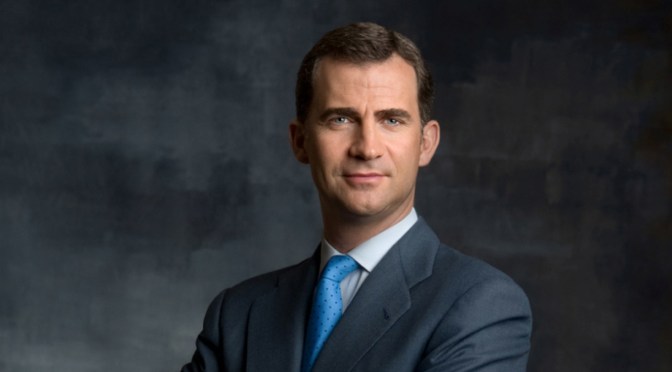
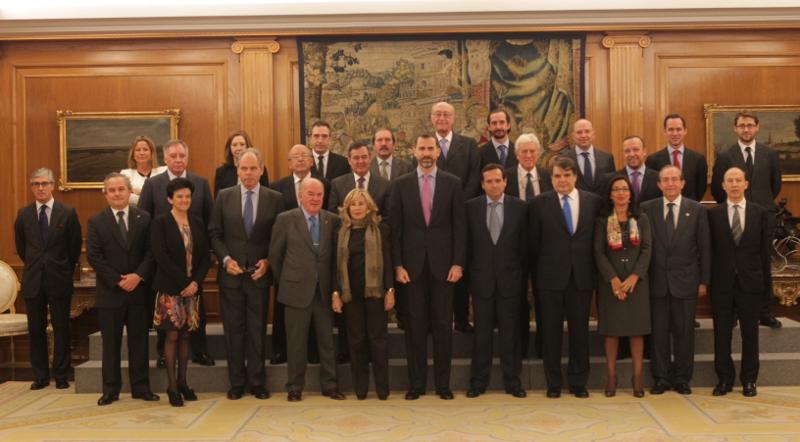 On January 9, 2013, His Royal Highness Prince Felipe of Asturias held audiences at Palacio de la Zarzuela in Madrid. The prince met with representatives from the Club Financiero Génova, members of the Asociación Española de Fabricantes de Automóviles y Camiones (ANFAC), and met with the recipients of the XI Edición de los Premios Autónomo del Año.


 The Royal Correspondent