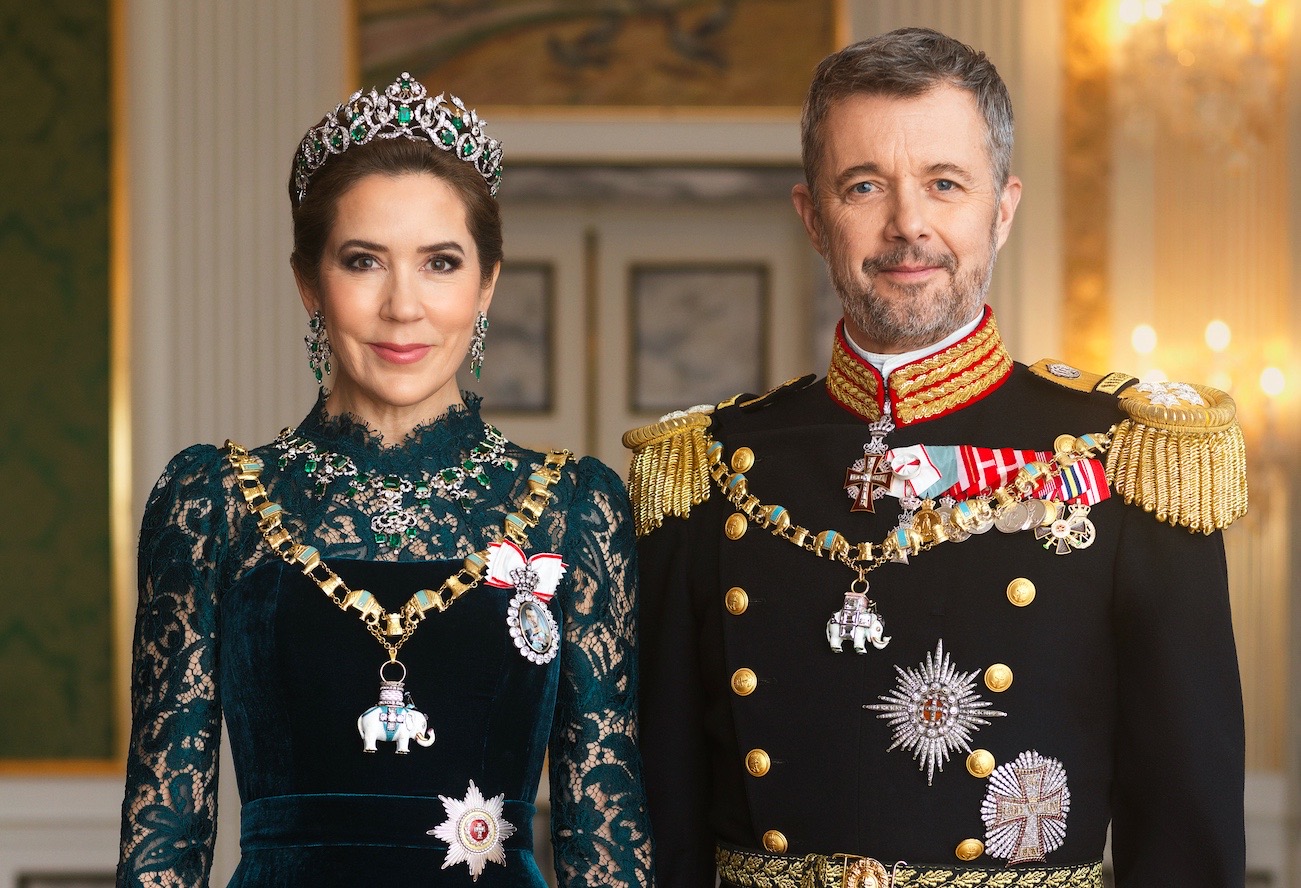
This afternoon, it was announced by the Royal Household of Denmark that Their Majesties King Frederik X and Queen Mary of Denmark, accompanied by their family, will take up residence at Kancellihuset (Chancellery House) at Fredensborg Slot on May 4th, 2026, relocating from Frederik VIII’s Palace at Amalienborg in Copenhagen.
Kancellihuset serves as the summer residence of Their Majesties. Following their marriage on May 14th, 2004, the then Crown Prince Couple resided there while Frederik VIII’s Palace underwent extensive restoration works, completed in 2010.
In accordance with tradition, Their Majesties will be formally welcomed to the town of Fredensborg by Mayor Thomas Lykke Pedersen. The occasion will be marked by flag displays and a concert performance featuring the Fredensborg Slotskirke and the Fredensborg Brass Ensemble. The ceremony is scheduled to take place at 5 p.m.
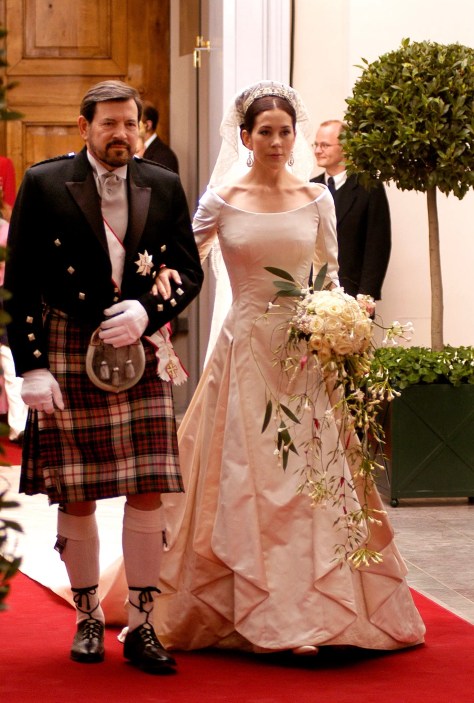
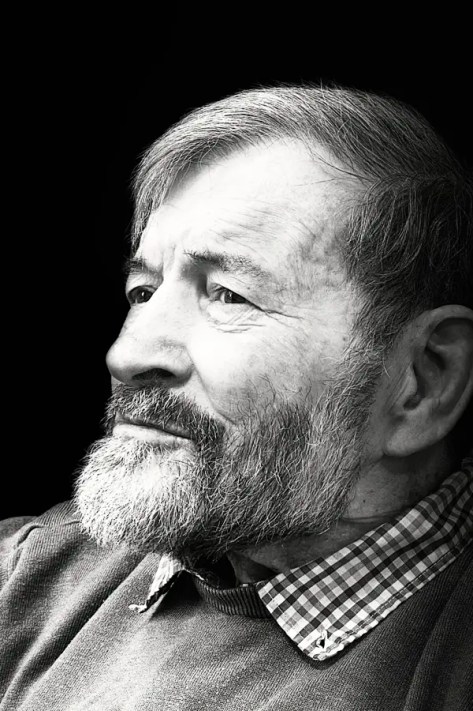
This morning, the Royal Household of Denmark announced the passing of Professor John Dalgleish Donaldson, father of Her Majesty Queen Mary of Denmark. He was 84 years old.
Professor Donaldson passed away in Hobart, Tasmania.
In a statement, Her Majesty the Queen wrote:
“My heart is heavy, and my thoughts are grey. My beloved father has passed away. But I know that when the grief settles, the memories will brighten my day, and what will remain strongest is love and gratitude for everything he gave me and taught me.”
Born in Scotland on September 5th, 1941, Professor Donaldson was a Scottish-born Australian academic whose career was closely associated with the University of Tasmania in Hobart. He served as Professor of Applied Mathematics and was known for his work in statistics and numerical analysis, as well as for mentoring generations of students.
He graduated from the University of Edinburgh in 1963 with a Bachelor of Science with honours in Mathematics and Physics. Later that year, on August 31st, he married Henrietta Clark Horne in Port Seton, Scotland. The couple emigrated to Tasmania in November 1963, where Professor Donaldson continued his academic career.
In 1967, he completed a Doctor of Philosophy in Mathematics at the University of Tasmania under the supervision of Professor David Elliott. He subsequently joined the academic staff, serving as a lecturer in Applied Mathematics before later being appointed Dean of the Faculty of Science, a position he held until his retirement.
His academic work focused particularly on numerical analysis, and his career demonstrated a sustained commitment to both research and teaching within the Australian university system.
Professor Donaldson and his first wife had four children: Jane Donaldson Stevens, Patricia Donaldson Bailey, John Stuart Donaldson Jr., and Mary Elizabeth Donaldson, now Her Majesty Queen Mary of Denmark.
Henrietta Donaldson passed away on November 20th, 1997. He later married the British-born novelist Susan Elizabeth Horwood, known under the pen name Susan Moody.
Professor Donaldson is survived by his four children and eight grandchildren, including the four children of Their Majesties King Frederik X and Queen Mary of Denmark.
A private memorial service for the late Professor John Dalgleish Donaldson will be held at a later date.
My deepest condolences to the late Professor Donaldson’s family and friends.
In Copenhagen, the Head of Communications for the Royal Household of Denmark, Ms. Nina Z. Munch-Perrin, issued a press release to announce that Her Royal Highness Princess Isabella of Denmark will undertake her military conscription with the Guard Hussar Regiment in Slagelse beginning in August 2026, following the completion of her upper secondary education.
The Princess will be among the first to serve under the Kingdom of Denmark’s reformed conscription system, established under the Forsvarsforlig 2024–2033, concluded in June 2023 between the Danish Government and a broad majority of political parties in the Folketinget.
The reform extends conscription from four months to eleven months, combining basic training with operational service, and forms part of a broader effort to strengthen military readiness in response to changing security conditions in Europe.
The Guard Hussar Regiment is the oldest regiment in the Danish Army, dating back to 1614, with the motto In Actis Esto Volucris.
Princess Isabella’s forthcoming service follows that of her brother and father. His Royal Highness Crown Prince Christian of Denmark completed his military training with the Guard Hussar Regiment in May 2025 and has since continued his military training as part of the lieutenant officer training program.
His Majesty King Frederik X began his military career in 1986, when he was the Crown Prince, with Den Kongelige Livgarde. In 1988, he was commissioned as a lieutenant of the reserve and served as a platoon commander with the Guard Hussar Regiment. He was promoted to first lieutenant of the reserve in 1989.
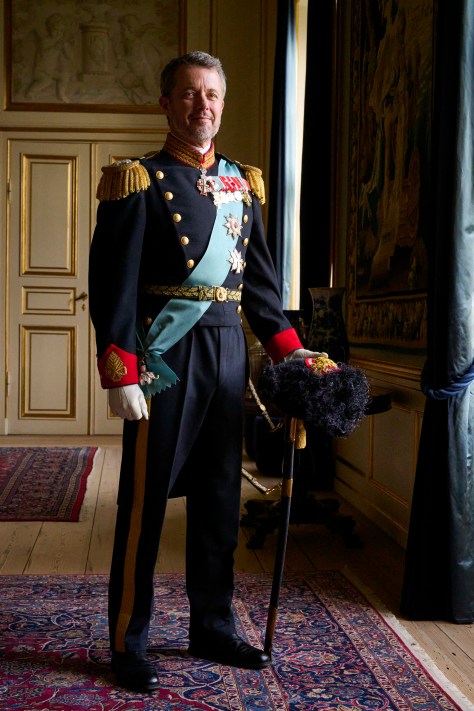
In Copenhagen, His Majesty King Frederik X of Denmark has requested the Prime Minister of the Kingdom of Denmark, Mette Frederiksen, to lead negotiations to form a new government, following consultations with party representatives at Amalienborg after the general election of March 24th, 2026.
Earlier in the day, the Prime Minister formally submitted the resignation of her government to the King, in accordance with Danish constitutional practice. She continues in office in a caretaker capacity pending the formation of a new administration.
Consultations held at Amalienborg brought together representatives of parties elected to the Folketing, who advised the King on the designation of a “royal investigator” (kongelig undersøger) to lead government formation talks.
According to the Royal Household of Denmark, in a statement issued by Hofmarskal, Christian Schønau, parties representing the largest number of seats in the Folketing, recommended that Prime Minister Frederiksen be tasked with leading negotiations. These parties, including Socialdemokratiet, Socialistisk Folkeparti, Enhedslisten, Radikale Venstre, and Alternativet, together account for 84 mandates.
Parties from the liberal and conservative blocs, including Venstre, Liberal Alliance, Dansk Folkeparti, Det Konservative Folkeparti, and Danmarksdemokraterne, representing 73 mandates, proposed Venstre leader, Troels Lund Poulsen, as an alternative candidate to lead negotiations.
The Moderates (Moderaterne), holding 14 seats, recommended their leader, Lars Løkke Rasmussen, as a potential royal investigator to explore the formation of a government across the political center.
Following the consultations, the caretaker Prime Minister Frederiksen advised the King that the parties commanding the largest parliamentary support had indicated her as the preferred leader of negotiations. Acting on this advice, the King formally requested Prime Minister Frederiksen to undertake the task of forming a new government, with a view to a coalition including Socialistisk Folkeparti and Radikale Venstre.
No single bloc commands an outright majority in the 179-seat Folketing, where 90 seats are required. The outcome leaves open the possibility of coalition negotiations across traditional political alignments or the formation of a minority government supported by external parties.
Under Denmark’s constitutional framework, the Sovereign acts based on parliamentary indications and does not exercise discretion in the political selection of a government. The process now enters a negotiation phase, the duration and outcome of which remain uncertain.
In Copenhagen, His Majesty King Frederik X of Denmark presided over the Royal Life Guards parade and the presentation of the Kongens Ur at the barracks of Den Kongelige Livgarde at Rosenborg Slot.
The parade forms part of the concluding ceremonies marking the completion of service for a company of the Royal Life Guards, during which the sovereign traditionally reviews the unit and presents the Kongens Ur, known in English as the King’s Watch.
The distinction is awarded to the guardsman judged by the Guard Company to have distinguished himself most notably during his period of service. In selecting the recipient, superiors and fellow guards place particular emphasis on exemplary military conduct, reliability in duty, and the individual’s contribution to the cohesion and morale of the unit.
The tradition of presenting the Kongens Ur was established in 1970 during the reign of King Frederik IX of Denmark. Since that time, the watch has been awarded annually at the conclusion of a guardsman’s service to the soldier regarded by his comrades and commanders as the most distinguished of his intake.
Den Kongelige Livgarde itself is among the oldest institutions of the Danish armed forces, having been established in 1658 by King Frederik III of Denmark. The regiment serves both as a ceremonial guard to the Danish monarch and as an operational infantry unit of the Danish Army.
This year, the Kongens Ur was awarded to Guardsman Frederik G. Nielsen.
In a statement, Den Kongelige Livgarde noted that Guardsman Nielsen received the distinction in recognition of his “great maturity,” observing that he “has established a natural authority among fellow guards on duty and those serving alongside him, and his strong relationships with colleagues make that authority credible.”
The regiment further noted that Guardsman Nielsen is attentive to his colleagues and strives to ensure a positive social environment within the guard unit.


 The Royal Correspondent