Photo courtesy of Schloss Oettingen/Fürst zu Oettingen-Spielberg
On Friday, November 28th, the funeral of His Serene Highness Prince Albrecht of Oettingen-Spielberg was held at Saint Jakob Church in Oettingen in Bayern, Germany. The Prince died unexpectedly on November 11 at the age of 74.
Members of European royal and grand-ducal houses were among those who traveled to Oettingen in Bayern for the funeral service. Attendees included His Royal Highness Grand Duke Guillaume of Luxembourg, His Royal Highness Prince Louis of Luxembourg, His Royal Highness Duke Franz of Bavaria and Mr. Thomas Greinwald, Their Royal Highnesses Prince Ludwig and Princess Sophie Alexandra of Bavaria, Their Royal Highnesses Prince Luitpold and Princess Katrin of Bavaria, His Royal Highness Duke Max Emanuel of Bavaria, Their Highnesses Prince Hubertus and Princess Kelly of Saxe-Coburg and Gotha, His Royal Highness Prince Christian of Hanover, His Grace The Duke of Northumberland, Ralph Percy, and Mr. Pierre Casiraghi.
In his eulogy, Pastor Richard Hörmann described the late Prince Albrecht as a warm and approachable man who combined clarity and decisiveness in leadership with consistent kindness toward others. He noted the late prince’s lifelong curiosity, his ability to build and maintain personal connections, and the positive manner with which he carried out his responsibilities.
Born Albrecht Ernst Otto Joseph Maria Notger, Prince of Oettingen-Oettingen and Oettingen-Spielberg on February 7, 1951, in Munich, Germany, he was the son of Their Serene Highnesses Prince Alois and Princess Elisabeth (born Countess Elisabeth Gabriele zu Lynar) of Oettingen-Spielberg.
Following the death of his father, Prince Alois, on November 30, 1975, Prince Albrecht succeeded as Head of the Princely House of Oettingen-Spielberg, a role in which he served for five decades.
Throughout his life, the Prince received several orders and decorations, including the Bundesverdienstkreuz am Bande and the Bayerischer Verdienstorden. He was also a member of the Hausorden vom Heiligen Georg and of the Sovereign Order of Malta.
The late Prince Albrecht is survived by his wife, Her Serene Highness Princess Angela of Oettingen-Spielberg, and their four children: His Serene Highness Hereditary Prince Franz-Albrecht of Oettingen-Spielberg, Her Serene Highness Princess Theresa of Oettingen-Spielberg, Her Serene Highness Princess Antonia of Oettingen-Spielberg, and Her Serene Highness Princess Nora of Oettingen-Spielberg, as well as nine grandchildren.
Photo courtesy of Rencontres Philosophiques de Monaco
Book cover courtesy of Amazon France/Julliard
In Paris, it was announced that Ms. Charlotte Casiraghi, the eldest daughter of Princess Caroline of Hanover and the late Stefano Casiraghi, will release her first solo book, La fêlure, on January 29, 2026.
Ms. Casiraghi previously co-wrote a philosophical work in 2018 with her former philosophy teacher, Mr. Robert Maggiori, titled Archipel des Passions (Éditions du Seuil), in which they examined forty “passions”, from love and cruelty to admiration and ennui, through a series of literary dialogues.
In La fêlure, Ms. Casiraghi undertakes a literary and philosophical exploration of what it means to be “cracked” or fragile. According to the official synopsis, the book draws inspiration from the well-known short story The Crack-Up by F. Scott Fitzgerald and incorporates the work of writers, poets, and artists such as Ingeborg Bachmann, Colette, Marguerite Duras, Anna Akhmatova, the sailor Bernard Moitessier, and musician J. J. Cale.
Through these references, Ms. Casiraghi develops a sequence of reflections on the inner fracture, La fêlure, understood as a point of vulnerability that may also offer access to deeper insight.
The publisher, Éditions Julliard, describes the book as an “intimate literary inquiry” into “the line of flight that threatens us but may also offer our most sublime chance to grasp what moves through us when we live.”
If you are interested in reserving a copy of La fêlure, it is now available for pre-order through major French booksellers, including FNAC, Librest, and Amazon France.
Press release courtesy of T.R.H.s Prince Charles-Philippe and Princess Naomi d’Orléans/ducdanjou.com
On Friday, it was announced that Their Royal Highnesses Prince Charles-Philippe and Princess Naomi d’Orléans, Duke and Duchess of Anjou, are expecting their first child, due in the spring of 2026.
According to the official press release: “Awaiting this blessed day, Their Royal Highnesses thank all those who will share in their joy and pray that this joyous time will be filled with peace and love.No further statements will be made at this time.”
The couple married on September 9, 2023, and divide their time between the Principality of Monaco and the South of France.
Prince Charles-Philippe d’Orléans, Duke of Anjou, is a member of the House of Orléans, a cadet branch of the Capetian dynasty. He is a direct descendant of King Louis-Philippe I, who reigned from 1830 to 1848 and was the last king of the French.
According to his official biography, Prince Charles-Philippe served for twelve years in the Infanterie de Marine, undertaking operational missions abroad and contributing to strategic planning and civil–military coordination. His military service laid the groundwork for subsequent responsibilities in institutional leadership and international development.
He holds a Master’s degree in Communication Institutionnelle from l’Université Paris-Sorbonne, as well as a second Master’s degree in Intelligence Économique from EISTI. His professional pursuits include founding a consultancy in economic intelligence and directing renewable-energy development projects in sub-Saharan Africa. He also serves as special advisor to the Prince Albert II of Monaco Foundation in relation to international development missions.
Culturally, Prince Charles-Philippe is the author of three historical novels and serves as President of the Prix littéraire Hugues Capet, an institution dedicated to the preservation and study of Capetian heritage. He previously served as Grand Maître of the Ordre Militaire et Hospitalier de Saint-Lazare de Jérusalem (2004–2010) and now holds the honorary dignity of Grand Maître émérite. He also serves as Grand Prieur de France within the Order.
Prince Charles-Philippe was previously married to Diana Álvares Pereira de Melo, the 11th Duchess of Cadaval. Together, they have one child, Her Royal Highness Princess Isabelle d’Orléans, born on February 22, 2012, in Portugal. The Princess’s godparents are His Majesty King Felipe VI of Spain and Princess Dora Loewenstein.
Princess Naomi d’Orléans, Duchess of Anjou, was born Naomi-Valeska Salz in 1981 to Wolfgang and Karola Salz. The Princess holds a Master’s degree in Economics, as noted in her official biography, and has pursued a professional career in economic strategy and consultancy. Prior to her marriage to Prince Charles-Philippe, she was married to the German fashion designer Otto Kern, who died in 2017.
Since her marriage to Prince Charles-Philippe, Princess Naomi has undertaken public duties alongside the Prince, contributing to cultural, charitable, and representational activities associated with the Orléans branch of the historic Capetian dynasty.
Photo courtesy of Fürst zu Oettingen-Spielberg/Schloss Oettingen
On Friday, the Princely House of Oettingen-Spielberg announced that His Serene Highness Prince Albrecht of Oettingen-Spielberg passed away unexpectedly on Tuesday, November 11, 2025. He was 74 years old.
Per the press release:
“With utmost discipline, sense of responsibility, incredible dedication, and generosity, the Prince successfully led the House of Oettingen-Spielberg for 50 years. He always referred to his company and all its employees as his extended family. His warmth and openness will remain with us forever.”
Born Albrecht Ernst Otto Joseph Maria Notger, Prince of Oettingen-Oettingen and Oettingen-Spielberg on February 7, 1951, in Munich, Germany, to Their Serene Highnesses Prince Alois and Princess Elisabeth (born Countess Elisabeth Gabriele zu Lynar) of Oettingen-Spielberg.
Following the death of his father, Prince Alois, on November 30, 1975, Prince Albrecht succeeded as Head of the Princely House of Oettingen-Spielberg, a role in which he served for five decades.
Throughout his life, Prince Albrecht received several orders and decorations, including the Bundesverdienstkreuz am Bande and the Bayerischer Verdienstorden. He was also a member of the Hausorden vom Heiligen Georg and of the Sovereign Order of Malta.
The late Prince Albrecht leaves behind his wife, Her Serene Highness Princess Angela of Oettingen-Spielberg, and four children: His Serene Highness Hereditary Prince Franz-Albrecht of Oettingen-Spielberg, Her Serene Highness Princess Theresa of Oettingen-Spielberg, Her Serene Highness Princess Antonia of Oettingen-Spielberg, and Her Serene Highness Princess Nora of Oettingen-Spielberg.
The late Prince also leaves behind nine grandchildren.
With the passing of Prince Albrecht on Tuesday, His Serene Highness Hereditary Prince Franz-Albrecht now becomes the Head of the Princely House of Oettingen-Spielberg.
(L) T.S.H.s Hereditary Prince Franz-Albrecht and Hereditary Princess Cleo of Oettingen-Spielberg.
(R) T.S.H.s Prince Albrecht and Princess Angela of Oettingen-Spielberg
H.S.H. Prince Albrecht of Oettingen-Spielberg
H.S.H. Hereditary Prince Franz Albrecht of Oettingen-Spielberg.
H.S.H. Hereditary Prince Franz Albrecht of Oettingen-Spielberg at Schloss Berleburg, June 4, 2022.
This evening in London, Buckingham Palace issued a statement announcing that His Majesty King Charles III of the United Kingdom has “initiated a formal process to remove the style, titles, and honours of Prince Andrew.”
According to the Palace statement:
“Prince Andrew will now be known as Andrew Mountbatten-Windsor. His lease on Royal Lodge has, to date, provided him with legal protection to continue in residence. Formal notice has now been served to surrender the lease and he will move to alternative private accommodation. These censures are deemed necessary, notwithstanding the fact that he continues to deny the allegations against him.
Their Majesties wish to make clear that their thoughts and utmost sympathies have been, and will remain with, the victims and survivors of any and all forms of abuse.”
This announcement marks the most decisive step yet in addressing Prince Andrew’s public standing within the Royal Family.
No further comment was provided by Buckingham Palace following the release of the statement.
Photo courtesy of the Bureau of the Royal Household
In Bangkok, the Bureau of the Royal Household announced that Her Majesty Queen Sirikit, The Queen Mother of Thailand, passed away peacefully at 9:21 p.m. on October 24, 2025, at Chulalongkorn Hospital. She was 93 years old.
Per a press release from the Bureau of the Royal Household:
“According to the medical team providing treatment to Her Majesty Queen Sirikit, the Queen Mother, they requested royal permission for Her Majesty to be admitted to Chulalongkorn Hospital of the Thai Red Cross Society on 7 September 2019 to monitor various health conditions.
During Her Majesty’s stay at Chulalongkorn Hospital, she experienced several periods of illness. The medical team discovered various abnormalities in multiple systems, which required continuous medical care.
On 17 October 2025, Her Majesty Queen Sirikit, the Queen Mother, developed sepsis (a bloodstream infection). Although the medical team provided treatment with the utmost effort, Her Majesty’s condition gradually worsened.
On Friday, 24 October 2025, at 9:21 p.m., Her Majesty passed away peacefully at Chulalongkorn Hospital, Thai Red Cross Society, at the age of 93.
His Majesty the King has issued a Royal Command for the Royal Household Bureau to arrange the funeral rites with the highest honors in accordance with royal tradition. Her Majesty’s body will be enshrined at Dusit Maha Prasat Throne Hall in the Grand Palace.
His Majesty has also graciously ordered members of the Royal Family and officials in the Royal Court to observe a period of mourning for one year, beginning from the date of Her Majesty’s passing.”
Her Majesty Queen Sirikit, The Queen Mother of Thailand, was born Mom Rajawongse Sirikit Kitiyakara on August 12, 1932, in Bangkok. She was the daughter of His Highness Prince Nakkhatra Mangkala, Prince of Chanthaburi II, a senior diplomat who served as the Ambassador of the Kingdom of Thailand to the United Kingdom and later to the French Republic, and Mom Luang Bua Snidvongs.
During her father’s diplomatic postings in Europe, Sirikit was educated in England and France, and briefly attended a finishing school in Lausanne, Switzerland. While living in Paris, where her father was serving as the Ambassador of the Kingdom of Thailand to the French Republic, she met His Majesty King Bhumibol Adulyadej of Thailand, who had acceded to the throne in 1946 following the death of his elder brother, His Majesty King Ananda Mahidol of Thailand, also known as King Rama VIII, but continued his studies in political science and law at the University of Lausanne. The two became engaged in July 1949, while the King was recovering from a car accident in Lausanne.
On April 28, 1950, Sirikit married His Majesty King Bhumibol Adulyadej of Thailand, also known as His Majesty King Rama IX of Thailand, at the Boromarajonani Hall of Sra Pathum Palace in Bangkok. The following week, on May 5, 1950, His Majesty King Bhumibol Adulyadej was crowned in a grand coronation ceremony at the Grand Palace, during which Sirikit was formally invested as Her Majesty Queen Sirikit of Thailand.
The royal couple had four children: Her Royal Highness Princess Ubolratana Rajakanya Sirivadhana Barnavadi of Thailand, born on April 5, 1951, His Royal Highness Crown Prince Vajiralongkorn of Thailand, born on July 28, 1952, now known as His Majesty King Maha Vajiralongkorn Phra Vajiraklaochaoyuhua of Thailand, King Rama X, Her Royal Highness Princess Maha Chakri Sirindhorn of Thailand, born on April 2, 1955, and Her Royal Highness Princess Chulabhorn Krom Phra Srisavangavadhana of Thailand, born on July 4, 1957.
In 1956, King Bhumibol temporarily entered the Buddhist monkhood at Wat Phra Sri Rattana Satsadaram. This was not unusual in Thai tradition, as it is customary for Thai men, including monarchs, to be ordained as monks for a brief period as an act of merit-making and devotion to Buddhism.
During his two-week ordination at Wat Bowonniwet Vihara, Queen Sirikit was appointed Regent of Thailand, the first woman in modern Thai history to serve in that capacity.
Throughout her life, Queen Sirikit was deeply involved in charitable and cultural work. She served as President of the Thai Red Cross Society from August 12, 1956, and was known for her work supporting rural communities and traditional Thai craftsmanship. In 1976, she established the Foundation for the Promotion of Supplementary Occupations and Related Techniques (SUPPORT) to promote handicrafts, weaving, and sustainable rural livelihoods across Thailand.
Queen Sirikit was widely regarded as a symbol of Thai culture and national identity. Her elegant style and dedication to preserving Thai textiles and traditional arts earned her recognition both at home and abroad.
Following the death of King Bhumibol Adulyadej of Thailand on October 13, 2016, she was thereafter known as Her Majesty Queen Sirikit, The Queen Mother.
Her Majesty Queen Sirikit, The Queen Mother, leaves behind a legacy of compassion, cultural preservation, and dedication to her nation. Her lifelong devotion to the Kingdom of Thailand and its people continues to be deeply felt today.
Photo: Bureau of the Royal Household
Photo courtesy of the Bureau of the Royal Household.
Photo: Henry Clarke, VOGUE
Photo courtesy of the Bureau of the Royal Household.
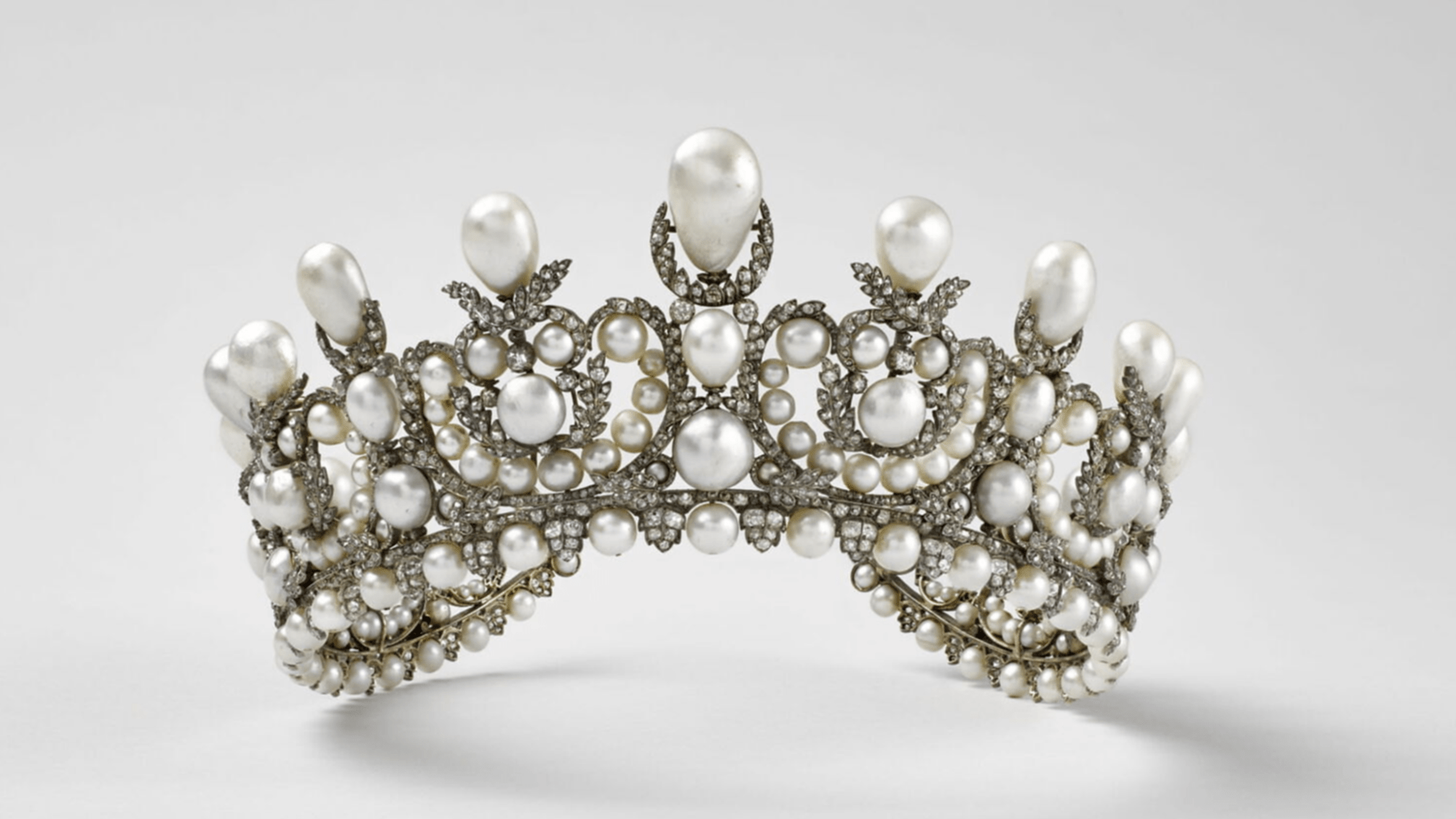
Diadème de l’impératrice Eugénie. Photos courtesy of the Musée du Louvre/Domaine public.
As I reported on Sunday, October 19, 2025, at around 9:30 a.m., thieves broke into the Galerie d’Apollon at the Musée du Louvre in Paris, stealing eight historical pieces from the Joyaux de la Couronne de France.
Among the stolen items were a diadème from the parure once belonging to Queen Marie-Amélie, later passed through her descendants, and Empress Eugénie’s diadème, consisting of diamonds and emeralds. The Couronne de l’Impératrice Eugénie, set with 1,354 diamonds and 56 emeralds, was later recovered outside the museum, damaged after being dropped during the escape.
According to investigators from the Préfecture de police de Paris and the police judiciaire, the assailants used a truck-mounted platform to reach an upper-floor window under renovation, forced entry, smashed several vitrines, and fled on motorbikes. The entire operation reportedly lasted between four and seven minutes.
Le ministre de l’Intérieur, Laurent Nuñez, confirmed that eight pieces were taken from a collection associated with Emperor Napoléon III and Empress Eugénie. According to an official communiqué from le Ministère de la Culture de la République française, the following pieces of the Joyaux de la Couronne de France were stolen:
Diadème de la parure de la reine Marie-Amélie et de la reine Hortense
Collier de la parure de saphirs de la reine Marie-Amélie et de la reine Hortense
Boucle d’oreille (d’une paire) de la parure de saphirs de la reine Marie-Amélie et de la reine Hortense
Collier en émeraudes de la parure de Marie-Louise
Paire de boucles d’oreilles en émeraudes de la parure de Marie-Louise
Broche dite broche reliquaire
Diadème de l’Impératrice Eugénie
Grand nœud de corsage de l’Impératrice Eugénie (broche)
In a statement, le ministre de l’Intérieur described the stolen items as possessing “une valeur patrimoniale et historique inestimable.” A full investigation has been launched by le parquet de Paris for organised theft and criminal conspiracy.
The Musée du Louvre and le Ministère de l’Intérieur are working closely with the Brigade de Répression du Banditisme (BRB), the specialised art-crime unit, which is reviewing CCTV footage and forensic evidence to determine whether the robbery involved insider coordination or prior surveillance.
Jean-Carl Pierre Marie d’Orléans, Comte de Paris, born May 19, 1965, in Boulogne-Billancourt, is the Head of the Maison d’Orléans, a cadet branch of the former French royal family descended from King Louis-Philippe I, who reigned from 1830 to 1848. Considered by Orléanist monarchists as the principal claimant to the historical throne of France, the Comte issued a statement:
“It is with immense sadness that I learned of the theft of historic jewels at the Louvre, among them the sapphire diadème and parure of Queen Marie-Amélie, which also once belonged to my grandmother.
These jewels are not merely family heirlooms, they are a living part of our national history, a testament to the elegance and craftsmanship of our country.
Their disappearance deeply saddens me and, I believe, represents a painful loss for the French people.
I wish to express my support for the authorities and the teams at the Musée du Louvre who are working to recover them.
I call on everyone to recognise how vital it is to protect these precious witnesses of our history, which connect us to what is noble and timeless about France. To protect our heritage is to honour our shared memory and serve our country.”
Prince Joachim Charles Napoléon Murat, born May 3, 1973, in Neuilly-sur-Seine, is heir apparent to the Maison Murat. He is descended from Marshal Joachim Murat, King of Naples and brother-in-law of Emperor Napoléon I. The Prince represents the Napoleonic legacy within France’s historic nobility. In his statement, he noted that:
“It is with immense sadness and deep indignation that I learned of the theft of the imperial jewels stolen this morning at the Musée du Louvre.
These diadèmes, colliers and parures belonging to Napoléon Iᵉʳ, Joséphine, Marie-Louise and Empress Eugénie are not mere works of art, they belong to France, to its people, to each of its children.
Created by the greatest goldsmiths in our history, these jewels embody the French genius, its taste for beauty and the sublime. By stealing them, it is not only precious stones that have been taken from a display case, it is a part of our national soul that has been stripped away.
This heinous act does not wound one family, one institution, or one era; it wounds all French people. For this heritage is our common good. I call upon the authorities and all defenders of heritage to bring these treasures back to their rightful place, that of the French people.”
Princess Yasmine Murat, wife of Prince Joachim Murat, also issued a statement expressing her sorrow:
“I express my deep sadness following the theft of Napoleonic jewels that occurred today at the Musée du Louvre.
I am affected not only as a member of the Imperial family but above all as a Frenchwoman, deeply attached to our history and to those who keep it alive, and to our national treasures.
Like all lovers of heritage throughout the world, I feel profound sorrow at this assault on what unites us, memory and beauty.”
Speaking to French media outlets, Dutch art historian and art crime detective, Mr. Arthur Brand, often referred to as “the Indiana Jones of the art world,” described the theft as a race against time.
“These crown jewels are so famous, you just cannot sell them,” he said. “The only thing they can do is melt the silver and gold down, dismantle the diamonds. That’s the way they will probably disappear forever. They have a week. If they catch the thieves, the pieces might still be there. If it takes longer, the loot is probably gone and dismantled. It’s a race against time.”
As of Monday evening, the Musée du Louvre remains closed while investigators continue to review surveillance footage and follow leads.
The ministre de l’Intérieur, Laurent Nuñez, described the raid as “une opération professionnelle visant des objets d’une valeur patrimoniale inestimable,” while the Ministère de la Culture, Rachida Dati, affirmed that the government would take “toutes les mesures possibles” to recover the stolen works and reinforce protection for national heritage.
Meanwhile, INTERPOL has now listed the jewels stolen from the Musée du Louvre in its Stolen Works of Art database, marking an escalation in the international investigation and highlighting the global urgency to recover France’s missing crown jewels.
Jean, Comte de Paris, the head of the Maison d’Orléans
Prince Joachim Charles Napoléon Murat, the heir apparent to the Maison de Murat.







 The Royal Correspondent