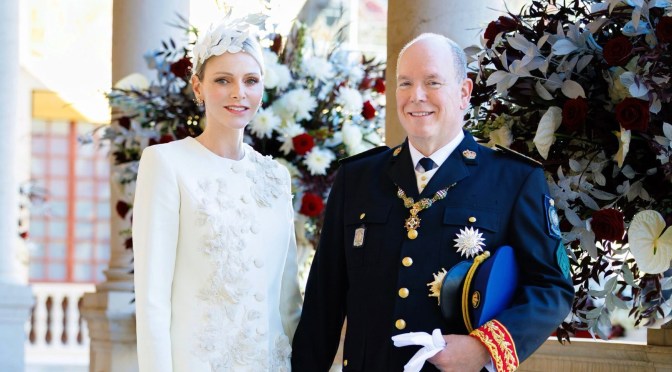
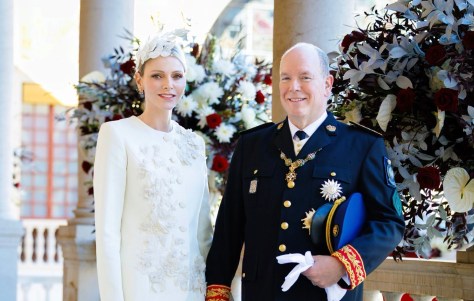
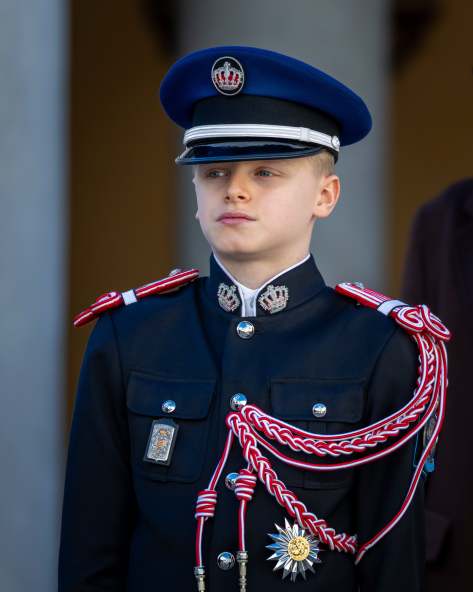
His Serene Highness Prince Albert II of Monaco has announced plans to revise the Principality of Monaco’s regency arrangements, entrusting Her Serene Highness Princess Charlene of Monaco with the exercise of sovereign authority should he die or become unable to reign while His Serene Highness Hereditary Prince Jacques of Monaco remains a minor.
The Sovereign Prince made the announcement in his annual Fête Nationale Monégasque interview with Monaco-Matin, published on November 19th. He said a new Sovereign Ordinance would be finalized before the end of the year to amend the existing regency provisions.
Under the proposed arrangement, Princess Charlene would be directly entrusted with the regency. She would be supported by a restructured Regency Council, which she would chair.
“I will soon be 69,” Prince Albert II said. “Hereditary Prince Jacques, who is called upon to succeed me, is still young. But rest assured, I simply want to plan ahead calmly and transparently.”
“In this context, a new ordinance will be finalised by the end of the year to confirm the changes to the Regency text,” he continued. “It will be entrusted to my wife, Princess Charlene, who will be able to rely on a restructured Regency Council, which she will chair.”
The Sovereign Prince said there was no urgency behind the proposal, but that it was time to review the existing legislation in its entirety.
What would change
The Constitution of the Principality of Monaco establishes that the Sovereign Prince may exercise sovereign powers upon reaching the age of 18. It further provides that the organization and conditions of a regency, whether during the Sovereign Prince’s minority or in the event of his inability to exercise his functions, are governed by the Statutes of the Sovereign Family.
Those statutes were established by Sovereign Ordinance No. 5,344 of June 2nd, 2015, and amended by Sovereign Ordinance No. 9,389 of July 29th, 2022.
Under the current framework, if the Sovereign Prince dies or abdicates while the Hereditary Prince is still a minor, the regency is exercised by the Regency Council. The same applies if the Sovereign Prince is permanently unable to perform his duties and no delegation of authority has been made.
The Regency Council is chaired by the spouse of the Sovereign Prince, provided they are not legally or factually separated. Its other members include the President of the Council of the Crown, the Secretary of State, the President of the Council of State and four additional members appointed by Sovereign Decision. The president holds the casting vote in the event of a tie.
During a regency, the minor Sovereign or incapacitated reigning Prince retains sovereignty. The Regency Council exercises sovereign powers in that person’s name.
Prince Albert II’s proposal would alter that balance. Rather than leaving the exercise of sovereign authority to the council collectively, it would place the responsibility directly with Princess Charlene. The restructured council would provide support, but would no longer be the primary body exercising the regency.
No change to the succession
The proposed reform would not alter Hereditary Prince Jacques’s place in the line of succession.
Hereditary Prince Jacques, who will turn 12 in December, remains first in line to the Monégasque throne. Under Article 11 of the Constitution of the Principality of Monaco, he will reach the age of majority for the exercise of sovereign powers at 18.
If Prince Albert II were to pass away or become permanently incapacitated before then, Hereditary Prince Jacques would succeed to the throne, subject to the constitutional provisions governing a regency. Princess Charlene would exercise sovereign authority as Regent on his behalf until he attained the constitutional age of majority.
The announcement therefore concerns the practical exercise of sovereign authority during a Regency, rather than a change to the order of succession.
A recent precedent
The Principality of Monaco has confronted the question of regency within recent years.
In March 2005, as the health of Prince Rainier III deteriorated, the Crown Council established that the Sovereign was unable to perform his duties. Hereditary Prince Albert, the present Prince Albert II, was appointed Regent and assumed the duties of Head of State.
Prince Rainier III passed away on April 6th, 2005, after a reign of almost 56 years. Prince Albert II succeeded him immediately as Sovereign Prince.
That episode demonstrated the importance of clear constitutional arrangements at a moment of uncertainty. It also provides the immediate context for Prince Albert II’s decision to address the question of regency well before any such situation might arise.
Constitutional continuity
The Principality of Monaco’s current Constitution dates from 1962 and was revised by Law No. 1,249 of April 2nd, 2002. Article 11 sets the age of majority for the exercise of sovereign powers at 18 and delegates the detailed regulation of regency to the Statutes of the Sovereign Family.
The forthcoming ordinance is expected to amend those statutes once again.
Its effect would be to establish a more clearly defined role for Princess Charlene in the Principality of Monaco’s constitutional continuity. Should the need ever arise, she would assume responsibility for exercising sovereign authority during her son’s minority, supported by a restructured Regency Council.
For a Principality whose political stability has long been closely tied to the continuity of the Grimaldi dynasty, the proposed reform represents a significant, though carefully framed, modernization of the arrangements governing a future regency.

