Tag Archives: Royal Family of Belgium

Prince Emmanuel of Belgium Changes Course of Study, Continues His University Education in Brussels, the Palace Confirms

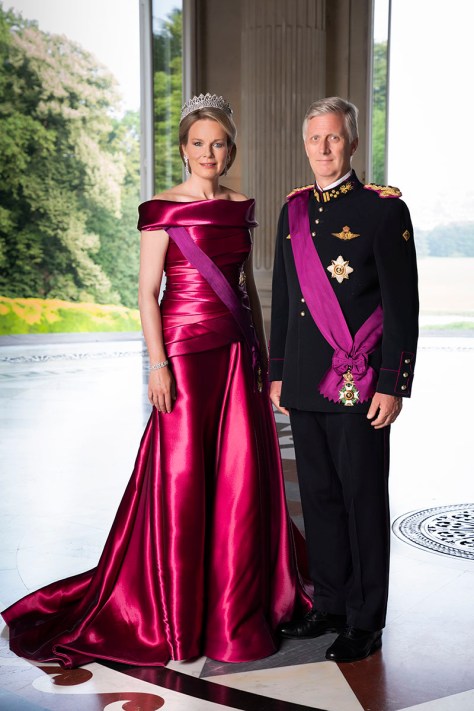
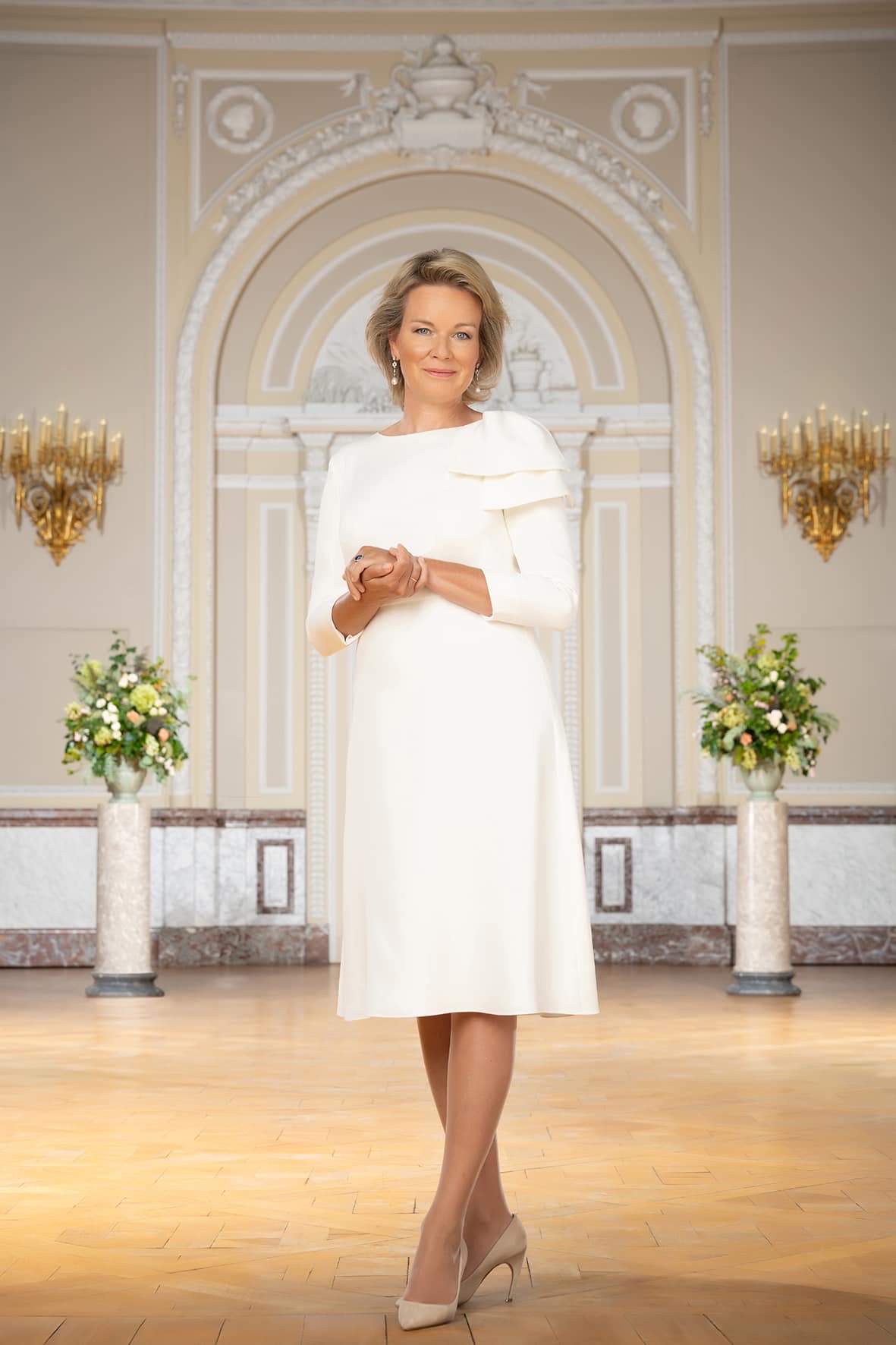
Portrait courtesy of Monarchie Belge/Bas Bogaerts

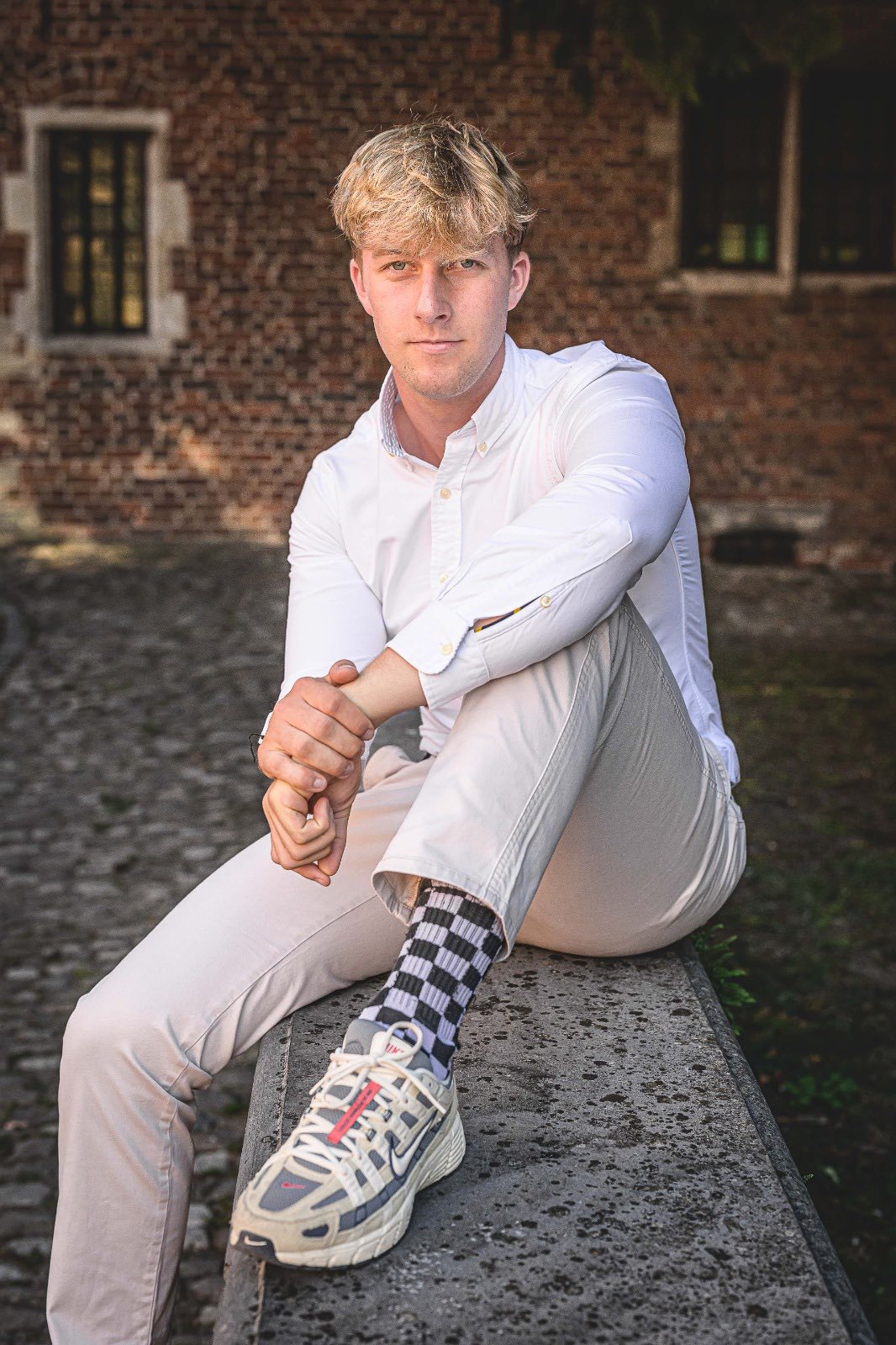
In Brussels, the Palais Royal de Bruxelles has confirmed that His Royal Highness Prince Emmanuel of Belgium has changed his course of study and will continue his education in the Belgian capital.

The 20-year-old son of Their Majesties King Philippe and Queen Mathilde of the Belgians has withdrawn from UC Leuven-Limburg (UCLL) in Leuven after completing his first semester, where he had been pursuing a bachelor’s degree in International Business Management and Marketing, taught in English.

Prince Emmanuel has since enrolled in a French-language program in business development at ISTEC Bruxelles, École supérieure de commerce et de marketing, where he is following the program, “chargé d’affaires commerciales.” The course is understood to offer a more practical, hands-on approach, including opportunities for professional placements.

According to the Palais Royal, the transition was carried out discreetly and reflects a personal decision by the Prince following a reassessment of his academic direction. Despite the change, Prince Emmanuel’s studies are expected to proceed without delay, provided he completes his examinations by the end of the academic year.

Belgian State Visit to Norway Begins as Crown Princess Mette-Marit of Norway Makes Unscheduled Appearance

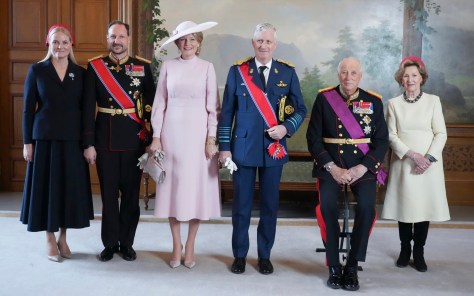
In Oslo, Their Majesties King Harald V and Queen Sonja of Norway hosted an incoming state visit from Their Majesties King Philippe and Queen Mathilde of the Belgians at the Royal Palace, marking the first state visit between the two kingdoms in nearly three decades.

The visit, which includes engagements in Oslo and Stavanger, is centered on cooperation in energy, defense, and broader multilateral priorities. Norway remains a key energy supplier to Belgium, and both countries maintain close coordination as NATO allies.

Their Majesties the King and Queen of the Belgians were formally welcomed at the Royal Palace with full state honours, including the playing of national anthems, an inspection of the King’s Guard of Honor, and the presentation of official delegations.

Once inside the Royal Palace, Their Majesties held a private meeting, described by the Royal Court as a “tête-à-tête,” ahead of the exchange of gifts.

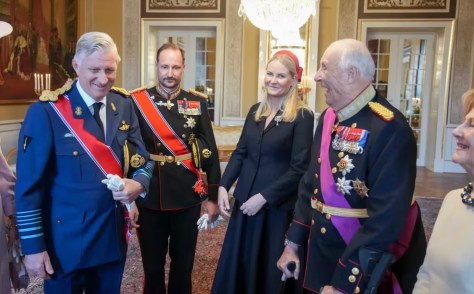
Her Royal Highness Crown Princess Mette-Marit of Norway appeared during the indoor program at the Royal Palace, joining Their Majesties King Harald V and Queen Sonja and His Royal Highness Crown Prince Haakon of Norway for official photographs. Her attendance had not been listed in the official press release from the Royal Court of Norway.

The appearance comes days after an interview broadcast by NRK (Norsk rikskringkasting) that prompted widespread criticism in Norway, in which the Crown Princess addressed her past associations with Jeffrey Epstein.

Later in the day, Their Majesties the King and Queen of the Belgians, accompanied by the Crown Prince of Norway, laid a wreath at the National Monument at Akershus Fortress in tribute to those who lost their lives during the Second World War.

A state banquet hosted by Their Majesties the King and Queen of Norway is scheduled to take place at the Royal Palace this evening, bringing together members of the Belgian delegation and representatives of Norwegian public life.

King Philippe and Queen Mathilde of the Belgians to Host a State Visit by Emperor Naruhito and Empress Masako of Japan Marking 160 Years of Diplomatic Relations

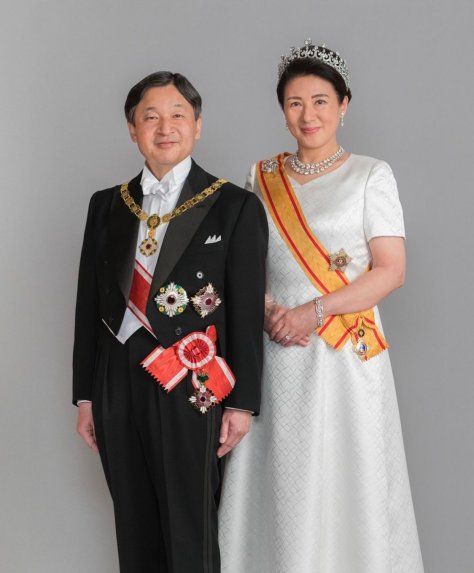
On Thursday, the Government of Japan announced that Their Majesties King Philippe and Queen Mathilde of the Belgians will host an incoming state visit from Their Imperial Majesties Emperor Naruhito and Empress Masako of Japan in mid to late June 2026.

The visit will take place on the occasion of the 160th anniversary of the establishment of diplomatic relations between the Kingdom of Belgium and Japan.

In a statement issued by the Chief Cabinet Secretary of the Government of Japan, Minoru Kihara, noted that exchanges between the Imperial Family of Japan and the Royal Family of Belgium have long played an important role in strengthening the close and friendly relations between the two countries. He added that preparations for the visit are proceeding following repeated invitations extended by the Government of the Kingdom of Belgium.

Diplomatic relations between the Kingdom of Belgium and Japan date back to  August 1st, 1866, when the two countries signed the Treaty of Amity, Commerce and Navigation. The agreement was concluded during the final years of the Tokugawa period, at a time when Japan was establishing formal diplomatic and commercial relations with a number of Western countries following the end of its long period of relative isolation.

The Kingdom of Belgium was among the early European countries to establish sustained diplomatic ties with Japan. In the decades that followed, relations between the two countries expanded through diplomacy, trade, and cultural exchange.

In October 1921, His Imperial Highness Crown Prince Hirohito of Japan, the future Emperor Hirohito, visited the Kingdom of Belgium during his tour of Europe. During the visit, the Crown Prince was received by King Albert I and Queen Elisabeth of the Belgians.

Exchanges between the Royal Family of Belgium and the Imperial Family of Japan have continued as part of the broader diplomatic relationship between the two countries. The forthcoming visit by Emperor Naruhito and Empress Masako will mark the latest chapter in those relations.

Queen Mathilde of the Belgians Visits Major Renaissance Art Exhibition at Brussels’ Palais des Beaux-Arts

Portrait courtesy of La Monarchie Belge

In Brussels, Her Majesty Queen Mathilde of the Belgians visited the Palais des Beaux-Arts this afternoon to view the exhibition Bellezza e Bruttezza: Beauty and Ugliness in the Renaissance.

The exhibition examines how artists in Italy and Northern Europe during the 15th and 16th centuries explored contrasting ideals of beauty and ugliness in their work. Through paintings, drawings, and other artworks, the exhibition traces how artistic representations evolved from the late 15th century through the end of the 16th century, a period of significant cultural and artistic transformation in Europe.

During the Renaissance, standards of beauty increasingly became a subject of social interest, reflected in the growing number of 16th century publications offering advice on cosmetics, appearance, and personal care. At the same time, artists also experimented with depictions of ugliness and the grotesque, presenting exaggerated or unconventional features in ways that reflected both humor and social commentary.

The exhibition brings together works by several major Renaissance artists, including Sandro Botticelli, Titian, Tintoretto, Leonardo da Vinci, Michelangelo, Lucas Cranach the Elder, and Quentin Massys, among others.

Bellezza e Bruttezza: Beauty and Ugliness in the Renaissance is on display at the Palais des Beaux-Arts in Brussels until June 14th, 2026.

Her Majesty Queen Mathilde of Belgium Tests Positive for COVID-19.

Photo courtesy of the Belgian royal court

This afternoon the Belgian royal court announced that Her Majesty Queen Mathilde of Belgium has tested positive for COVID-19. At this time, Her Majesty “…is doing well and is following the recommendations of her doctor.”

Her Majesty has canceled all of her engagements for the next week.

This is the second time in one week that a monarch has tested positive for COVID-19. Last week, His Serene Highness Prince Albert II of Monaco tested positive and was Asymptomatic.

Wishing Her Majesty a speedy recovery!

Her Majesty Queen Mathilde of Belgium Gives a Speech During the Sustainable Value Chains: From Legislation to Action, Conference.

On Thursday, March 31, 2022, Her Majesty Queen Mathilde of Belgium, in her capacity as an Advocate of the United Nations Sustainable Development Goals, gave a speech during the Sustainable Value Chains: From Legislation to Action conference organized by The Shift, a Belgian platform for a sustainable economy and society in Brussels.

The purpose of yesterday’s conference was to show how companies, NGPs, and public institutions can complement each other to set up value chains that protect human rights and the environment and thus contribute to sustainable development.

Below is Her Majesty Queen Mathilde of Belgium’s speech:

Madam Minister,
Ladies and Gentlemen,

When the international community adopted Agenda 2030 and the United Nations Sustainable Development Goals, in 2015, it gave itself a mission: to work together for a transition towards a more sustainable world. A transition that would benefit people and the planet. A transition that would put in motion the reduction of poverty and inequalities, and guarantee a life of dignity for all. A transition that would bring back balance in climate, in biodiversity, in water resources and oceans.  And, in so doing, do no harm, protect the rights of every individual, leave no one behind and respect the planetary boundaries. 

Understanding and keeping in mind the interconnectedness between all the SDGs is a precondition for fulfilling Agenda 2030. The SDGs provide a global and integrated vision to ensure that economic, social and environmental policies take into account the needs of all countries and all population groups, as well as the urgency of restoring the health of the planet. The SDGs are, therefore, a very useful and practical reference for policymaking and business-planning, as well as consumer practices. Since their adoption, a variety of stakeholders have worked diligently to produce practical instruments to assist decision-makers, at all levels, in this regard. Today’s event is a welcome contribution to this overall effort.

We are increasingly aware that the economic and commercial decisions and actions of one country or region can have consequences for populations or the environment on the other side of the earth. With this realization comes greater responsibility in making economic choices, adapting production and consumption patterns, and changing the behavior of companies and consumers. Indeed, the wide lens of the SDGs allows us to look beyond borders. They allow us to distinguish which actions may have a negative impact on the capacity of other – often poorer – countries to reach these objectives. Greenhouse gas emissions have dramatic consequences in terms of desertification and sea level rise worldwide. Commodity agriculture for exportation relies, in some cases, on dramatic deforestation. Affordable goods in developed countries may be the product of unsatisfactory work conditions, and even child or forced labor elsewhere. This spillover effect blurs the picture of our achievements as well as the evaluation of the real costs. We must ensure, too, that the way we implement the SDGs at a national or regional level helps other economies and communities to work towards these goals.

As you will discuss today, transparent and sustainable value chains have an important role to play in this respect. Of course, many international instruments, developed to guarantee the protection of human rights and the environment in the supply chain, predate the adoption of the SDGs. Nevertheless, they are based on the same principles and concerns, and they are now part of the general effort to push forward Agenda 2030, to which they are clearly related. They encompass, for instance, rolling back poverty, guaranteeing access to quality education, healthcare, decent employment, adequate housing, safe water and land, and promoting women’s empowerment. Moving from principle to practice to create and maintain sustainable value chains requires legal rules, transparency, responsibility, and due diligence. For smaller companies the task might sometimes look complex and arduous. Exchanging best practices and sharing experience, as you will today, is one way to help close the gap. Cooperation with local actors will be key. Hopefully, non-governmental organizations and consumers will continue to be demanding – but constructive – partners and sounding boards, in the common effort to establish value chains that contribute to the implementation of the SDGs.

I thank you.”
TMs King Philippe and Queen Mathilde of Belgium Host a State Visit in Brussels.

On Monday, March 21, 2022, Their Majesties King Philippe and Queen Mathilde of Belgium welcomed the President of the Republic of Austria, His Excellency Alexander Van der Bellen, and First Lady Her Excellency Mrs. Doris Schmidauer, to the Palais Royal in Brussels. President Van der Bellen and his wife were invited to Belgium for a three-day state visit. This is the first state visit between Austria and Belgium since 1997, but also the first incoming state visit to Belgium since the start of the COVID-19 pandemic in 2020.

After warm greetings were given and the Belgian as well as Austrian national anthems were played His Majesty King Philippe and President Van der Bellen, per tradition, participated in inspecting the Guard of Honor.

This evening there will be an official state dinner at Château de Laeken.

Click the link below to view a photo gallery from PPE:

Photos courtesy of the Belgian Royal Court