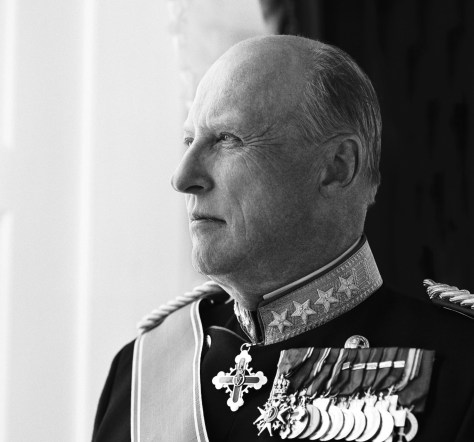
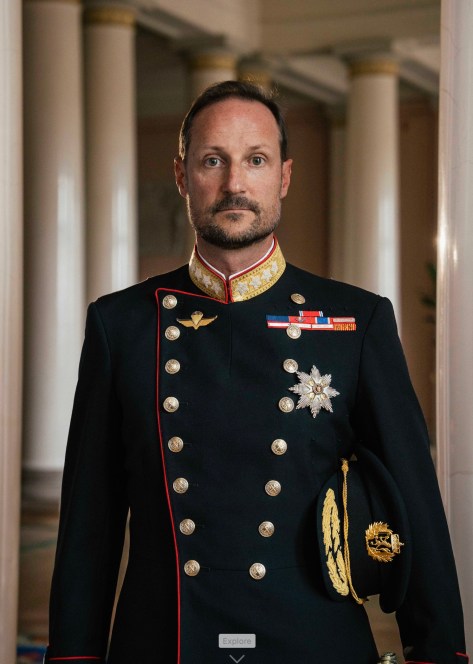
In Oslo, the Royal Court of Norway announced that His Majesty King Harald V of Norway passed away peacefully at 6:35 a.m. at Rikshospitalet. He was 89 years old.
The King had been admitted to the hospital on Monday, Aug. 17th, following a medical examination. In the weeks before his admission, he had been receiving cortisone treatment for hemolytic anaemia. The treatment caused fluid accumulation in his body and required hospital care.
On Sunday, Aug. 23rd, the Royal Court announced that the King’s health had deteriorated over the weekend. He was receiving antibiotics for a bacterial infection in his bloodstream. The Royal House said at the time that he had responded to treatment and that his condition was stable.
On Thursday, Aug. 27th, the Royal Court announced that the King’s condition had deteriorated further and described it as “very serious.”
Following the King’s death, Crown Prince Haakon acceded to the throne. During an extraordinary Council of State meeting at the Royal Palace in Oslo, he announced that he would reign as His Majesty King Haakon VIII of Norway and retain the motto Alt for Norge (All for Norway).
King Haakon VIII, with Her Royal Highness Crown Princess Ingrid Alexandra of Norway at his side, formally informed the Council of State of his father’s death.
“Prime Minister and Ministers,
It is my duty to inform the Council of State that my dear father, His Majesty King Harald V, died today, 28 August 2026, at 06:35, and that in accordance with the provisions of the Constitution, I have assumed the government as King of Norway.
I will take the name Haakon VIII and will continue the same motto that my father, grandfather and great-grandfather chose: ‘Alt for Norge.’”
King Haakon VIII is scheduled to take the constitutional oath before the Storting on Tuesday, Sept. 1st, at 1 p.m.
Article 9 of the Constitution of the Kingdom of Norway provides that the King must promise and swear to govern the Kingdom of Norway in accordance with its Constitution and laws.
If the Storting is not sitting when the King assumes the throne, the oath is submitted in writing during a Council of State meeting and repeated solemnly before the Storting at its first subsequent session.
With the constitutional succession now underway, the Kingdom of Norway is preparing to bid farewell to one of the longest-serving monarchs in its modern history. His Majesty King Harald V’s life was shaped by war, exile, duty, family, sport and an unwavering commitment to his country.
The King’s Life
Born Prince Harald on Feb. 21st, 1937, at Skaugum, outside Oslo, he was the only son of Crown Prince Olav, later King Olav V, and Crown Princess Märtha of Norway. He was also the grandson of King Haakon VII.
For his first few years, Prince Harald lived a relatively peaceful life with his elder sisters, Princess Ragnhild and Princess Astrid. That peace ended on April 9, 1940, when Nazi Germany invaded the Kingdom of Norway.
The royal family was forced to leave the country. Crown Princess Märtha took Prince Harald and his sisters first to Sweden and later to the United States, where they spent much of the Second World War in exile.
The Kingdom of Norway was liberated on May 8th, 1945. One month later, on June 7th, 8-year-old Prince Harald returned to Oslo with King Haakon VII, his mother and his sisters. They were welcomed by Crown Prince Olav and large crowds of Norwegians.
That homecoming became one of the defining experiences of Prince Harald’s childhood.
Prince Harald later attended schools in Oslo, received military training and studied political science, economics and history at Balliol College, University of Oxford.
On Sept. 21st, 1957, King Haakon VII died. Prince Harald became Crown Prince of Norway, while his father acceded to the throne as King Olav V of Norway.
As Crown Prince, Harald gradually assumed official responsibilities and represented the Kingdom of Norway at home and abroad.
On Aug. 29th, 1968, Crown Prince Harald married Miss Sonja Haraldsen at Oslo Cathedral. Their marriage was regarded as a significant moment for the Norwegian monarchy because Miss Haraldsen came from outside a royal or aristocratic family.
The couple had two children: Princess Märtha Louise and Prince Haakon, later Crown Prince Haakon.
Crown Prince Harald became King of Norway on Jan. 17th, 1991, following the death of his father. Four days later, on Jan. 21st, he swore an oath to uphold the Constitution of the Kingdom of Norway.
On June 23rd, 1991, King Harald V and Queen Sonja were consecrated at Nidaros Cathedral in Trondheim. He adopted the same motto as his father and grandfather: Alt for Norge.
Throughout his life, King Harald V was known for his love of sailing and the outdoors. He represented Norway at three Olympic Games and continued to compete in sailing events for many years.
For more than three decades, King Harald V served as Norway’s head of state. His reign was marked by a steady public presence, a close connection with the Norwegian people, and a deep sense of duty to his country.
King Harald V’s final public appearance was on July 13th, 2026, when he hosted a reception for the Norwegian Men’s National football team in the Small Banqueting Hall at the Royal Palace in Oslo. The reception followed the team’s historic World Cup achievement.
King Harald V is survived by his wife, Queen Sonja, their daughter, Princess Märtha Louise, their son, King Haakon VIII, his five grandchildren; and his sister, Princess Astrid, Mrs. Ferner.
King Harald V’s life spanned war and peace, exile and royal service. At the centre of it all was the promise expressed in his royal motto Alt for Norge.

