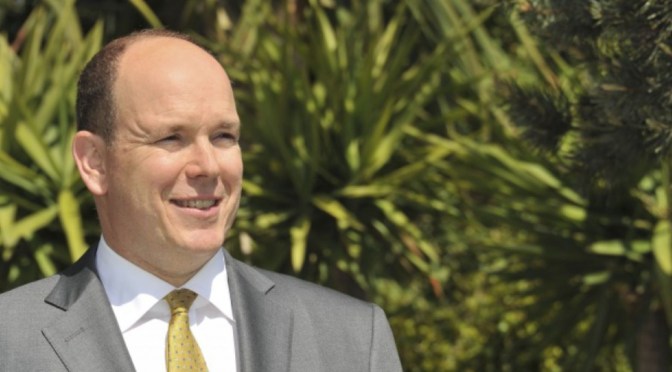
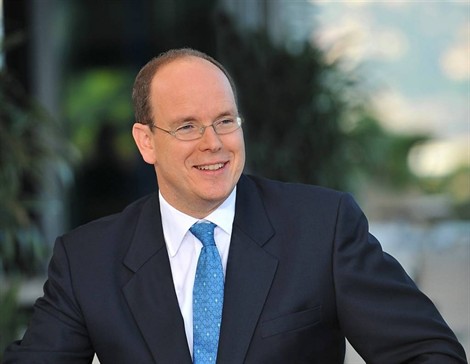
On the morning of June 16, 2013, His Serene Highness Prince Albert II of Monaco attended the 3rd Edition of the Women’s Fx Pro Monte-Carlo Beach Volleyball tournament at Larvotto Beach in Monaco. Click hereto watch an incredibly silly video from Monaco Matin of women wearing unflattering bikinis whilst dancing in the sand for no apparent reason, and a 45 second shot of Prince Albert looking rather embarrassed.
Moving on…
In the early evening the sovereign prince arrived in Taormina, Italy to attend the 59th Edition of the Taormina Film Fest. During this evening’s event Prince Albert II received the Taormina Humanitarian Award for “…his efforts to protect the global environment and to promote scientific research…” as well as for being his awesome self.
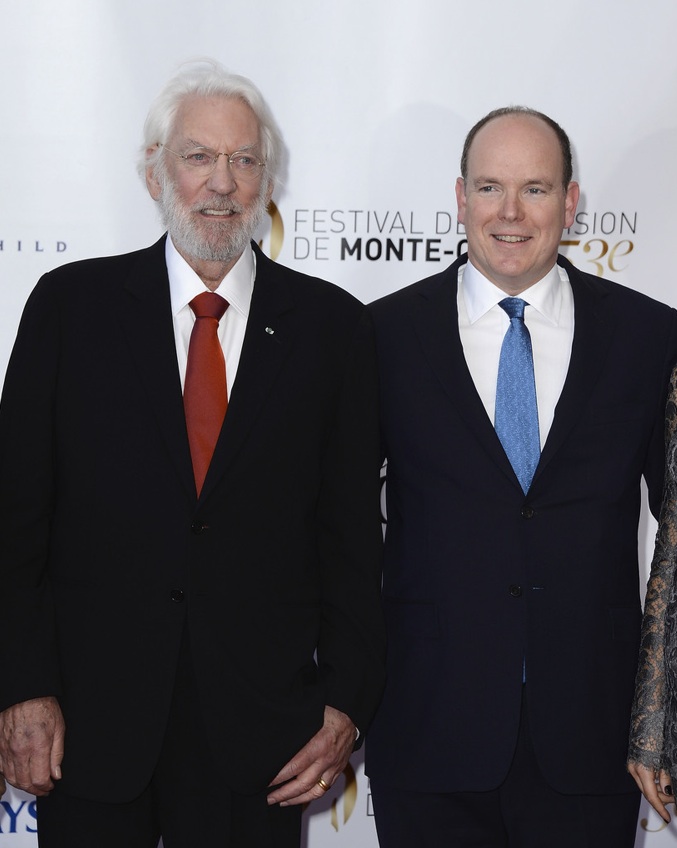
On the evening of June 13, 2013, His Serene Highness Prince Albert II of Monaco arrived at the Grimaldi Forum in Monaco to attend the closing ceremony of the 53rd Festival de Télévision de Monte-Carlo.
According to various sources during tonight’s event the U.S. television shows “…Breaking Bad, Modern Family, and The Big Bang Theory…” were presented with Golden Nymph Award.
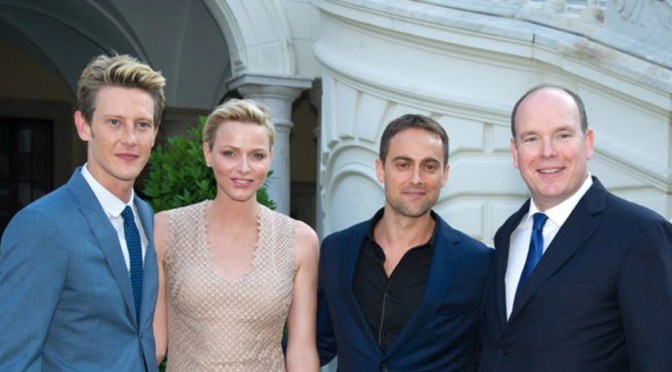
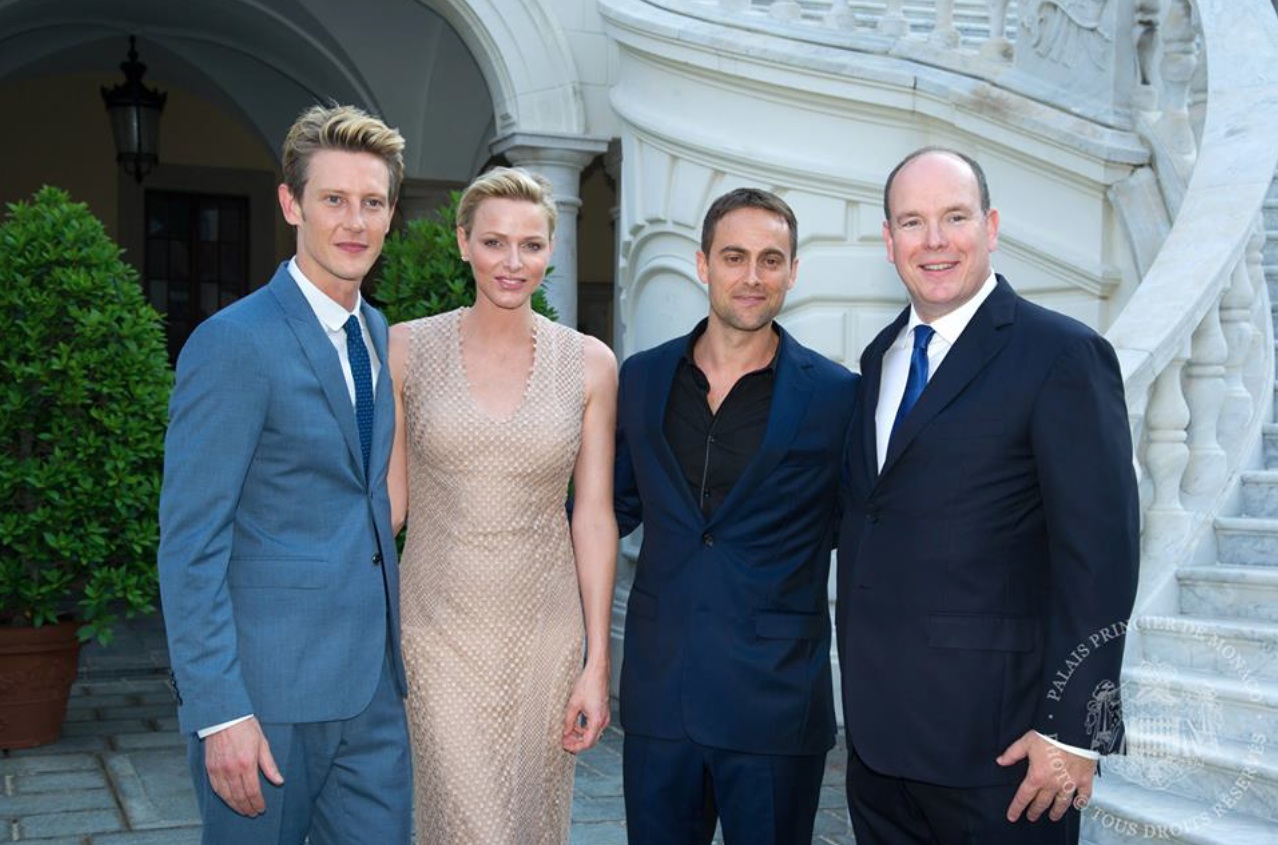
On the evening of June 12, 2013, Their Serene Highnesses Prince Albert II and Princess Charlene of Monaco hosted a gala reception at the courtyard of the Palais Princier for those attending the 53rd Festival de Télévision de Monte-Carlo.
The sovereign prince is Honorary President of the festival which ends this evening at the Grimaldi Forum.
And, finally, on June 11, 2013, His Serene Highness Prince Albert II of Monaco held an audience at the Palais Princier with painter and sculptor, Ms. Anna Chromy. During the meeting the sovereign prince was presented with the Chromy Award for his dedication to the “…preservation of the oceans and sustainable development…” For more information about Tuesday’s meeting please click here.
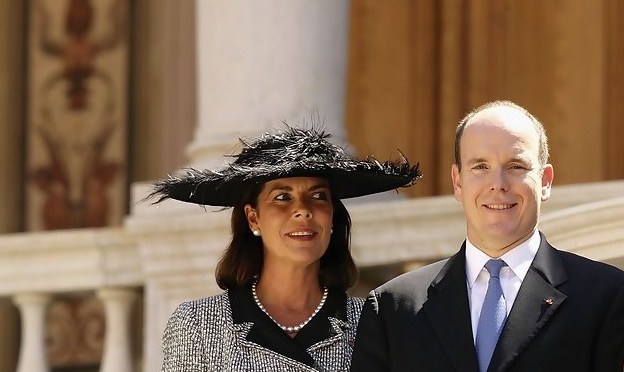
On June 11, 2013, His Serene Highness Prince Albert II of Monaco accompanied by Her Royal Highness Princess Caroline of Hanover attended the renaming and inauguration of the building Espace Leo Ferré. The building was renamed in honor of the late Monégasque composer and poet, Mr. Leo Ferré, who passed away on July 14, 1993, at the age of 76.
And, finally, last week the sovereign prince gave an interview with the International Atomic Energy Agency (IAEA) regarding “…his passion for the oceans and his on-going support of the IAEA’s ocean protection activities.” Here is what he had to say:
Where does your passion for marine protection come from?
There’s obviously some family heritage here. My great-grandfather, Prince Albert I, had an incredible vision for sciences in general but for oceanography in particular. His wonderful work in this field left us with his legacy in the form of the Monaco Oceanographic Museum. But of course this interest also comes from my father, Prince Rainer III, and the many marine protection initiatives he led, primarily in the Mediterranean Sea.
Did growing up next to the sea encourage you to protect it?
Obviously, the more you know the ocean or our sea here, the Mediterranean Sea, the more you want to protect it. Living near the sea and being exposed to it at a very young age can only entice you to learn more about it and find innovative ways of protecting it. Also the exceptional geographic situation of my country encouraged me to take a keen interest in the field of marine protection.
A year after your accession, in 2006 you founded your own foundation. What led you to this?
I was exposed to different environmental issues at a young age, but I think one of the turning points was the Post-Earth Summit in Rio in 1992 where I accompanied my father. Through attending this event, I became more aware of different environmental issues, not only concerning oceans but climate change, greenhouse gases and deforestation. Then I tried at my level and with our different organizations based here in Monaco to try to work more closely on these issues. But way before 2006, I wanted to create some kind of foundation, something more personal. I suppose after this Rio Summit I finally got the sense of urgency to do this, which had been building up over the years.
What is the main focus of the foundation?
The three main pillars are biodiversity, water and climate change. The three main regional areas that we’ve been trying to concentrate on are the Mediterranean Basin, the Least Developed Countries; this group includes a lot of African countries, and the Polar Regions. I’m very happy to see the way the foundation has developed over the last seven years. We’ve now been a part of over 230 projects in 40 different countries and have partnerships with many organizations, such as the UN Foundation, The Climate Group and the WWF.
You don’t just use your name and your title to draw attention to these issues you actually get first-hand experience of them. How important is this for you?
I think it’s extremely important. Not only to get a better knowledge of the different issues on the ground, but also to be able to meet the local populations we’re trying to help through these different programs, whether they are on land or sea. I don’t do it for myself. I do it because I’m interested and because I’m passionate about what I’m trying to achieve. But it’s also for the foundation, to get better visibility and to show that we’re following these different programs with all the attention they deserve.
How does your government support the work of the IAEA?
There is a long-standing collaboration between Monaco and the IAEA dating back to the early 1960s. We were collaborating through our scientific centre the CSM, the Monaco Science Centre, and it was decided that this cooperation could be even closer by the establishment of an IAEA marine laboratory. It’s now the IAEA Environment Laboratories that are here in Monaco. The research done there is absolutely tremendous and we’re very proud and honored to have this close partnership and it’s only going to develop even further in the future.
Why do you think it’s beneficial for the IAEA to have its Environment Laboratories here in Monaco?
We have a long history in marine sciences, so this makes us as credible as other locations that also do scientific research in this field. Because of this history and our teams of scientists at the Monaco Science Centre, we were able to establish this working cooperation with the IAEA. Also Monaco is a small country directly concerned by marine environmental problems, due to its position. Its size is an asset in testing out new environmental practices and implementing them. Furthermore, my country is apolitical. So, when we organize debates or conferences, we look to promote just a single interest, that of environmental protection. This is fundamental and lends credibility to our environmental approach on the international stage.
You also support the IAEA’s work in the field of research into ocean acidification. You led the Monaco declaration on ocean acidification in 2008. What was the purpose of this?
We wanted to draw international attention to ocean acidification. Increased CO2 emissions due to human activities represent a major threat to the marine environment. 50% of CO2 produced by humans over the last 200 years has been absorbed by the oceans. The higher the level of CO2 absorbed, the higher the level of ocean acidity. This acidification will upset the ocean balance and have a negative impact on biodiversity hotspots, the coral reef ecosystems for instance.
What was achieved by this declaration, have we moved on with our understanding of the issue?
I think the declaration and the meeting that lead to this declaration were of paramount importance. Not only to raise awareness of the issue, which very few people outside of the scientific community knew about, but also for us to get the stamp of approval from scientists from 26 different countries as to what the dangers are, to better identify the issues and to direct the research toward a better understanding of the dynamics of ocean acidification. I’m very happy to see that this declaration is considered to be a very important stepping stone towards a better awareness not only by the scientific community but by the general public as well.
Despite your efforts the seas are still being abused. Do you think this situation can really improve?
I think we are at a crossroads now and we have very little time to try to reverse these different trends that are affecting our seas and oceans – from ocean acidification to overfishing, excessive pollution and the non-treatment of different waste waters. Pressures on marine ecosystems are constantly growing, and the sustainable management of marine resources is now a major global issue. As global populations increase and most people live in urban areas that are on the coast, there is more and more pressure on the oceans. The consequences of climate change and ocean acidification further exacerbate the fragile balance of ocean ecosystems and biodiversity. My personal commitment and my Government’s policy is to work towards improving the situation.”
Interview courtesy of the official website of International Atomic Energy Agency (IAEA)
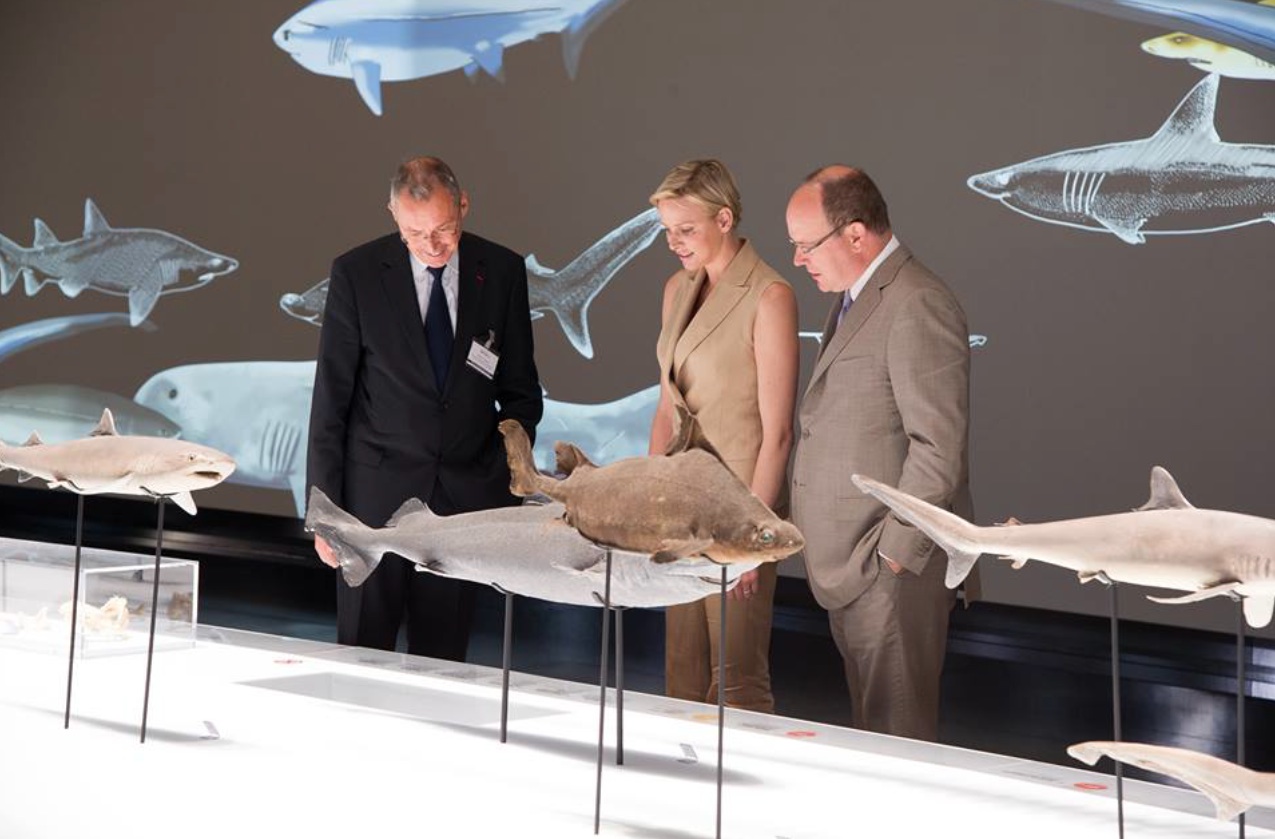
On Monday, June 10, 2013, Their Serene Highnesses Prince Albert II and Princess Charlene of Monaco arrived at the Musée Océanographique in Monaco to view the exhibition, Requins: Au-Delà du Malentendu.
Officially opened to the public on World Ocean Day (June 8) Requins: Au-Delà du Malentendu offers:
“…visitors a sensory exhibition of encounters with sharks. It is through this new visiting experience that the public will be invited to experience a genuine adventure to overcome its prejudices and discover the true nature of these lords of the seas.
In our imagination, the shark is often only a succession of frightening images, the heavy legacy of Hollywood thriller movies. By offering an exhibition on this theme, the Musée Océanographique is hoping to overcome that bad reputation. Much less lethal than jellyfish (50), mosquitoes (800,000) or road accidents (1.2 million), sharks kill fewer than 10 persons per year.
Essential for the health of ecosystems, these great predators are now under threat. Each year, more than 100 million sharks are killed by man. To raise the awareness of the general public about their protection, the Musée océanographique has chosen to appeal to emotion.”
For more information about Requins: Au-Delà du Malentendu please visit the Musée Océanographique’s official website here.
And, finally, late yesterday afternoon the sovereign prince visited theMonacology Village located at Port Hercule. The event “…held under the Monégasque Awareness Week children are able to learn more about the environment and sustainable development…” according to Monaco Matin.
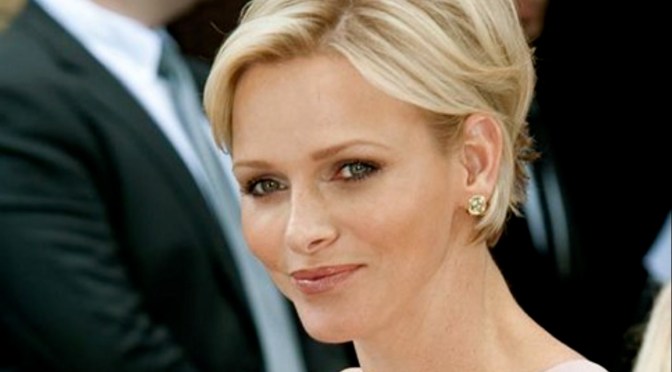
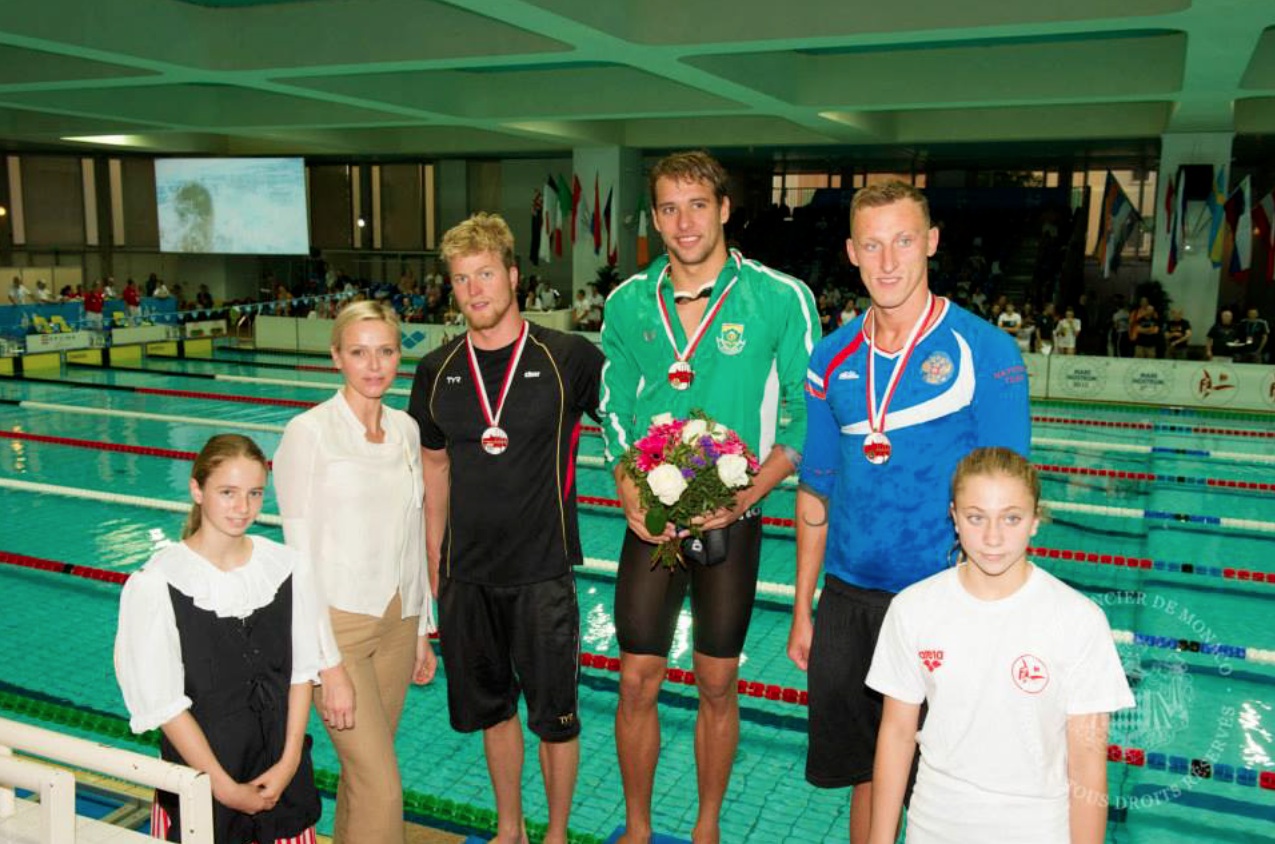
On Sunday, June 9, 2013, Her Serene Highness Princess Charlene of Monaco arrived at the Stade Louis II in Monaco to attend the final day of the 31st Edition Meeting International de Natation Mare Nostrum Monaco. Also in attendance was His Serene Highness Prince Albert II of Monaco.
On Sunday, June 9, 2013, His Serene Highness Prince Albert II of Monaco attended the opening of the 53rd Festival de Télévision de Monte-Carlo held at the Grimaldi Forum in Monaco. The sovereign prince is Honorary President.
The five-day festival was created in 1961 by the late Prince Rainier III of Monaco. It was his wish to “…encourage a new art form, in the service of peace and understanding between men andrecognize television as an exceptional means of bringing cultures together and enhancing their respective knowledge.”
 On the morning of June 16, 2013, His Serene Highness Prince Albert II of Monaco attended the 3rd Edition of the Women’s Fx Pro Monte-Carlo Beach Volleyball tournament at Larvotto Beach in Monaco. Click here to watch an incredibly silly video from Monaco Matin of women wearing unflattering bikinis whilst dancing in the sand for no apparent reason, and a 45 second shot of Prince Albert looking rather embarrassed.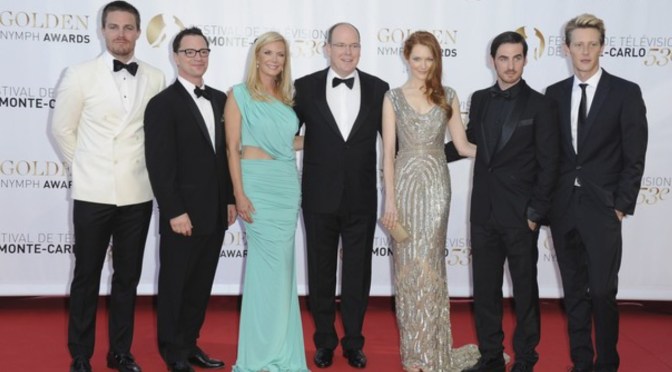

 The Royal Correspondent