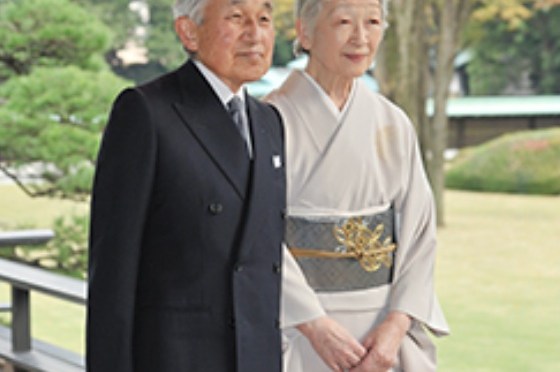
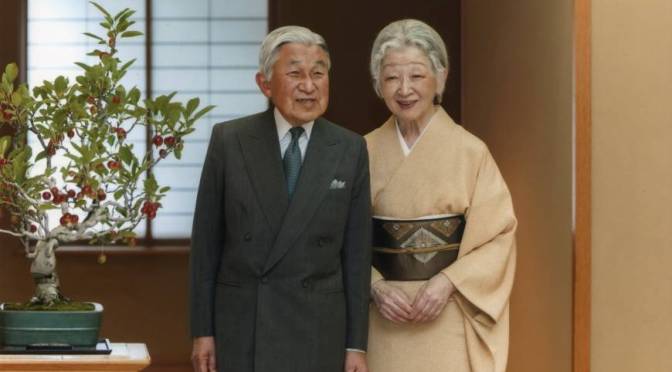
On Monday, August 15, 2016, Their Imperial Majesties Emperor Akihito and Empress Michiko of Japan arrived at the Nippon Budokan arena in Tokyo to attend a memorial service for war victims as well as to mark the 71st anniversary of the end of the World War II.
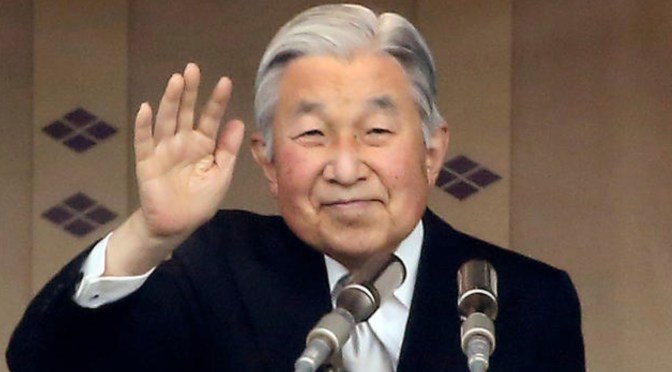
On Monday, August 8, 2016, His Imperial Majesty Emperor Akihito of Japan addressed the people — via a pre-recorded video message — of Japan hinting that he would like to abdicate the ancient Chrysanthemum Throne. Here is what the 82-year-old emperor had to say:
“A major milestone year marking the 70th anniversary of the end of World War II has passed, and in two years we will be welcoming the 30th year of Heisei.
As I am now more than 80 years old and there are times when I feel various constraints such as in my physical fitness, in the last few years I have started to reflect on my years as the Emperor, and contemplate on my role and my duties as the Emperor in the days to come. As we are in the midst of a rapidly aging society, I would like to talk to you today about what would be a desirable role of the Emperor in a time when the Emperor, too, becomes advanced in age. While, being in the position of the Emperor, I must refrain from making any specific comments on the existing Imperial system, I would like to tell you what I, as an individual, have been thinking about.
Ever since my accession to the throne, I have carried out the acts of the Emperor in matters of state, and at the same time I have spent my days searching for and contemplating on what is the desirable role of the Emperor, who is designated to be the symbol of the State by the Constitution of Japan. As one who has inherited a long tradition, I have always felt a deep sense of responsibility to protect this tradition. At the same time, in a nation and in a world which are constantly changing, I have continued to think to this day about how the Japanese Imperial Family can put its traditions to good use in the present age and be an active and inherent part of society, responding to the expectations of the people.
It was some years ago, after my two surgeries that I began to feel a decline in my fitness level because of my advancing age, and I started to think about the pending future, how I should conduct myself should it become difficult for me to carry out my heavy duties in the way I have been doing, and what would be best for the country, for the people, and also for the Imperial Family members who will follow after me. I am already 80 years old, and fortunately I am now in good health. However, when I consider that my fitness level is gradually declining, I am worried that it may become difficult for me to carry out my duties as the symbol of the State with my whole being as I have done until now.
I ascended to the throne approximately 28 years ago, and during these years, I have spent my days together with the people of Japan, sharing much of the joys as well as the sorrows that have happened in our country. I have considered that the first and foremost duty of the Emperor is to pray for peace and happiness of all the people. At the same time, I also believe that in some cases it is essential to stand by the people, listen to their voices, and be close to them in their thoughts. In order to carry out the duties of the Emperor as the symbol of the State and as a symbol of the unity of the people, the Emperor needs to seek from the people their understanding on the role of the symbol of the State. I think that likewise, there is need for the Emperor to have a deep awareness of his own role as the Emperor, deep understanding of the people, and willingness to nurture within himself the awareness of being with the people. In this regard, I have felt that my travels to various places throughout Japan, in particular, to remote places and islands, are important acts of the Emperor as the symbol of the State and I have carried them out in that spirit. In my travels throughout the country, which I have made together with the Empress, including the time when I was Crown Prince, I was made aware that wherever I went there were thousands of citizens who love their local community and with quiet dedication continue to support their community. With this awareness I was able to carry out the most important duties of the Emperor, to always think of the people and pray for the people, with deep respect and love for the people. That, I feel, has been a great blessing.
In coping with the aging of the Emperor, I think it is not possible to continue reducing perpetually the Emperor’s acts in matters of state and his duties as the symbol of the State. A Regency may be established to act in the place of the Emperor when the Emperor cannot fulfill his duties for reasons such as he is not yet of age or he is seriously ill. Even in such cases, however, it does not change the fact that the Emperor continues to be the Emperor till the end of his life, even though he is unable to fully carry out his duties as the Emperor. When the Emperor has ill health and his condition becomes serious, I am concerned that, as we have seen in the past, society comes to a standstill and people’s lives are impacted in various ways. The practice in the Imperial Family has been that the death of the Emperor called for events of heavy mourning, continuing every day for two months, followed by funeral events which continue for one year. These various events occur simultaneously with events related to the new era, placing a very heavy strain on those involved in the events, in particular, the family left behind. It occurs to me from time to time to wonder whether it is possible to prevent such a situation.
As I said in the beginning, under the Constitution, the Emperor does not have powers related to government. Even under such circumstances, it is my hope that by thoroughly reflecting on our country’s long history of emperors, the Imperial Family can continue to be with the people at all times and can work together with the people to build the future of our country, and that the duties of the Emperor as the symbol of the State can continue steadily without a break. With this earnest wish, I have decided to make my thoughts known. I sincerely hope for your understanding.”
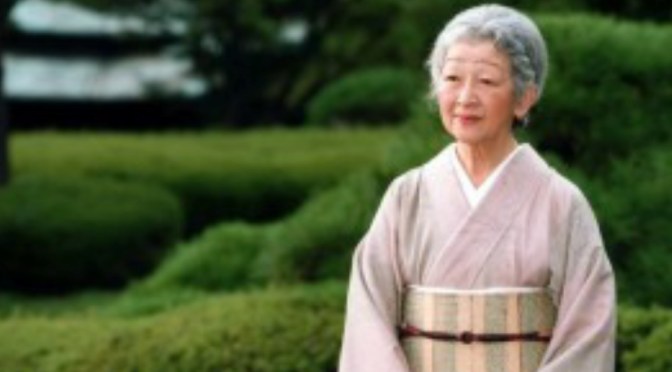
On Sunday, July 31, 2016, Her Imperial Majesty Empress Michiko of Japan attended a concert in Tokyo, Japan, with special guest performer South Korean tenor, Mr. Bae Jae-chul.
According to AFP News, Mr. Jae-chul “…lost his vocal cords after he underwent a thyroid cancer surgery in 2005 when he was in Germany but has successfully returned to his singing career in three years after his Japanese fan music producer arranged him to restore his vocal cords through a thyroplasty operation by a Kyoto Univ. prof. emeritus and then vocal training conducted by a Japanese specialist.”
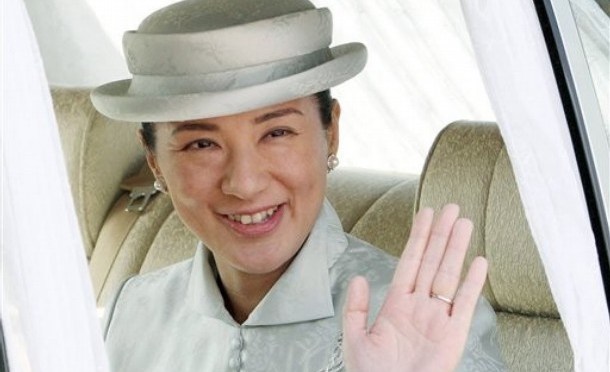
Here is yet another documentary, in German, entitled Die Tränen der Prinzessin Masako von Japan. The program is about the lovely Her Imperial Highness Crown Princess Masako of Japan.
On the morning of Saturday, January 2, 2016, Their Imperial Majesties Emperor Akihito and Empress Michiko of Japan accompanied by TIHs Crown Prince Naruhito and Crown Princess Masako of Japan, TIHs Prince Akishino and Princess Kiko of Japan, TIHs Princess Kako and Princess Mako of Japan, TIHs Prince Hitachi and Princess Hitachi, TIHs Prince Mikasa and Princess Mikasa, and TIHs Princess Tomohito and Princess Akiko of Mikasa appeared on the Chowa-den Hall balcony at the Imperial Palace in Tokyo to wish 45,000 Japanese citizens as well as tourists a very Happy New Year.
In his speech to the crowd Emperor Akihito stated “…I am truly pleased to celebrate this New Year with you. From the start of this New Year, I pray for peace for our nation and for the world…”
On the afternoon of January 1, 2016, Their Imperial Majesties Emperor Akihito and Empress Michiko of Japan accompanied by Their Imperial Highnesses Crown Prince Naruhito and Crown Princess Masako, Their Imperial Highnesses Prince Akishino and Princess Kiko along with their two daughters, Princess Mako and Princess Kako, hosted New Year Greetings at the Imperial Palace in Tokyo.
Guests in attendance during today’s event included the Prime Minister of Japan, Mr. Shinzo Abe, accompanied by his Cabinet members, the heads of the Diet’s two chambers and the chief justice of the Supreme Court as well as ambassadors including the United States Ambassador to Japan, Ms. Caroline Kennedy.
Earlier in the day, the Imperial Household Agency published Emperor Akihito’s New Year reflections:
“As last year was the 70th anniversary of the end of World War II, it was a year in which many of us spent much time thinking about the war. In welcoming the new year, I would like to renew my prayer for peace both for our country and our people.
It will soon be five years since the Great East Japan Earthquake, and it pains me to think that there are still people who cannot return to the places they used to live and those who must endure the hardships of living in temporary housing. I hope that these people will take good care of their health through the cold winter, and that further progress will be made in the recovery of the afflicted areas.
Our country Japan is indeed blessed with beautiful nature, but at the same time, we are prone to natural disasters. It is my sincere hope that each and every Japanese cultivate an awareness of disaster prevention and continue to look out for each other and be prepared to protect themselves at all times.
May the new year bring happiness to the people of our country and the people around the world.
On Saturday, December 19, 2015, Her Imperial Majesty Empress Michiko of Japan arrived at the Suntory Hall in Minato, Tokyo, Japan to attend a concert performance by violinist, Ms. Yasuko Otani, accompanied by the National Philharmonic Society of Ukraine Kiev.
This afternoon’s performance also marked the 40th anniversary violin début by Ms. Otani according to Kyodo News.
 The Royal Correspondent