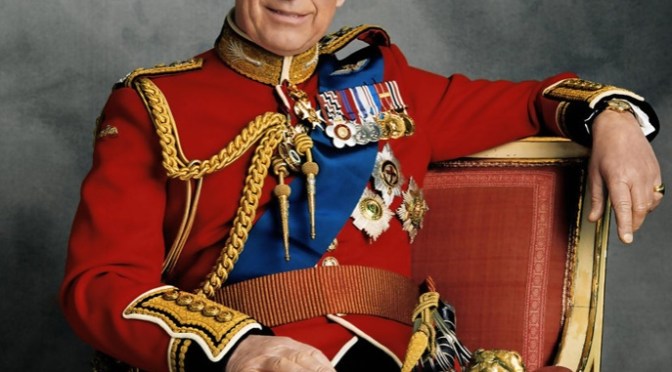
On the evening of Tuesday, February 18, 2014, His Royal Highness The Prince of Wales attended the Janadriya Culture Festival held at the Der’iya in Riyadh.
According to AFP News, during last evening’s celebration the future king “…wore a traditional Saudi Arabian uniform, complete with a sword, and performed the Ardah, a traditional Saudi dance…”
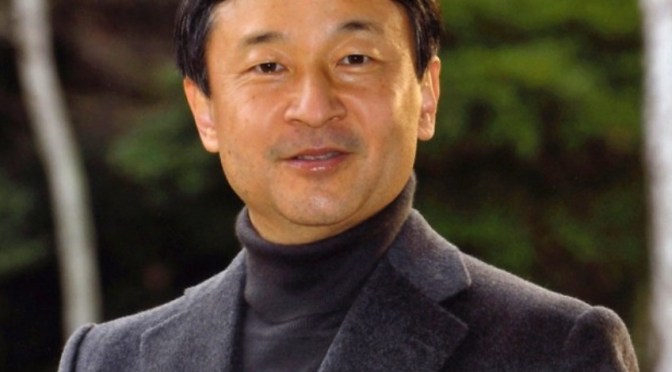
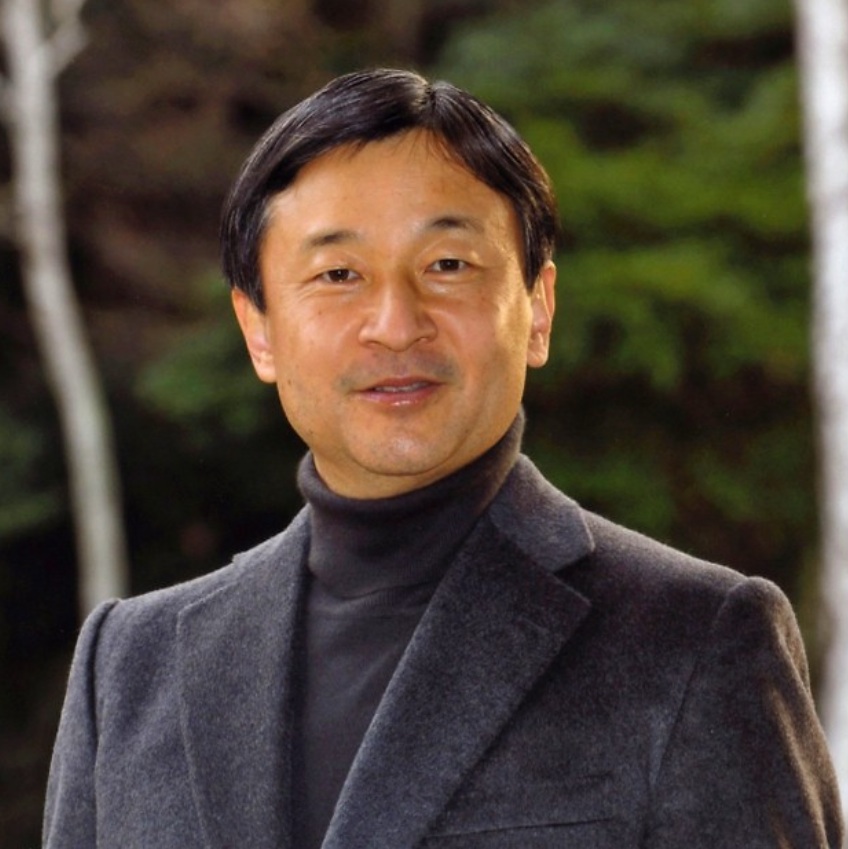
On Tuesday, February 18, 2014, His Imperial Highness Crown Prince Naruhito of Japan welcomed His Royal Highness Crown Prince Salman bin Abdulaziz al-Saud and his delegation as they arrived at Haneda Airport in Tokyo.
This afternoon His Imperial Majesty Emperor Akihito of Japan held a meeting with the crown prince at the Imperial Palace in Tokyo. After the meeting the emperor hosted a luncheon in honor of Crown Prince Salman bin Abdulaziz al-Saud’s visit to Japan.
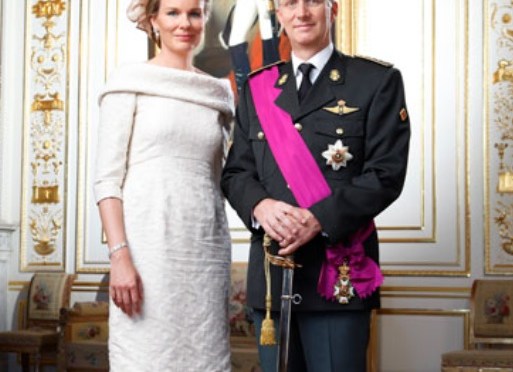
On Wednesday, February 19, 2014, Their Majesties King Philippe and Queen Mathilde of Belgium accompanied by the Belgian Prime Minister, Mr. Elio Di Rupo, and the Belgian Minister of Foreign Affairs, Mr. Didier Reynders, arrived in Rome, Italy for an official one-day visit.
Upon their arrival at Palazzo del Quirinale Their Majesties were warmly welcomed by the President of Italy, Mr. Giorgio Napolitano and other government officials. After the inspection of the guards Their Majesties and President Napolitano posed for the press inside the Palazzo.
In the afternoon, Their Majesties arrived at the Palazzo Giustiniani where they held a meeting with the President of the Italian Senate, Mr. Pietro Grasso.
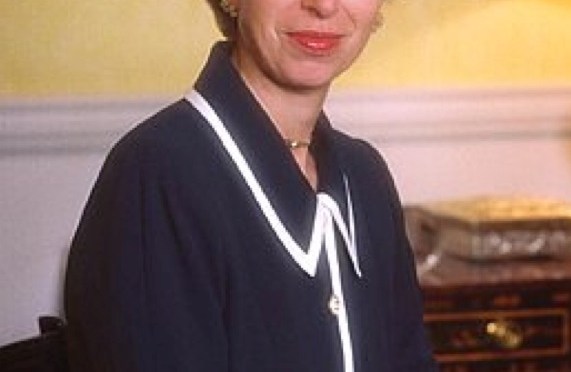
On Tuesday, February 18, 2014, Her Royal Highness The Princess Royal arrived at the Stratford campus of University of East London (UEL) to attend the seminar, Higher Education: Improving Access and Opportunities for Mature Students, organized by the UEL, The National Institute of Adult Continuing Education, and Action on Access.
Please click herefor more information about today’s event as well as to view one tiny photo. 🙂
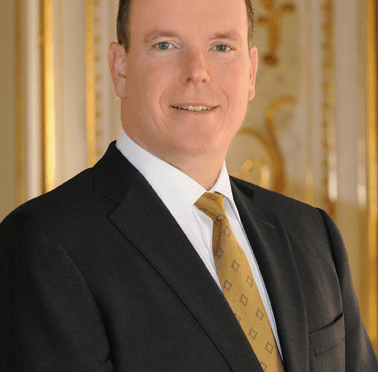
On February 18, 2014, His Serene Highness Prince Albert II of Monaco arrived in Baku, Azerbaijan, for a brief visit.
This morning the sovereign prince held a meeting with the President of Azerbaijan, Mr. Ilham Aliyev. According to the news agency, APA, discussions focused on “…ways of developing the relations between Azerbaijan and Monaco and the 2015 European Games which will be held in Azerbaijan…”
Thereafter, Prince Albert II arrived at the Heydar Aliyev Center where he viewed the exhibition, Fly to Baku: Contemporary Art from Azerbaijan. The sovereign prince then held a meeting with First Lady Heydar Aliyev.
For more information about today’s events as well as to view photos please click here.
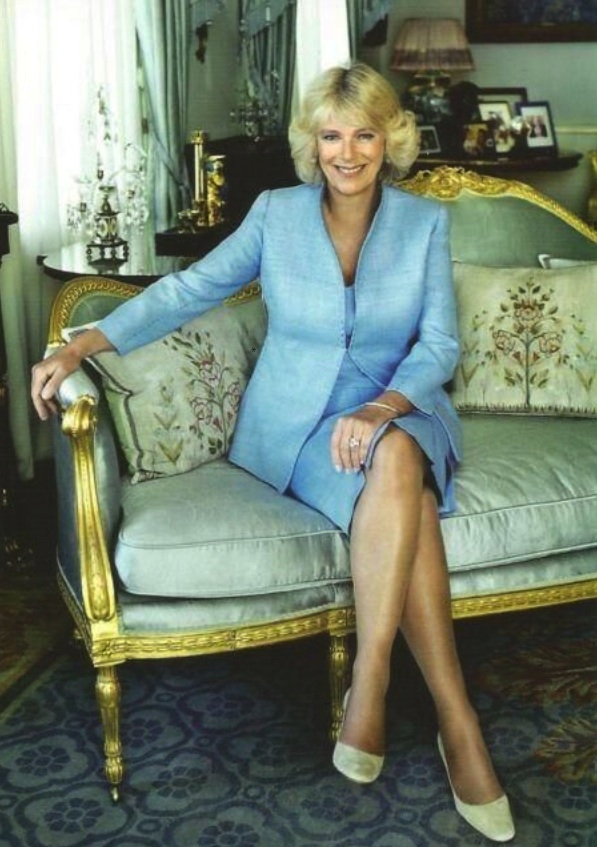
On February 18, 2014, Her Royal Highness The Duchess of Cornwall visited the Pound Arts Centre in Corsham, north Wiltshire.
The Pound Arts Centre is an:
“…arts hub for north Wiltshire, offers a year round program of performances, workshops, a youth theatre and exhibitions.
Our mission is to provide opportunities for all people to experience, enjoy and engage with the arts. We believe that the arts can transform people’s lives regardless of their age, circumstances, ability or interests.”
Please click here for more information about today’s visit as well as to view photos.
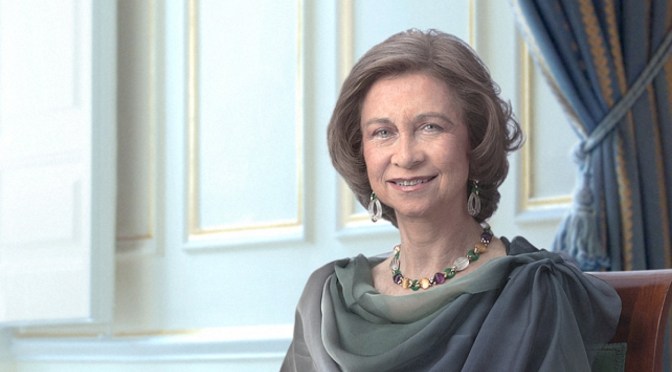
On February 18, 2014, Her Majesty Queen Sofia of Spain attended the opening of the exhibit entitled, La colección del IVAM: XXV Aniversario, held at the Instituto Valenciano de Arte Moderno in Valencia.
According to the official website for the Instituto Valenciano de Arte Moderno, the exhibition:
“…intends to be a glance to the art of the 20th century from key works of its Collection. It is organized in three phases or stages, thought chronologically and forming constellations that articulate the different moments.
The first phase goes from the 1920s until the end of the Second World War. The first hall focuses on the work of Julio González in dialogue with Torres-García, David Smith, Brancusi, etc. They interpret the esprit of the historical Avant-gardes that find their expression in the theses of Futurism, the geometric spatialism. Dadaism and Surrealism will occupy the centre of the artistic debate in the 1920s. From Duchamp to Tristan Tzara and André Breton runs a line of new languages which burst in a society leaning to an end of a period. The new formalism so close to the esprit nouveau of Architecture will come together with the passionate journey of the Russian Constructivism of Rodchenko, Popova, El Lissitzky or Malevich. All of them, with their heroism and revolutionary enthusiasm, ending in the catastrophe that was the Spanish civil war and the Second World War. There you will find the documents of an end of journey, from the Russian agit-prop materials, the work of George Grosz or photomontages of John Heartfield or Josep Renau next to the allegory of Jacques Lipchitz, Prometheus Strangling the Vulture, which express the sense of this tragedy.
The second phase covers the years ranging from the 1950s to 1990s, forty key years in the history of 20th-century art. To these consequences of the war, art answers searching for new languages, leaving all formalism. European Informalism and American Abstract Expressionism are the two lines that trace the new maps of art. Since Dubuffet or Tapies, or from Pollock, Kline or Barnett Newman, passing by the Soulages, Asger Jorn, Saura, Millares, Chillida or Chirino we find the lines of a new map of art. Its highest expression and representative will be found in great American artists such as Jasper Johns and Robert Rauschenberg. At the same time is the appearance of Pop art, a new language attentive to the dimensions of a new order of things and the world, the so-called American Way of Life that artists like Warhol, Rosenquist, Baldessari or Lindner interpreted. Opposite the reading proposed by Pop art are other languages that will seek to recover a truth of art. Nearest to concept, rather then to media are artists such as Richard Serra, Robert Smithson, Gordon Matta-Clark, or photographs as Bernd and Hilla Becher, which among others express.
The third stage of the exhibition traces the years ranging from the 90s until today. There has been talk of an ethical spin in the culture, loading art with questions. Issues such as identity, in all its declinations, memory and archives, the cultural approval and multiple forms of resistance, are today the key arguments that contemporary art interprets and elucidates. In this direction we can see works of Robert Rauschenberg and Tony Cragg, Sean Scully, Cristina Iglesias, Juan Muñoz or Cabrita Reis. The duel of Christian Boltanski together with works by Zoran Music, Carmen Calvo, John Davis, Bernardí Roig or Darío Villalba. Paying special attention to works by Baselitz, Lüpertz and Magdalena Abakanowicz. Not to mention the presence of photographers ranging from Gabriele Basilico to Joan Fontcuberta or José M. Ballester which are already a reference in the history of contemporary photography. Concluding with the virtual space of a permanent happening that Antoni Muntadas again offers us as the true measure of the world. In short a journey that from the Collections of the Ivam, allows us to approach the problems of art of the 20th century.”
LikeLoading...
All the latest news and events from monarchies around the world.



 The Royal Correspondent