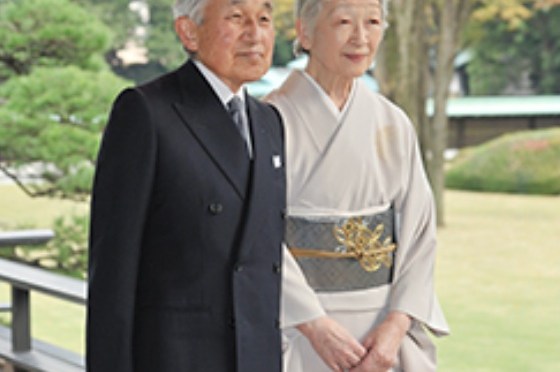
On Sunday, May 17, 2015, Their Imperial Majesties Emperor Akihito and Empress Michiko of Japan attended the annual National Tree Planting ceremony held in the city of Komatsu in the Ishikawa Prefecture.
On Sunday, May 17, 2015, Their Imperial Majesties Emperor Akihito and Empress Michiko of Japan attended the annual National Tree Planting ceremony held in the city of Komatsu in the Ishikawa Prefecture.
On Wednesday, May 13, 2015, Her Imperial Majesty Empress Michiko of Japan accompanied by Her Imperial Highness Princess Kiko of Japan presided over the 2015 Japan Red Cross Annual Meeting held at the Meiji Jingu Shrine Hall in Tokyo.
On Tuesday, April 21, 2015, Their Imperial Majesties Emperor Akihito and Empress Michiko of Japan accompanied by His Imperial Highness Crown Prince Naruhito of Japan, Their Imperial Highnesses Prince Akishino and Princess Kiko of Japan along with other members of the Imperial Family hosted a lovely spring garden party held at the Akasaka Palace Imperial Garden in Tokyo.
On the morning of Thursday, April 16, 2015, Their Imperial Majesties Emperor Akihito and Empress Michiko of Japan visited the Musashino Imperial Graveyard in Hachiōji, Tokyo, Japan.
According to ANN News, the purpose of today’s visit was to offer prayers of thanks to “…Emperor Hirohito, following their (Emperor Akihito and Empress Michiko’s) recent visit to Palau to commemorate those who lost their lives there during World War II…”
Well, this is very important news. This morning — February 25, 2015 — in amazing Tokyo, Japan, His Imperial Highness Crown Prince Naruhito of Japan decided to go for a run outside the grounds of the Imperial Palace.
According to the Japanese newspaper, Asahi Shimbun, the 55 year-old heir to ancient Chrysanthemum throne “… usually jogs in the Akasaka Imperial Ground, where the Togu Palace his residence is located, it is the first time in seven years since he last jogs outside the state properties for the royal family.”
On Wednesday, January 21, 2015, His Imperial Highness Crown Prince Naruhito of Japan arrived at the Gakushuin Women’s College and Graduate School in Tokyo to speak to students about the benefits of studying abroad.
Meanwhile, the Imperial Household Agency announced that His Imperial Majesty Emperor Akihito of Japan has cancelled all of his engagements on Wednesday due to “…cold-like symptoms…” The IHA also noted that all engagements scheduled for the remaining week are still pending (hence depending on the emperor’s health).
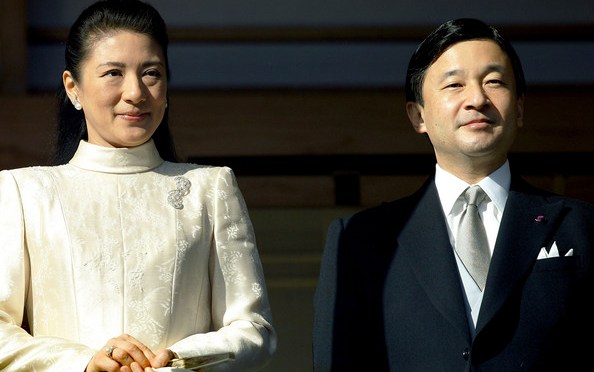
On the morning of Monday, January 19, 2015, Their Imperial Highnesses Crown Prince Naruhito and Crown Princess Masako of Japan arrived at the Yamatane Museum of Art in Tokyo to view the special 15th memorial exhibition, Higashiyama Kaii and Four Seasons in Japan.
The exhibition examines the works of the late Japanese artist, Mr. Higashiyama Kaii. According to the official website for the Yamatane Museum of Art:
“In the late 1940s, Kaii launched himself as a landscape painter. From then on, endeavoring to create Nihonga for a new age, he produced landscapes with unique compositions and remarkable figurative beauty, such as his Tree Roots (Meguro Museum of Art) or White Wall (Yamatane Museum of Art). In the course of that quest, he traveled, and painted, throughout Europe as well as the length and breadth of Japan. In the 1960s, he created two wall panels, for the Imperial Palace and the Crown Prince’s Palace and, at the same time, inspired by the novelist Kawabata Yasunari, began creating hisFour Seasons in Kyoto series. In those works, his approach returned to a traditional expression of Japan’s subtly changing four seasons and the beauties of nature.
Among them, his Dawn Tide (Imperial Household Agency), created for the Imperial Palace, has been highly praised as a work combining the natural and decorative beauty found in Yamato-e, a genre of painting traditional to Japan. Yamazaki Taneji, the first director of our museum, had an opportunity to see that works at the Palace, and was captivated by them. Taneji then directly commissioned the artists whose work adorned the Imperial Palace to create other works of a similar nature so that the public could have an opportunity to appreciate them even outside of the Palace. The resulting paintings are now the heart of the Yamatane collection, including Kaii’s Rising Tide, a painting nine meters long, Hashimoto Meiji’s Cherry Tree in Morning Sun, and Uemura Shōkō’s Flowers and Birds of Japan.
This exhibition presents those paintings associated with works at the Imperial Palace, works from theFour Seasons in Kyoto series, including End of the Year (Yamatane Museum of Art), Early Summer(Ichikawa City Higashiyama Kaii Memorial Hall), and First Snowfall in Kitayama (Kawabata Foundation). It also includes other masterworks in which Kaii depicted many parts of Japan, such asHill Inviting Spring (Hasegawa Machiko Art Museum).
To offer a broader perspective on Kaii’s oeuvre and the path he followed in his life’s work, the exhibition also includes paintings by Kawai Gyokudō and Yūki Somei, the mentors who taught Kaii his approach to the landscape, and Yamada Shingo and Katō Eizō, his classmates at the Tokyo School of Fine Arts, with whom he worked to polish his skills.”
Higashiyama Kaii and Four Seasons in Japan will be open to the public until February 1, 2015.
 The Royal Correspondent