Press release courtesy of T.R.H.s Prince Charles-Philippe and Princess Naomi d’Orléans/ducdanjou.com
On Friday, it was announced that Their Royal Highnesses Prince Charles-Philippe and Princess Naomi d’Orléans, Duke and Duchess of Anjou, are expecting their first child, due in the spring of 2026.
According to the official press release: “Awaiting this blessed day, Their Royal Highnesses thank all those who will share in their joy and pray that this joyous time will be filled with peace and love.No further statements will be made at this time.”
The couple married on September 9, 2023, and divide their time between the Principality of Monaco and the South of France.
Prince Charles-Philippe d’Orléans, Duke of Anjou, is a member of the House of Orléans, a cadet branch of the Capetian dynasty. He is a direct descendant of King Louis-Philippe I, who reigned from 1830 to 1848 and was the last king of the French.
According to his official biography, Prince Charles-Philippe served for twelve years in the Infanterie de Marine, undertaking operational missions abroad and contributing to strategic planning and civil–military coordination. His military service laid the groundwork for subsequent responsibilities in institutional leadership and international development.
He holds a Master’s degree in Communication Institutionnelle from l’Université Paris-Sorbonne, as well as a second Master’s degree in Intelligence Économique from EISTI. His professional pursuits include founding a consultancy in economic intelligence and directing renewable-energy development projects in sub-Saharan Africa. He also serves as special advisor to the Prince Albert II of Monaco Foundation in relation to international development missions.
Culturally, Prince Charles-Philippe is the author of three historical novels and serves as President of the Prix littéraire Hugues Capet, an institution dedicated to the preservation and study of Capetian heritage. He previously served as Grand Maître of the Ordre Militaire et Hospitalier de Saint-Lazare de Jérusalem (2004–2010) and now holds the honorary dignity of Grand Maître émérite. He also serves as Grand Prieur de France within the Order.
Prince Charles-Philippe was previously married to Diana Álvares Pereira de Melo, the 11th Duchess of Cadaval. Together, they have one child, Her Royal Highness Princess Isabelle d’Orléans, born on February 22, 2012, in Portugal. The Princess’s godparents are His Majesty King Felipe VI of Spain and Princess Dora Loewenstein.
Princess Naomi d’Orléans, Duchess of Anjou, was born Naomi-Valeska Salz in 1981 to Wolfgang and Karola Salz. The Princess holds a Master’s degree in Economics, as noted in her official biography, and has pursued a professional career in economic strategy and consultancy. Prior to her marriage to Prince Charles-Philippe, she was married to the German fashion designer Otto Kern, who died in 2017.
Since her marriage to Prince Charles-Philippe, Princess Naomi has undertaken public duties alongside the Prince, contributing to cultural, charitable, and representational activities associated with the Orléans branch of the historic Capetian dynasty.
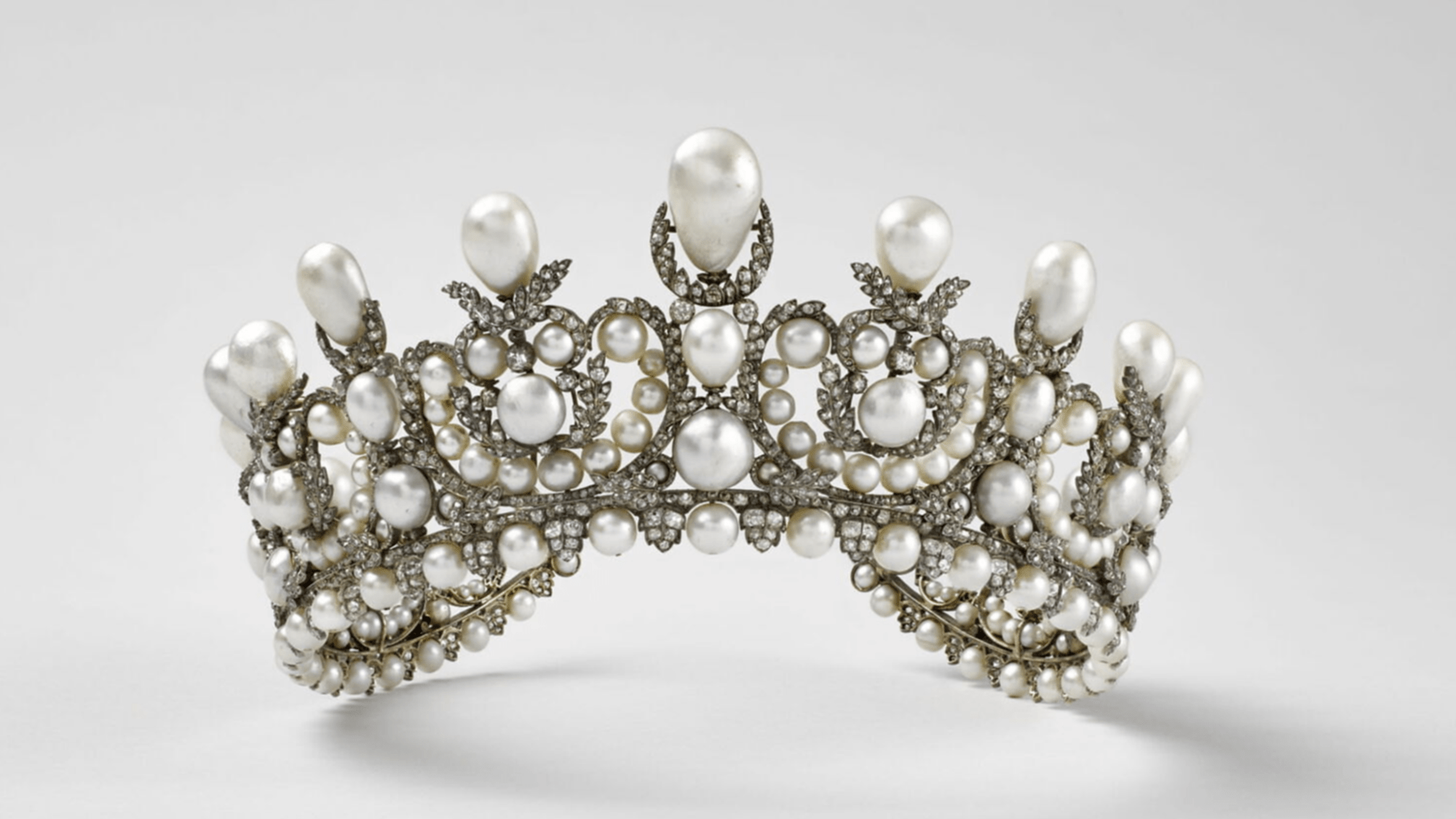
Diadème de l’impératrice Eugénie. Photos courtesy of the Musée du Louvre/Domaine public.
As I reported on Sunday, October 19, 2025, at around 9:30 a.m., thieves broke into the Galerie d’Apollon at the Musée du Louvre in Paris, stealing eight historical pieces from the Joyaux de la Couronne de France.
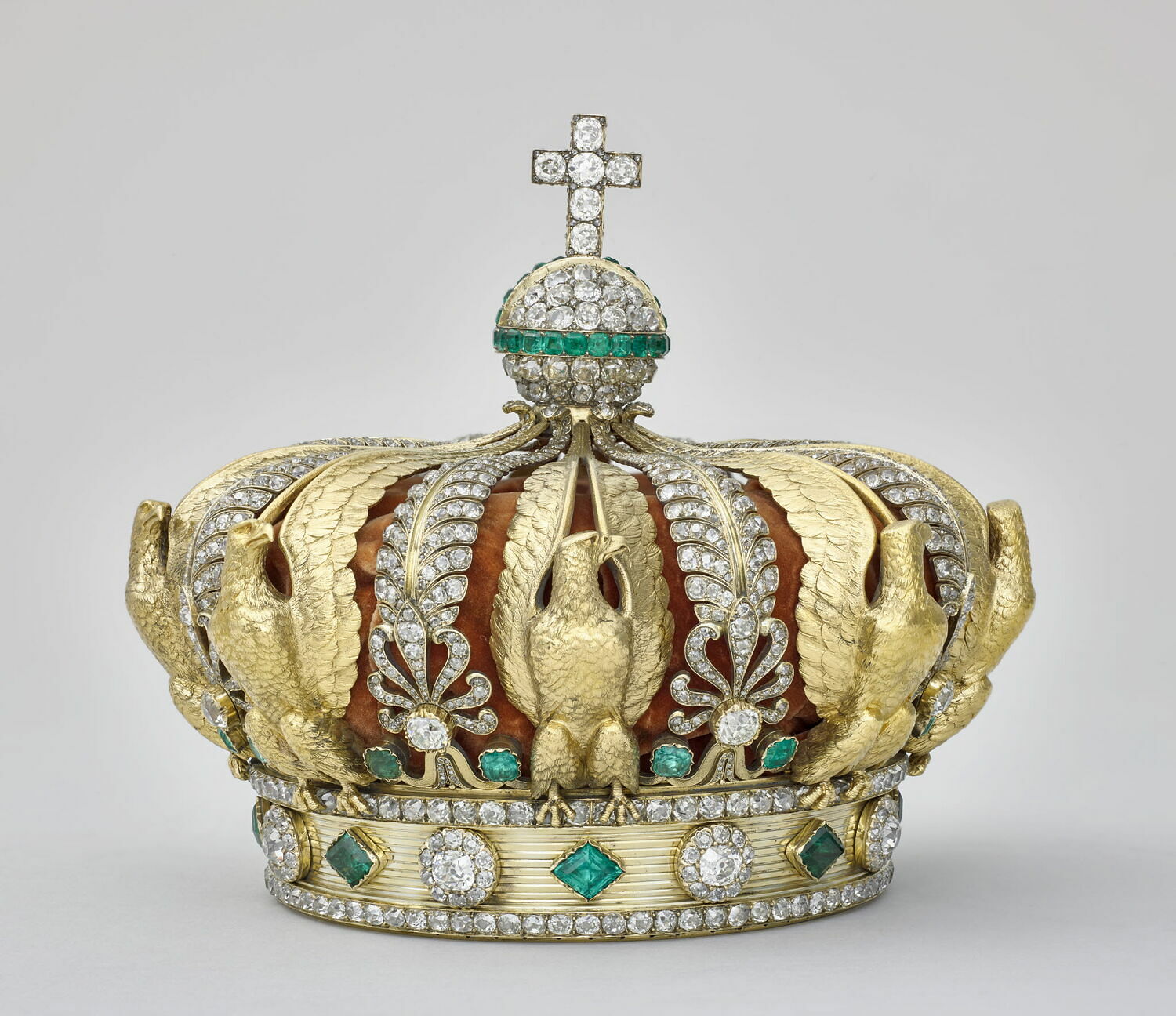
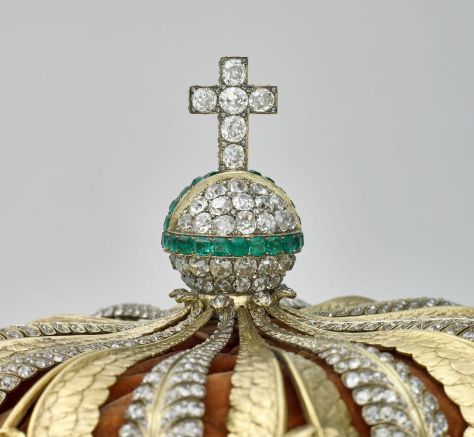
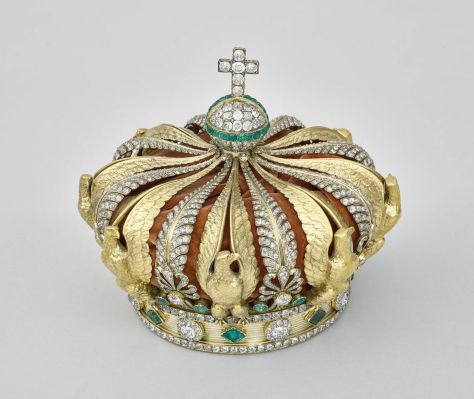
Among the stolen items were a diadème from the parure once belonging to Queen Marie-Amélie, later passed through her descendants, and Empress Eugénie’s diadème, consisting of diamonds and emeralds. The Couronne de l’Impératrice Eugénie, set with 1,354 diamonds and 56 emeralds, was later recovered outside the museum, damaged after being dropped during the escape.
According to investigators from the Préfecture de police de Paris and the police judiciaire, the assailants used a truck-mounted platform to reach an upper-floor window under renovation, forced entry, smashed several vitrines, and fled on motorbikes. The entire operation reportedly lasted between four and seven minutes.
Le ministre de l’Intérieur, Laurent Nuñez, confirmed that eight pieces were taken from a collection associated with Emperor Napoléon III and Empress Eugénie. According to an official communiqué from le Ministère de la Culture de la République française, the following pieces of the Joyaux de la Couronne de France were stolen:
Diadème de la parure de la reine Marie-Amélie et de la reine Hortense
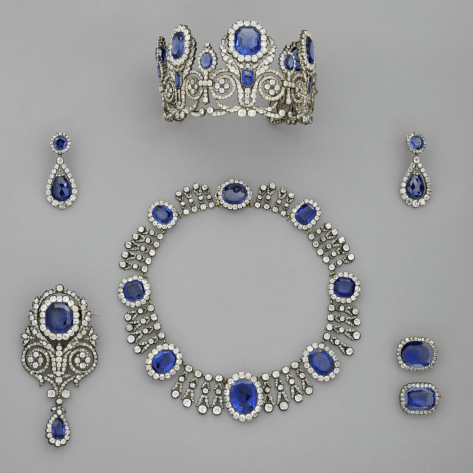
Collier de la parure de saphirs de la reine Marie-Amélie et de la reine Hortense
Boucle d’oreille (d’une paire) de la parure de saphirs de la reine Marie-Amélie et de la reine Hortense
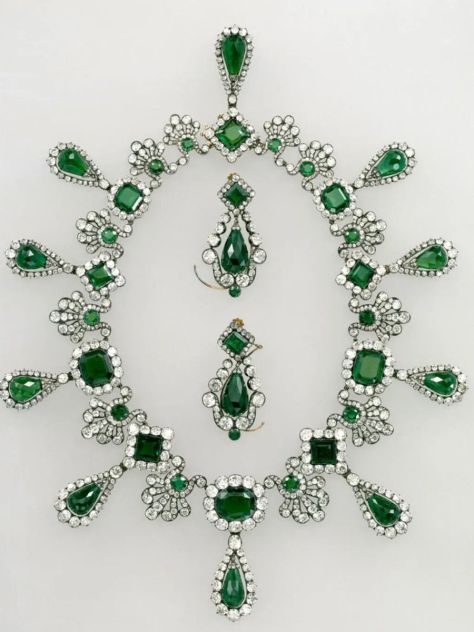
Collier en émeraudes de la parure de Marie-Louise
Paire de boucles d’oreilles en émeraudes de la parure de Marie-Louise
Broche dite broche reliquaire
Diadème de l’Impératrice Eugénie
Grand nœud de corsage de l’Impératrice Eugénie (broche)
In a statement, le ministre de l’Intérieur described the stolen items as possessing “une valeur patrimoniale et historique inestimable.” A full investigation has been launched by le parquet de Paris for organised theft and criminal conspiracy.
The Musée du Louvre and le Ministère de l’Intérieur are working closely with the Brigade de Répression du Banditisme (BRB), the specialised art-crime unit, which is reviewing CCTV footage and forensic evidence to determine whether the robbery involved insider coordination or prior surveillance.
Jean-Carl Pierre Marie d’Orléans, Comte de Paris, born May 19, 1965, in Boulogne-Billancourt, is the Head of the Maison d’Orléans, a cadet branch of the former French royal family descended from King Louis-Philippe I, who reigned from 1830 to 1848. Considered by Orléanist monarchists as the principal claimant to the historical throne of France, the Comte issued a statement:
“It is with immense sadness that I learned of the theft of historic jewels at the Louvre, among them the sapphire diadème and parure of Queen Marie-Amélie, which also once belonged to my grandmother.
These jewels are not merely family heirlooms, they are a living part of our national history, a testament to the elegance and craftsmanship of our country.
Their disappearance deeply saddens me and, I believe, represents a painful loss for the French people.
I wish to express my support for the authorities and the teams at the Musée du Louvre who are working to recover them.
I call on everyone to recognise how vital it is to protect these precious witnesses of our history, which connect us to what is noble and timeless about France. To protect our heritage is to honour our shared memory and serve our country.”
Prince Joachim Charles Napoléon Murat, born May 3, 1973, in Neuilly-sur-Seine, is heir apparent to the Maison Murat. He is descended from Marshal Joachim Murat, King of Naples and brother-in-law of Emperor Napoléon I. The Prince represents the Napoleonic legacy within France’s historic nobility. In his statement, he noted that:
“It is with immense sadness and deep indignation that I learned of the theft of the imperial jewels stolen this morning at the Musée du Louvre.
These diadèmes, colliers and parures belonging to Napoléon Iᵉʳ, Joséphine, Marie-Louise and Empress Eugénie are not mere works of art, they belong to France, to its people, to each of its children.
Created by the greatest goldsmiths in our history, these jewels embody the French genius, its taste for beauty and the sublime. By stealing them, it is not only precious stones that have been taken from a display case, it is a part of our national soul that has been stripped away.
This heinous act does not wound one family, one institution, or one era; it wounds all French people. For this heritage is our common good. I call upon the authorities and all defenders of heritage to bring these treasures back to their rightful place, that of the French people.”
Princess Yasmine Murat, wife of Prince Joachim Murat, also issued a statement expressing her sorrow:
“I express my deep sadness following the theft of Napoleonic jewels that occurred today at the Musée du Louvre.
I am affected not only as a member of the Imperial family but above all as a Frenchwoman, deeply attached to our history and to those who keep it alive, and to our national treasures.
Like all lovers of heritage throughout the world, I feel profound sorrow at this assault on what unites us, memory and beauty.”
Speaking to French media outlets, Dutch art historian and art crime detective, Mr. Arthur Brand, often referred to as “the Indiana Jones of the art world,” described the theft as a race against time.
“These crown jewels are so famous, you just cannot sell them,” he said. “The only thing they can do is melt the silver and gold down, dismantle the diamonds. That’s the way they will probably disappear forever. They have a week. If they catch the thieves, the pieces might still be there. If it takes longer, the loot is probably gone and dismantled. It’s a race against time.”
As of Monday evening, the Musée du Louvre remains closed while investigators continue to review surveillance footage and follow leads.
The ministre de l’Intérieur, Laurent Nuñez, described the raid as “une opération professionnelle visant des objets d’une valeur patrimoniale inestimable,” while the Ministère de la Culture, Rachida Dati, affirmed that the government would take “toutes les mesures possibles” to recover the stolen works and reinforce protection for national heritage.
Meanwhile, INTERPOL has now listed the jewels stolen from the Musée du Louvre in its Stolen Works of Art database, marking an escalation in the international investigation and highlighting the global urgency to recover France’s missing crown jewels.
Jean, Comte de Paris, the head of the Maison d’Orléans
Prince Joachim Charles Napoléon Murat, the heir apparent to the Maison de Murat.
On Sunday, October 19, 2025, at around 9:30 a.m., thieves broke into the Galerie d’Apollon at the Musée du Louvre in Paris, France, and stole several pieces from the Joyaux de la Couronne de France. The Musée du Louvre, which had just opened for the day, was swiftly evacuated and closed “pour raisons exceptionnelles.”
According to French investigators from the Préfecture de police de Paris and the police judiciaire, the assailants used a truck-mounted platform to reach an upper-floor window under renovation, forced entry, smashed several display cases, and fled on motorbikes. The entire operation lasted between four and seven minutes.
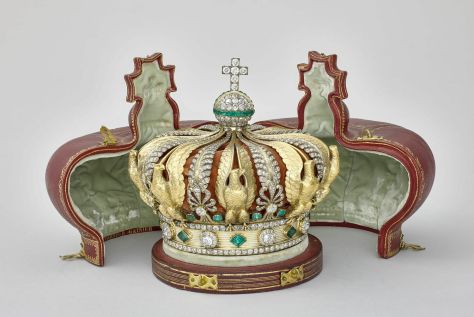
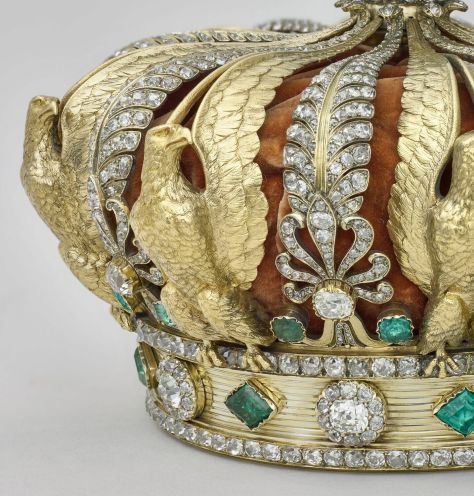
The Ministère de l’Intérieur de la République française, led by Laurent Nuñez, Ministre de l’Intérieur, confirmed that eight pieces were taken from a collection associated with Emperor Napoléon III and Empress Eugénie. One of the stolen items, believed to be the Couronne de l’Impératrice Eugénie, set with 1,354 diamonds and 56 emeralds, was later recovered outside the museum, damaged after being dropped during the thieves’ escape.
According to an official communiqué from the Ministère de la Culture de la République française, the following historical pieces from the Joyaux de la Couronne de France were stolen from the Musée du Louvre:
Diadème de la parure de la reine Marie-Amélie et de la reine Hortense
Collier de la parure de saphirs de la reine Marie-Amélie et de la reine Hortense
Boucle d’oreille (d’une paire) de la parure de saphirs de la reine Marie-Amélie et de la reine Hortense
Collier en émeraudes de la parure de Marie-Louise
Paire de boucles d’oreilles en émeraudes de la parure de Marie-Louise
Broche dite broche reliquaire
Diadème de l’impératrice Eugénie
Grand nœud de corsage de l’impératrice Eugénie (broche)
In a statement, Minister Nuñez described the stolen items as possessing “une valeur patrimoniale et historique inestimable.” A full investigation has been opened by le parquet de Paris for organised theft and criminal conspiracy. The Musée du Louvre and the Ministère de l’Intérieur de la République française are working closely with the Brigade de répression du banditisme (BRB), the specialised art-crime unit, which is reviewing CCTV and forensic evidence to determine whether the robbery involved insider coordination or prior surveillance.
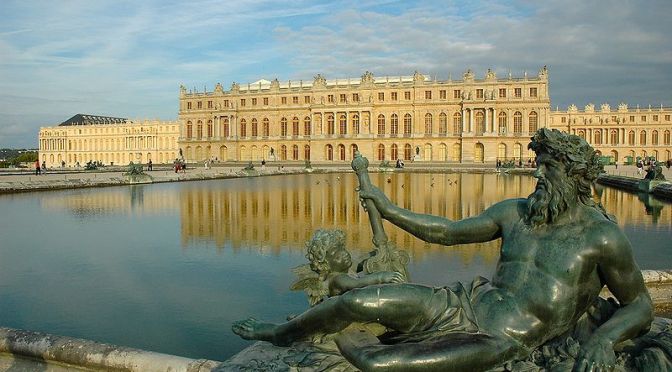
The jewels were displayed in reinforced glass vitrines within the Galerie d’Apollon, a space often described as the architectural prelude to the Galerie des Glaces (Hall of Mirrors) at Château de Versailles. The collection, part of the Musée du Louvre’s permanent exhibition, showcases the surviving pieces of the French Crown Jewels after most were sold by the Third Republic in 1887. Those retained by the State were preserved as national heritage, representing the artistic craftsmanship of France’s royal and imperial courts.
The significance of the theft extends far beyond monetary value. The Galerie d’Apollon, built under King Louis XIV and later refurbished under Emperor Napoléon III, is one of the Musée du Louvre’s most emblematic spaces, a symbol of the French monarchy and the continuity of royal and imperial heritage. The jewels displayed there form part of the Joyaux de la Couronne, a collection that includes crowns, diadems, and parures once worn by French sovereigns and consorts.
The Couronne de l’Impératrice Eugénie, created in 1855 by Alexandre-Gabriel Lemonnier, was designed for the Empress as a symbol of the Second Empire’s splendour. Empress Eugénie, renowned for her elegance and taste, helped define the fashion and court aesthetics of her era. The crown, with its distinctive arches and intricate gemstone setting, represents not only imperial luxury but also a tangible link to the history of France’s monarchy and empire.
Security measures at the Louvre have long been considered among the most advanced in Europe, combining motion sensors, reinforced glass, and 24-hour surveillance. However, the ongoing renovation works in the Galerie d’Apollon may have created vulnerabilities now under investigation. The French press has reported that the museum will conduct a full internal audit once the criminal inquiry concludes.
This theft is a severe blow to the French Republic’s cultural patrimony. The Joyaux de la Couronne are among the last remaining symbols connecting modern France to its royal and imperial past.
As of Sunday evening, the Musée du Louvre remains closed while police continue their investigation. The Ministère de la Culture has pledged to review security protocols for national collections housed within public museums.
This incident recalls another historic loss at the Louvre, the 1911 theft of the Mona Lisa, which was taken by a museum employee and remained missing for two years before its recovery in Italy. Over a century later, the 2025 heist once again raises pressing questions about the protection of the French Republic’s most treasured works and the enduring vulnerability of national heritage.
Couronne de l’impératrice Eugénie, avec son écrin (OA 11160 BIS)
Couronne de l’impératrice Eugénie, avec son écrin (OA 11160 BIS)
Couronne de l’impératrice Eugénie, avec son écrin (OA 11160 BIS)
Couronne de l’impératrice Eugénie, avec son écrin (OA 11160 BIS)
Diadème de la parure de la reine Marie-Amélie et de la reine Hortense. Photos courtesy of the Musée du Louvre/Domaine public.
Collier en émeraudes de la parure de Marie-Louise.Photos courtesy of the Musée du Louvre/Domaine public.
Diadème de l’impératrice Eugénie. Photos courtesy of the Musée du Louvre/Domaine public.
Grand nœud de corsage de l’impératrice Eugénie (broche). Photos courtesy of the Musée du Louvre/Domaine public.
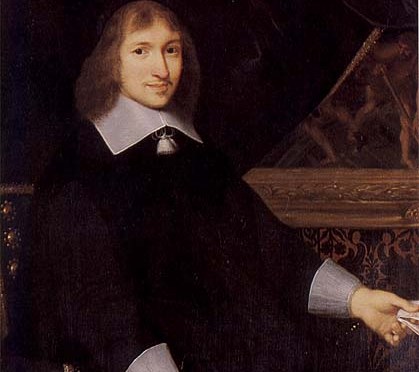
Nicolas Fouquet est sans doute, l’un des personnages les plus fascinants du règne de Louis XIV. Surintendant des finances du roi, découvreur des plus grands artistes du XVIIème siècle,et bâtisseur du splendide château de Vaux le Vicomte Fouquet a connu une ascension fulgurante et l’une des chutes les plus vertigineuses de l’Histoire.





 The Royal Correspondent