Press release courtesy of T.R.H.s Prince Charles-Philippe and Princess Naomi d’Orléans/ducdanjou.com
On Friday, it was announced that Their Royal Highnesses Prince Charles-Philippe and Princess Naomi d’Orléans, Duke and Duchess of Anjou, are expecting their first child, due in the spring of 2026.
According to the official press release: “Awaiting this blessed day, Their Royal Highnesses thank all those who will share in their joy and pray that this joyous time will be filled with peace and love.No further statements will be made at this time.”
The couple married on September 9, 2023, and divide their time between the Principality of Monaco and the South of France.
Prince Charles-Philippe d’Orléans, Duke of Anjou, is a member of the House of Orléans, a cadet branch of the Capetian dynasty. He is a direct descendant of King Louis-Philippe I, who reigned from 1830 to 1848 and was the last king of the French.
According to his official biography, Prince Charles-Philippe served for twelve years in the Infanterie de Marine, undertaking operational missions abroad and contributing to strategic planning and civil–military coordination. His military service laid the groundwork for subsequent responsibilities in institutional leadership and international development.
He holds a Master’s degree in Communication Institutionnelle from l’Université Paris-Sorbonne, as well as a second Master’s degree in Intelligence Économique from EISTI. His professional pursuits include founding a consultancy in economic intelligence and directing renewable-energy development projects in sub-Saharan Africa. He also serves as special advisor to the Prince Albert II of Monaco Foundation in relation to international development missions.
Culturally, Prince Charles-Philippe is the author of three historical novels and serves as President of the Prix littéraire Hugues Capet, an institution dedicated to the preservation and study of Capetian heritage. He previously served as Grand Maître of the Ordre Militaire et Hospitalier de Saint-Lazare de Jérusalem (2004–2010) and now holds the honorary dignity of Grand Maître émérite. He also serves as Grand Prieur de France within the Order.
Prince Charles-Philippe was previously married to Diana Álvares Pereira de Melo, the 11th Duchess of Cadaval. Together, they have one child, Her Royal Highness Princess Isabelle d’Orléans, born on February 22, 2012, in Portugal. The Princess’s godparents are His Majesty King Felipe VI of Spain and Princess Dora Loewenstein.
Princess Naomi d’Orléans, Duchess of Anjou, was born Naomi-Valeska Salz in 1981 to Wolfgang and Karola Salz. The Princess holds a Master’s degree in Economics, as noted in her official biography, and has pursued a professional career in economic strategy and consultancy. Prior to her marriage to Prince Charles-Philippe, she was married to the German fashion designer Otto Kern, who died in 2017.
Since her marriage to Prince Charles-Philippe, Princess Naomi has undertaken public duties alongside the Prince, contributing to cultural, charitable, and representational activities associated with the Orléans branch of the historic Capetian dynasty.
Photo courtesy of Fürst zu Oettingen-Spielberg/Schloss Oettingen
On Friday, the Princely House of Oettingen-Spielberg announced that His Serene Highness Prince Albrecht of Oettingen-Spielberg passed away unexpectedly on Tuesday, November 11, 2025. He was 74 years old.
Per the press release:
“With utmost discipline, sense of responsibility, incredible dedication, and generosity, the Prince successfully led the House of Oettingen-Spielberg for 50 years. He always referred to his company and all its employees as his extended family. His warmth and openness will remain with us forever.”
Born Albrecht Ernst Otto Joseph Maria Notger, Prince of Oettingen-Oettingen and Oettingen-Spielberg on February 7, 1951, in Munich, Germany, to Their Serene Highnesses Prince Alois and Princess Elisabeth (born Countess Elisabeth Gabriele zu Lynar) of Oettingen-Spielberg.
Following the death of his father, Prince Alois, on November 30, 1975, Prince Albrecht succeeded as Head of the Princely House of Oettingen-Spielberg, a role in which he served for five decades.
Throughout his life, Prince Albrecht received several orders and decorations, including the Bundesverdienstkreuz am Bande and the Bayerischer Verdienstorden. He was also a member of the Hausorden vom Heiligen Georg and of the Sovereign Order of Malta.
The late Prince Albrecht leaves behind his wife, Her Serene Highness Princess Angela of Oettingen-Spielberg, and four children: His Serene Highness Hereditary Prince Franz-Albrecht of Oettingen-Spielberg, Her Serene Highness Princess Theresa of Oettingen-Spielberg, Her Serene Highness Princess Antonia of Oettingen-Spielberg, and Her Serene Highness Princess Nora of Oettingen-Spielberg.
The late Prince also leaves behind nine grandchildren.
With the passing of Prince Albrecht on Tuesday, His Serene Highness Hereditary Prince Franz-Albrecht now becomes the Head of the Princely House of Oettingen-Spielberg.
(L) T.S.H.s Hereditary Prince Franz-Albrecht and Hereditary Princess Cleo of Oettingen-Spielberg.
(R) T.S.H.s Prince Albrecht and Princess Angela of Oettingen-Spielberg
H.S.H. Prince Albrecht of Oettingen-Spielberg
H.S.H. Hereditary Prince Franz Albrecht of Oettingen-Spielberg.
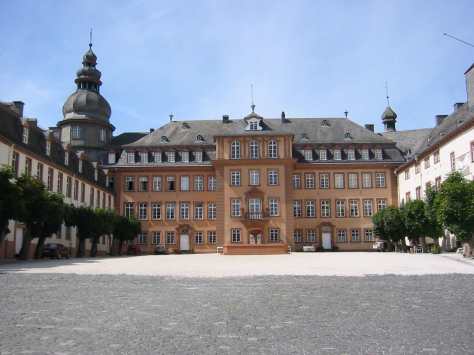
H.S.H. Hereditary Prince Franz Albrecht of Oettingen-Spielberg at Schloss Berleburg, June 4, 2022.
This evening in London, Buckingham Palace issued a statement announcing that His Majesty King Charles III of the United Kingdom has “initiated a formal process to remove the style, titles, and honours of Prince Andrew.”
According to the Palace statement:
“Prince Andrew will now be known as Andrew Mountbatten-Windsor. His lease on Royal Lodge has, to date, provided him with legal protection to continue in residence. Formal notice has now been served to surrender the lease and he will move to alternative private accommodation. These censures are deemed necessary, notwithstanding the fact that he continues to deny the allegations against him.
Their Majesties wish to make clear that their thoughts and utmost sympathies have been, and will remain with, the victims and survivors of any and all forms of abuse.”
This announcement marks the most decisive step yet in addressing Prince Andrew’s public standing within the Royal Family.
No further comment was provided by Buckingham Palace following the release of the statement.
Photo courtesy of the Bureau of the Royal Household
In Bangkok, the Bureau of the Royal Household announced that Her Majesty Queen Sirikit, The Queen Mother of Thailand, passed away peacefully at 9:21 p.m. on October 24, 2025, at Chulalongkorn Hospital. She was 93 years old.
Per a press release from the Bureau of the Royal Household:
“According to the medical team providing treatment to Her Majesty Queen Sirikit, the Queen Mother, they requested royal permission for Her Majesty to be admitted to Chulalongkorn Hospital of the Thai Red Cross Society on 7 September 2019 to monitor various health conditions.
During Her Majesty’s stay at Chulalongkorn Hospital, she experienced several periods of illness. The medical team discovered various abnormalities in multiple systems, which required continuous medical care.
On 17 October 2025, Her Majesty Queen Sirikit, the Queen Mother, developed sepsis (a bloodstream infection). Although the medical team provided treatment with the utmost effort, Her Majesty’s condition gradually worsened.
On Friday, 24 October 2025, at 9:21 p.m., Her Majesty passed away peacefully at Chulalongkorn Hospital, Thai Red Cross Society, at the age of 93.
His Majesty the King has issued a Royal Command for the Royal Household Bureau to arrange the funeral rites with the highest honors in accordance with royal tradition. Her Majesty’s body will be enshrined at Dusit Maha Prasat Throne Hall in the Grand Palace.
His Majesty has also graciously ordered members of the Royal Family and officials in the Royal Court to observe a period of mourning for one year, beginning from the date of Her Majesty’s passing.”
Her Majesty Queen Sirikit, The Queen Mother of Thailand, was born Mom Rajawongse Sirikit Kitiyakara on August 12, 1932, in Bangkok. She was the daughter of His Highness Prince Nakkhatra Mangkala, Prince of Chanthaburi II, a senior diplomat who served as the Ambassador of the Kingdom of Thailand to the United Kingdom and later to the French Republic, and Mom Luang Bua Snidvongs.
During her father’s diplomatic postings in Europe, Sirikit was educated in England and France, and briefly attended a finishing school in Lausanne, Switzerland. While living in Paris, where her father was serving as the Ambassador of the Kingdom of Thailand to the French Republic, she met His Majesty King Bhumibol Adulyadej of Thailand, who had acceded to the throne in 1946 following the death of his elder brother, His Majesty King Ananda Mahidol of Thailand, also known as King Rama VIII, but continued his studies in political science and law at the University of Lausanne. The two became engaged in July 1949, while the King was recovering from a car accident in Lausanne.
On April 28, 1950, Sirikit married His Majesty King Bhumibol Adulyadej of Thailand, also known as His Majesty King Rama IX of Thailand, at the Boromarajonani Hall of Sra Pathum Palace in Bangkok. The following week, on May 5, 1950, His Majesty King Bhumibol Adulyadej was crowned in a grand coronation ceremony at the Grand Palace, during which Sirikit was formally invested as Her Majesty Queen Sirikit of Thailand.
The royal couple had four children: Her Royal Highness Princess Ubolratana Rajakanya Sirivadhana Barnavadi of Thailand, born on April 5, 1951, His Royal Highness Crown Prince Vajiralongkorn of Thailand, born on July 28, 1952, now known as His Majesty King Maha Vajiralongkorn Phra Vajiraklaochaoyuhua of Thailand, King Rama X, Her Royal Highness Princess Maha Chakri Sirindhorn of Thailand, born on April 2, 1955, and Her Royal Highness Princess Chulabhorn Krom Phra Srisavangavadhana of Thailand, born on July 4, 1957.
In 1956, King Bhumibol temporarily entered the Buddhist monkhood at Wat Phra Sri Rattana Satsadaram. This was not unusual in Thai tradition, as it is customary for Thai men, including monarchs, to be ordained as monks for a brief period as an act of merit-making and devotion to Buddhism.
During his two-week ordination at Wat Bowonniwet Vihara, Queen Sirikit was appointed Regent of Thailand, the first woman in modern Thai history to serve in that capacity.
Throughout her life, Queen Sirikit was deeply involved in charitable and cultural work. She served as President of the Thai Red Cross Society from August 12, 1956, and was known for her work supporting rural communities and traditional Thai craftsmanship. In 1976, she established the Foundation for the Promotion of Supplementary Occupations and Related Techniques (SUPPORT) to promote handicrafts, weaving, and sustainable rural livelihoods across Thailand.
Queen Sirikit was widely regarded as a symbol of Thai culture and national identity. Her elegant style and dedication to preserving Thai textiles and traditional arts earned her recognition both at home and abroad.
Following the death of King Bhumibol Adulyadej of Thailand on October 13, 2016, she was thereafter known as Her Majesty Queen Sirikit, The Queen Mother.
Her Majesty Queen Sirikit, The Queen Mother, leaves behind a legacy of compassion, cultural preservation, and dedication to her nation. Her lifelong devotion to the Kingdom of Thailand and its people continues to be deeply felt today.
Photo: Bureau of the Royal Household
Photo courtesy of the Bureau of the Royal Household.
Photo: Henry Clarke, VOGUE
Photo courtesy of the Bureau of the Royal Household.
Diadème de l’impératrice Eugénie. Photos courtesy of the Musée du Louvre/Domaine public.
As I reported on Sunday, October 19, 2025, at around 9:30 a.m., thieves broke into the Galerie d’Apollon at the Musée du Louvre in Paris, stealing eight historical pieces from the Joyaux de la Couronne de France.
Among the stolen items were a diadème from the parure once belonging to Queen Marie-Amélie, later passed through her descendants, and Empress Eugénie’s diadème, consisting of diamonds and emeralds. The Couronne de l’Impératrice Eugénie, set with 1,354 diamonds and 56 emeralds, was later recovered outside the museum, damaged after being dropped during the escape.
According to investigators from the Préfecture de police de Paris and the police judiciaire, the assailants used a truck-mounted platform to reach an upper-floor window under renovation, forced entry, smashed several vitrines, and fled on motorbikes. The entire operation reportedly lasted between four and seven minutes.
Le ministre de l’Intérieur, Laurent Nuñez, confirmed that eight pieces were taken from a collection associated with Emperor Napoléon III and Empress Eugénie. According to an official communiqué from le Ministère de la Culture de la République française, the following pieces of the Joyaux de la Couronne de France were stolen:
Diadème de la parure de la reine Marie-Amélie et de la reine Hortense
Collier de la parure de saphirs de la reine Marie-Amélie et de la reine Hortense
Boucle d’oreille (d’une paire) de la parure de saphirs de la reine Marie-Amélie et de la reine Hortense
Collier en émeraudes de la parure de Marie-Louise
Paire de boucles d’oreilles en émeraudes de la parure de Marie-Louise
Broche dite broche reliquaire
Diadème de l’Impératrice Eugénie
Grand nœud de corsage de l’Impératrice Eugénie (broche)
In a statement, le ministre de l’Intérieur described the stolen items as possessing “une valeur patrimoniale et historique inestimable.” A full investigation has been launched by le parquet de Paris for organised theft and criminal conspiracy.
The Musée du Louvre and le Ministère de l’Intérieur are working closely with the Brigade de Répression du Banditisme (BRB), the specialised art-crime unit, which is reviewing CCTV footage and forensic evidence to determine whether the robbery involved insider coordination or prior surveillance.
Jean-Carl Pierre Marie d’Orléans, Comte de Paris, born May 19, 1965, in Boulogne-Billancourt, is the Head of the Maison d’Orléans, a cadet branch of the former French royal family descended from King Louis-Philippe I, who reigned from 1830 to 1848. Considered by Orléanist monarchists as the principal claimant to the historical throne of France, the Comte issued a statement:
“It is with immense sadness that I learned of the theft of historic jewels at the Louvre, among them the sapphire diadème and parure of Queen Marie-Amélie, which also once belonged to my grandmother.
These jewels are not merely family heirlooms, they are a living part of our national history, a testament to the elegance and craftsmanship of our country.
Their disappearance deeply saddens me and, I believe, represents a painful loss for the French people.
I wish to express my support for the authorities and the teams at the Musée du Louvre who are working to recover them.
I call on everyone to recognise how vital it is to protect these precious witnesses of our history, which connect us to what is noble and timeless about France. To protect our heritage is to honour our shared memory and serve our country.”
Prince Joachim Charles Napoléon Murat, born May 3, 1973, in Neuilly-sur-Seine, is heir apparent to the Maison Murat. He is descended from Marshal Joachim Murat, King of Naples and brother-in-law of Emperor Napoléon I. The Prince represents the Napoleonic legacy within France’s historic nobility. In his statement, he noted that:
“It is with immense sadness and deep indignation that I learned of the theft of the imperial jewels stolen this morning at the Musée du Louvre.
These diadèmes, colliers and parures belonging to Napoléon Iᵉʳ, Joséphine, Marie-Louise and Empress Eugénie are not mere works of art, they belong to France, to its people, to each of its children.
Created by the greatest goldsmiths in our history, these jewels embody the French genius, its taste for beauty and the sublime. By stealing them, it is not only precious stones that have been taken from a display case, it is a part of our national soul that has been stripped away.
This heinous act does not wound one family, one institution, or one era; it wounds all French people. For this heritage is our common good. I call upon the authorities and all defenders of heritage to bring these treasures back to their rightful place, that of the French people.”
Princess Yasmine Murat, wife of Prince Joachim Murat, also issued a statement expressing her sorrow:
“I express my deep sadness following the theft of Napoleonic jewels that occurred today at the Musée du Louvre.
I am affected not only as a member of the Imperial family but above all as a Frenchwoman, deeply attached to our history and to those who keep it alive, and to our national treasures.
Like all lovers of heritage throughout the world, I feel profound sorrow at this assault on what unites us, memory and beauty.”
Speaking to French media outlets, Dutch art historian and art crime detective, Mr. Arthur Brand, often referred to as “the Indiana Jones of the art world,” described the theft as a race against time.
“These crown jewels are so famous, you just cannot sell them,” he said. “The only thing they can do is melt the silver and gold down, dismantle the diamonds. That’s the way they will probably disappear forever. They have a week. If they catch the thieves, the pieces might still be there. If it takes longer, the loot is probably gone and dismantled. It’s a race against time.”
As of Monday evening, the Musée du Louvre remains closed while investigators continue to review surveillance footage and follow leads.
The ministre de l’Intérieur, Laurent Nuñez, described the raid as “une opération professionnelle visant des objets d’une valeur patrimoniale inestimable,” while the Ministère de la Culture, Rachida Dati, affirmed that the government would take “toutes les mesures possibles” to recover the stolen works and reinforce protection for national heritage.
Meanwhile, INTERPOL has now listed the jewels stolen from the Musée du Louvre in its Stolen Works of Art database, marking an escalation in the international investigation and highlighting the global urgency to recover France’s missing crown jewels.
Jean, Comte de Paris, the head of the Maison d’Orléans
Prince Joachim Charles Napoléon Murat, the heir apparent to the Maison de Murat.
On Sunday, October 19, 2025, at around 9:30 a.m., thieves broke into the Galerie d’Apollon at the Musée du Louvre in Paris, France, and stole several pieces from the Joyaux de la Couronne de France. The Musée du Louvre, which had just opened for the day, was swiftly evacuated and closed “pour raisons exceptionnelles.”
According to French investigators from the Préfecture de police de Paris and the police judiciaire, the assailants used a truck-mounted platform to reach an upper-floor window under renovation, forced entry, smashed several display cases, and fled on motorbikes. The entire operation lasted between four and seven minutes.
The Ministère de l’Intérieur de la République française, led by Laurent Nuñez, Ministre de l’Intérieur, confirmed that eight pieces were taken from a collection associated with Emperor Napoléon III and Empress Eugénie. One of the stolen items, believed to be the Couronne de l’Impératrice Eugénie, set with 1,354 diamonds and 56 emeralds, was later recovered outside the museum, damaged after being dropped during the thieves’ escape.
According to an official communiqué from the Ministère de la Culture de la République française, the following historical pieces from the Joyaux de la Couronne de France were stolen from the Musée du Louvre:
Diadème de la parure de la reine Marie-Amélie et de la reine Hortense
Collier de la parure de saphirs de la reine Marie-Amélie et de la reine Hortense
Boucle d’oreille (d’une paire) de la parure de saphirs de la reine Marie-Amélie et de la reine Hortense
Collier en émeraudes de la parure de Marie-Louise
Paire de boucles d’oreilles en émeraudes de la parure de Marie-Louise
Broche dite broche reliquaire
Diadème de l’impératrice Eugénie
Grand nœud de corsage de l’impératrice Eugénie (broche)
In a statement, Minister Nuñez described the stolen items as possessing “une valeur patrimoniale et historique inestimable.” A full investigation has been opened by le parquet de Paris for organised theft and criminal conspiracy. The Musée du Louvre and the Ministère de l’Intérieur de la République française are working closely with the Brigade de répression du banditisme (BRB), the specialised art-crime unit, which is reviewing CCTV and forensic evidence to determine whether the robbery involved insider coordination or prior surveillance.
The jewels were displayed in reinforced glass vitrines within the Galerie d’Apollon, a space often described as the architectural prelude to the Galerie des Glaces (Hall of Mirrors) at Château de Versailles. The collection, part of the Musée du Louvre’s permanent exhibition, showcases the surviving pieces of the French Crown Jewels after most were sold by the Third Republic in 1887. Those retained by the State were preserved as national heritage, representing the artistic craftsmanship of France’s royal and imperial courts.
The significance of the theft extends far beyond monetary value. The Galerie d’Apollon, built under King Louis XIV and later refurbished under Emperor Napoléon III, is one of the Musée du Louvre’s most emblematic spaces, a symbol of the French monarchy and the continuity of royal and imperial heritage. The jewels displayed there form part of the Joyaux de la Couronne, a collection that includes crowns, diadems, and parures once worn by French sovereigns and consorts.
The Couronne de l’Impératrice Eugénie, created in 1855 by Alexandre-Gabriel Lemonnier, was designed for the Empress as a symbol of the Second Empire’s splendour. Empress Eugénie, renowned for her elegance and taste, helped define the fashion and court aesthetics of her era. The crown, with its distinctive arches and intricate gemstone setting, represents not only imperial luxury but also a tangible link to the history of France’s monarchy and empire.
Security measures at the Louvre have long been considered among the most advanced in Europe, combining motion sensors, reinforced glass, and 24-hour surveillance. However, the ongoing renovation works in the Galerie d’Apollon may have created vulnerabilities now under investigation. The French press has reported that the museum will conduct a full internal audit once the criminal inquiry concludes.
This theft is a severe blow to the French Republic’s cultural patrimony. The Joyaux de la Couronne are among the last remaining symbols connecting modern France to its royal and imperial past.
As of Sunday evening, the Musée du Louvre remains closed while police continue their investigation. The Ministère de la Culture has pledged to review security protocols for national collections housed within public museums.
This incident recalls another historic loss at the Louvre, the 1911 theft of the Mona Lisa, which was taken by a museum employee and remained missing for two years before its recovery in Italy. Over a century later, the 2025 heist once again raises pressing questions about the protection of the French Republic’s most treasured works and the enduring vulnerability of national heritage.
Couronne de l’impératrice Eugénie, avec son écrin (OA 11160 BIS)
Diadème de la parure de la reine Marie-Amélie et de la reine Hortense. Photos courtesy of the Musée du Louvre/Domaine public.
Collier en émeraudes de la parure de Marie-Louise.Photos courtesy of the Musée du Louvre/Domaine public.
Diadème de l’impératrice Eugénie. Photos courtesy of the Musée du Louvre/Domaine public.
Grand nœud de corsage de l’impératrice Eugénie (broche). Photos courtesy of the Musée du Louvre/Domaine public.
In Tirana, the Royal Court of Albania announced the engagement between His Royal Highness Crown Prince Leka II of Albania and Miss Blerta Celibashi.
The couple became engaged on Saturday, October 11, 2025, in Ksamil, Southern Albania, in the presence of family and close friends.
The Crown Prince was born Leka Anwar Zog Reza Baudouin Msiziwe Zogu, Prince of Albania, on March 26, 1982, in Johannesburg, South Africa, to Their Royal Highnesses Crown Prince Leka I and Crown Princess Susan of Albania.
Crown Prince Leka II, who is fluent in English, Albanian, and Italian, received his education in South Africa before attending the Royal Military Academy Sandhurst in England in 2005.
He later earned his Bachelor of Arts degree in International Relations and Diplomacy from the University of Illyria and completed studies at the University for Foreigners of Perugia, as well as advanced courses at the Albanian Defense College.
From 2006 to 2013, he served as a political adviser within several Albanian government institutions, including the Ministry of Foreign Affairs, the Ministry of the Interior, and the Office of the President of Albania.
Following the death of his father, on November 30, 2011, Prince Leka succeeded as the Head of the House of Zogu and was thereafter known as His Royal Highness Crown Prince Leka II of Albania.
The Royal Family of Albania, known as the House of Zogu, traces its origins to northern Albania, where the Zogolli family (later styled Zogu) were prominent landowners and tribal leaders in the Mat region. The dynasty’s modern history began with Ahmet Muhtar Zogolli, later known as King Zog I of the Albanians.
Following Albania’s declaration of independence from the Ottoman Empire in 1912, Ahmet Zog emerged as a key political figure. He served as Minister of the Interior, later as Prime Minister, and eventually as the President of the Republika e Shqipërisë (Republic of Albania) on January 31, 1925.
His presidency marked the establishment of the First Albanian Republic, during which he consolidated central authority and sought to modernize state institutions.
On September 1, 1928, the Constitutional Assembly of Albania proclaimed Albania a constitutional monarchy, and President Zogu assumed the title King Zog I, King of the Albanians. The new regime was organized under the Fundamental Statute of the Kingdom of Albania, which outlined a hereditary monarchy with a parliament, though executive power remained largely concentrated in the King’s hands.
His reign continued until April 7, 1939, when Albania was invaded by Italy under the regime of Benito Mussolini, forcing the royal family into exile.
After World War II, the monarchy was formally abolished on January 11, 1946, with the proclamation of the People’s Republic of Albania (Republika Popullore e Shqipërisë). The new Communist-led government, under Enver Hoxha, consolidated power and ended the monarchy. Formally, Omer Nishani served as the first Head of State, holding the title Chairman of the Presidium of the People’s Assembly from 1946 to 1953.
Despite being in exile, King Zog I and his descendants remained recognized by royalists as the legitimate royal family of Albania. The king’s only son, His Royal Highness Crown Prince Leka I of Albania, became Head of the House of Zogu upon his father’s death on April 9, 1961. Following the death of his father on November 30, 2011, Prince Leka succeeded as Head of the House of Zogu and was recognized as His Royal Highness Crown Prince Leka II of Albania.
In 2008, he met Albanian actress and singer Elia Zaharia in Paris, France. The couple announced their engagement in 2010. On Saturday, October 8, 2016, they were married in a civil ceremony at the Presidential Palace (Pallati i Brigadave) in Tirana, formerly the royal palace of King Zog I.
Guests who attended the wedding included Her Majesty Queen Sofia of Spain (now known as H.M. Emerita Queen Sofía of Spain), Her Imperial Highness Grand Duchess Maria Vladimirovna of Russia, His Imperial Highness Grand Duke George Mikhailovich of Russia, Their Imperial Highnesses Archduke Georg and Archduchess Eilika of Austria, His Imperial and Royal Highness Prince Georg Friedrich of Prussia, Her Imperial Majesty Empress Farah Pahlavi,
Her Royal Highness Princess Lalla Meryem of Morocco, Her Royal Highness Princess Lea of Belgium, Their Royal Highnesses Crown Princess Margareta (now known as Her Majesty Margareta, The Custodian of the Crown of Romania) and Prince Radu of Romania, Their Royal Highnesses The Duke and Duchess of Bragança, Their Royal Highnesses Prince Guillaume and Princess Sibilla of Luxembourg, Her Royal Highness Princess Maria Pia of Savoy, Their Royal Highnesses Prince Charles and Princess Camilla of Bourbon-Two Sicilies, Their Serene Highnesses Prince Gundakar and Princess Marie of Liechtenstein,
Her Serene Highness Princess Gloria, the Dowager Princess of Thurn and Taxis, Her Serene Highness Princess Elisabeth of Thurn and Taxis, Their Royal Highnesses Crown Prince Alexander and Crown Princess Katherine of Serbia, His Royal Highness Prince Nikola Petrović Njegoš of Montenegro, Their Royal Highnesses Prince and Princess Michael of Kent, Prince Joachim Murat, the groom’s family, the bride’s family, government officials, and distinguished guests.
On October 22, 2020, the Crown Prince couple welcomed their first child, Her Royal Highness Princess Geraldine Sibilla Francesca Susan Marie of Albania.
On January 15, 2024, the Royal Court of Albania announced that the Crown Prince couple had decided to divorce after eight years of marriage.
On March 5, 2024, a domestic incident occurred at the Crown Prince’s residence in Tirana involving his soon-to-be ex-wife, Ms. Elia Zaharia, and her father, Mr. Gjergj Zaharia. The domestic incident, recorded on Crown Prince Leka’s phone as it unfolded, drew significant public attention in Albania and abroad.
Following the incident, the Crown Prince filed a formal report with the local police and filed a restraining order against Ms. Elia Zaharia. The video of the domestic incident was later leaked to the media by an Albanian police officer.
On April 24, 2024, the Royal Court announced that the couple’s divorce had been finalized, formally ending their marriage.
In the months following his divorce, Crown Prince Leka II began appearing publicly with Miss Blerta Celibashi, a professional photographer based in Tirana. She is the founder of Blerta C Photography, a company specializing in weddings, portraits, and lifestyle imagery, which she describes as “the art of visual storytelling.”
Miss Celibashi has been noted for her elegant and creative work within Albania’s photography scene and has accompanied the Crown Prince at several public engagements in Albania and abroad since the summer of 2024.
While her professional life is well-documented through her social media and business accounts, at this time, there are few personal details publicly available, as Miss Celibashi maintains a discreet presence regarding her family background.
This morning’s engagement announcement of His Royal Highness Crown Prince Leka II of Albania and Miss Blerta Celibashi marks a new chapter for the House of Zogu.