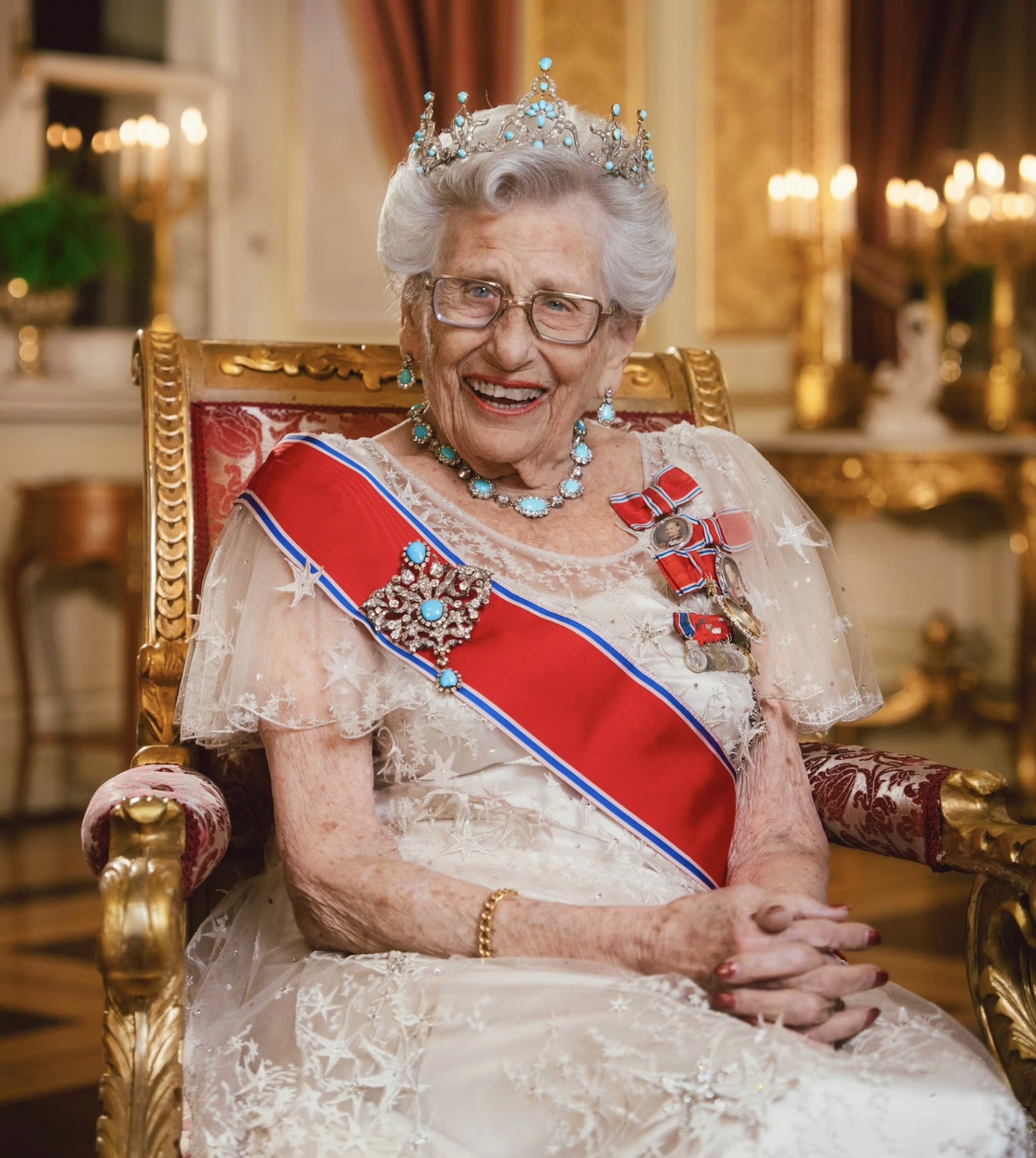
In Oslo, the Communications Director of the Royal Court of Norway, Ms. Guri Varpe, confirmed to the Norwegian public broadcaster Norsk rikskringkasting (NRK) this afternoon that Her Highness Princess Astrid, Mrs. Ferner, “has had pneumonia.”
The 94-year-old Princess, the eldest daughter of the late King Olav V and Crown Princess Märtha of Norway, is now “on the road to recovery,” according to Ms. Varpe.
Reports that the Princess had been hospitalized first emerged on Friday, when the Norwegian tabloid Se og Hør published photographs of Their Majesties King Harald V and Queen Sonja of Norway visiting her in hospital, prior to any official statement regarding her condition.
Meanwhile, Their Majesties King Harald V and Queen Sonja of Norway have begun their Easter holiday, travelling by train to Prinsehytta, their cabin in Sikkilsdalen.
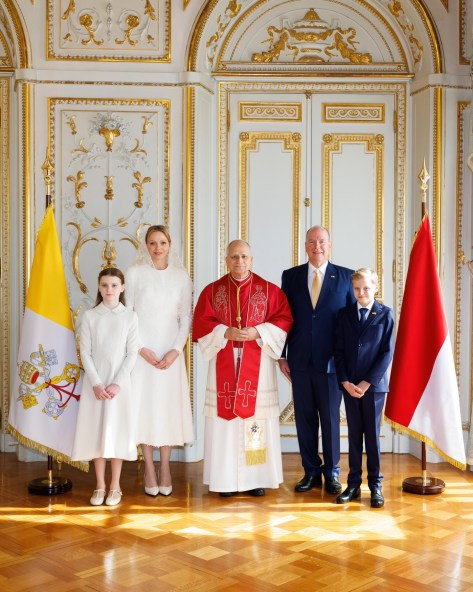
Photo courtesy of the Palais Princier de Monaco/Michaël Alesi
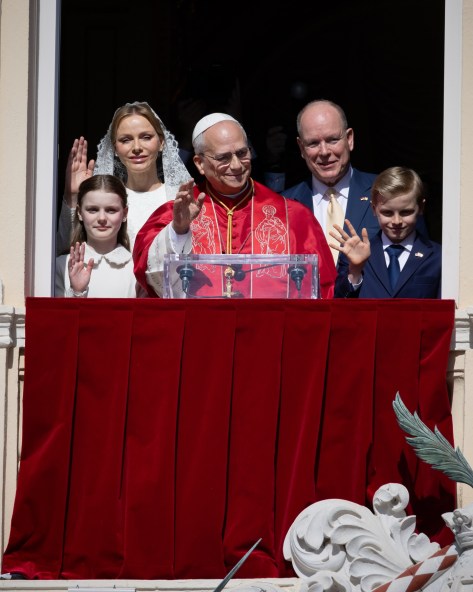
Photo courtesy of the Palais Princier de Monaco/Frédéric Nebinger
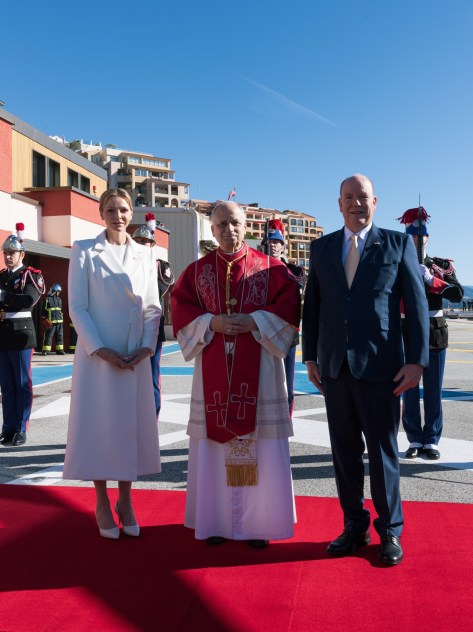
Photo courtesy of the Palais Princier de Monaco/Sarah Steck
This morning, Their Serene Highnesses Prince Albert II and Princess Charlene of Monaco welcomed His Holiness Pope Leo XIV to the Principality of Monaco.
The Apostolic Visit by His Holiness marks a historic moment for the Principality. While Pope Paul III was in nearby Nice in 1538, where he mediated the Trêve de Nice (Truce of Nice) between Francis I of France and Emperor Charles V, today’s visit represented the first Apostolic Visit by a reigning pope to the Principality of Monaco in the modern era.
The visit takes place within the longstanding relationship between the Holy See and the Grimaldi dynasty, as well as Monaco’s constitutional and ecclesiastical framework, reflected in the establishment of l’Archidiocèse de Monaco on July 30th, 1981, by the late Pope John Paul II and in the Constitution de la Principauté de Monaco of December 17th, 1962, which recognizes Roman Catholicism as the state religion.
The visit began at the Héliport de Monaco in the quartier of Fontvieille, where the Sovereign Prince couple formally welcomed His Holiness with full military honors, including a 21-gun salute at the Palais Princier de Monaco.
Following a short drive to the quartier of Monaco-Ville, His Holiness arrived at the Palais Princier de Monaco for the official welcoming ceremony in the Cour d’Honneur.
Among those in attendance were Her Royal Highness Princess Caroline of Hanover, Her Serene Highness Princess Stéphanie of Monaco, Ms. Charlotte Casiraghi, Mr. Pierre Casiraghi and Mrs. Beatrice Borromeo Casiraghi, Mr. Louis and Mrs. Marie Ducruet, Miss Mélanie-Antoinette de Massy, Mr. Sébastien and Mrs. Donatella Knecht de Massy, Mr. and Mrs. John “JB” Kelly III, Mr. Christopher LeVine, Ms. Susan Kelly von Medicus, and Mr. Gareth Wittstock.
During the ceremony, His Holiness was introduced to the Sovereign Prince couple’s children, His Serene Highness Hereditary Prince Jacques of Monaco and Her Serene Highness Princess Gabriella of Monaco.
Following the playing of the Monégasque national anthem, the inspection of the Guard of Honor, and the presentation of members of the Sovereign Prince’s government, including the Minister of State of the Principality of Monaco, Mr. Christophe Mirmand, the Minister of Foreign Affairs and Cooperation of the Principality of Monaco, Ms. Isabelle Berro-Amadeï, the Sovereign Prince’s Chief of Staff, Mr. Olivier Wenden, the Ambassador of the Principality of Monaco to the Holy See, Mr. Philippe Orengo, and the Archbishop of Monaco, Monsignor Dominique-Marie David, His Holiness and the Sovereign Prince held a meeting in the Salon de Famille of the Palais Princier.
According to the Palais Princier de Monaco, during the meeting, the discussions focused on:
“…shared priorities including environmental protection, the promotion of peace and dialogue between nations, as well as international solidarity and development aid.”
In the Salon Empire, Princess Charlene, Hereditary Prince Jacques, and Princess Gabriella joined His Holiness and the Sovereign Prince for an exchange of gifts and official photographs.
At 10 a.m., the Sovereign Prince couple, together with His Holiness, appeared on the balcony of the Palais Princier de Monaco, where they were greeted by Monégasques and residents gathered at the Place du Palais.
The Sovereign Prince delivered an address, followed by remarks by His Holiness, who expressed his joy at visiting the Principality, highlighting its deep-rooted connection to the Catholic faith and its historic ties to Rome.
In his address, His Holiness reflected on the role of smaller nations on the world stage, observing that “it is often the small who make history,” while cautioning against a global climate increasingly shaped by the “logic of power,” which risks undermining peace.
He also described Monaco as a “microcosm” of the wider world, where a diverse population reflects broader global dynamics, and emphasized that wealth and influence carry a responsibility that extends beyond private interest, noting that what has been entrusted “must not be buried, but put to use” for the good of all.
Noting that Monaco remains one of the few countries where Catholicism is the state religion, he framed this as a call to uphold a model of society grounded in dignity and solidarity, so that no one is left aside “from the table of fraternity.”
At 11:00 a.m., His Holiness presided over the celebration of the Liturgy of the Hours at the Cathédrale de Notre-Dame-Immaculée de Monaco in the quartier of Monaco-Ville, where he delivered a homily centered on Christ as “our advocate before the Father.”
Drawing from the First Letter of Saint John, he presented Christ not as a figure of condemnation, but as one who reconciles, heals, and restores, emphasizing that through Him, humanity is freed from sin and called into communion with God and with one another.
He described this communion as the defining sign of the Church, which is called to reflect a love that “makes no distinction between persons,” and pointed to the Principality of Monaco itself as a place marked by social and cultural diversity, where such unity is lived in a concrete way.
His Holiness then developed a second theme, presenting the Church as an “advocate” for humanity, called to defend the dignity of every person, particularly those who are marginalized, excluded, or forgotten. In this context, he emphasized that the proclamation of the Gospel must also serve as a defense of the human person in society.
He further warned against forms of secularism and economic systems that risk reducing human life to individualism or material gain, calling instead for a model of development rooted in dignity, solidarity, and moral responsibility.
Encouraging the faithful in their mission, he called for a renewed commitment to evangelization, urging that the Gospel be proclaimed with “new means and new language,” including in the digital sphere, while remaining firmly grounded in a living and personal faith.
Shortly before noon, His Holiness arrived at the Église Sainte-Dévote in the quartier of La Condamine, where he met with young people and catechumens on the forecourt of the church.
The visit included a moment of prayer and an address by His Holiness, as well as musical performances and traditional Monégasque dances presented by La Palladienne, the Principality’s folkloric dance ensemble.
Several young people then posed questions to His Holiness on themes including faith, doubt, and the challenges of contemporary life. In his responses, he emphasized the importance of a personal relationship with God as the foundation of hope, stating that “it is love that gives stability to life,” while also highlighting the role of prayer and reflection in sustaining faith amid the pressures of modern life.
His Holiness further encouraged young people to bear witness to the Gospel in their daily lives, noting that such witness “cannot be improvised,” but must be rooted in a deeper spiritual life. He concluded by urging them to “pour yourselves out completely for the Lord and for others,” describing self-giving as the path to lasting joy and meaning.
The Apostolic Visit concluded with His Holiness presiding over a pontifical Mass at the Stade Louis-II in the quartier of Fontvieille, observed according to the liturgy for the Saturday of the Fifth Week of Lent, in the presence of the Sovereign Prince family and the Princely Family of Monaco.
His Holiness’s homily centered on the Gospel account of the raising of Lazarus and the decision of the Sanhedrin to put Jesus to death.
Reflecting on this passage, he described the condemnation of Christ not as a matter of fate, but as the result of a deliberate calculation rooted in fear and the preservation of power. He noted that, rather than recognizing hope, certain religious authorities perceived a threat, allowing political logic to override truth and justice.
His Holiness contrasted this dynamic with the action of God, who transforms even acts of violence into a manifestation of salvation, emphasizing that Christ comes not to condemn, but to give life and to restore hope.
He warned that similar patterns persist in the modern world, pointing to decisions and systems that continue to harm the innocent, often justified by false reasoning, and cautioned against what he described as forms of “idolatry,” particularly the elevation of power and wealth above the dignity of the human person.
Emphasizing the centrality of mercy, he stated that it is through mercy that the world is healed, describing it as the force that safeguards human life at every stage, from its beginning to its natural end, and that stands in opposition to what he characterized as a “culture of rejection.”
Turning to the question of peace, His Holiness rejected the notion of peace as a simple balance of forces, instead presenting it as the fruit of converted hearts and moral responsibility. He urged the faithful not to become indifferent to war or suffering, calling for a renewed commitment to human dignity, solidarity, and the defense of life.
He concluded by encouraging the Catholic faithful in Monaco to bear witness through lives marked by faith, charity, and responsibility, emphasizing that the mission of the Church remains the same: to bear witness to the Gospel in the world.
The Apostolic Visit thus ended with a message that was both theological and deeply contemporary, situating the Gospel narrative within the moral realities of the present day. In his reflections, His Holiness drew attention to the contrast between fear and hope, as well as between power and truth, while reaffirming the central role of mercy, human dignity, and moral responsibility in public and private life.
In doing so, His Holiness left the Catholic faithful in Monaco, and those beyond the Principality, with a clear and consistent call: to resist indifference, to uphold the value of every human life, and to bear witness to a faith that remains, at its core, a source of life and hope in the world.
 The Royal Correspondent