Photo courtesy of the Presidenza della Repubblica Italiana/Quirinale.it
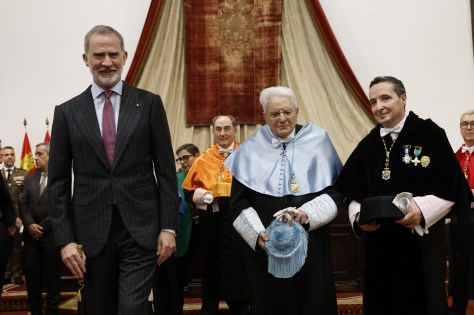
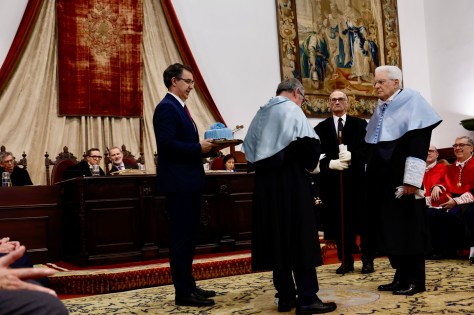
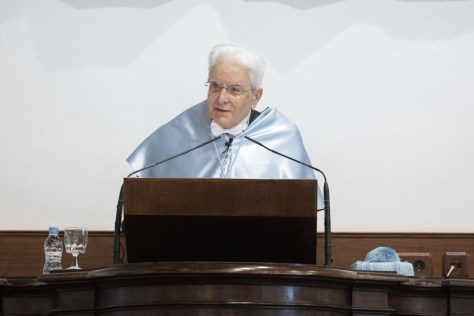
In Salamanca, His Majesty King Felipe VI of Spain presided over the investiture ceremony at which the President of the Italian Republic, Sergio Mattarella, was awarded the degree of Doctor Honoris Causa by the Universidad de Salamanca, one of the oldest and most historically significant universities in Europe.
Founded in 1218 by King Alfonso IX of León, the Universidad de Salamanca has long occupied a central place in the intellectual and institutional history of the Kingdom of Spain. Its traditions, shaped over eight centuries, situate the conferral of honorary doctorates within a broader framework of academic recognition reserved for individuals whose work has made a sustained contribution to public life, scholarship, or international cooperation.
The University conferred the distinction in recognition of President Mattarella’s longstanding cultural ties with the Kingdom of Spain, as well as his academic career as Professor of Parliamentary Law at the Università degli Studi di Palermo until 1983, during which he produced numerous scholarly publications. The Universidad de Salamanca further acknowledged his contribution to contemporary public thought.
In its citation, the University also highlighted President Mattarella’s commitment to humanism, European integration, and cooperation among nations, noting in particular a shared emphasis on the role of culture and education within democratic societies.
The degree of Doctor Honoris Causa constitutes the highest academic distinction conferred by the Universidad de Salamanca and is awarded to individuals of recognised international standing in the scientific, cultural, professional, or institutional spheres.
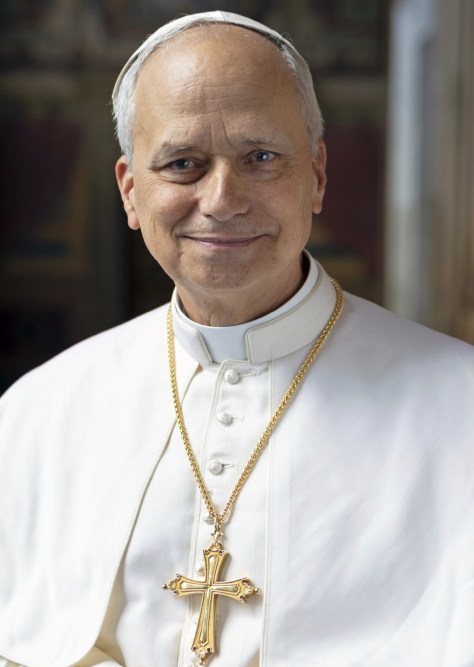
On Friday, Their Majesties King Felipe VI and Queen Letizia of Spain will travel to the Vatican, where they are scheduled to be received in audience by His Holiness Pope Leo XIV at the Apostolic Palace.
On Friday, the Casa de Su Majestad el Rey announced that Their Majesties King Felipe VI and Queen Letizia of Spain will be received in audience by His Holiness Pope Leo XIV at the Apostolic Palace in the Vatican on March 20th, 2026.
Following the audience, His Majesty the King will formally assume the position of Protocanon of the Papal Basilica of Santa Maria Maggiore.
The honorary title of Protocanon of the Papal Basilica of Santa Maria Maggiore is traditionally held by the Kings of Spain, a distinction historically associated with the Crown of Spain’s longstanding patronage of the basilica.
Their Majesties previously met His Holiness on Sunday, May 18th, 2025, following the Holy Mass for the Beginning of the Petrine Ministry of the Bishop of Rome, commonly referred to as the Mass for the Inauguration of the Pontificate of His Holiness Pope Leo XIV, celebrated in St. Peter’s Square, when they extended an invitation to His Holiness to visit the Kingdom of Spain.
The Casa de Su Majestad el Rey also announced that His Holiness is scheduled to undertake his first Apostolic Visit to the Kingdom of Spain from June 6th to 12th, 2026.
The visit will make His Holiness the first Pontiff to travel to the Kingdom of Spain during the reign of King Felipe VI. It will also mark the first papal visit to the country in fifteen years, following the visit of the late Pope Benedict XVI in 2011.
The visit responds to the official invitation of King Felipe VI and the Conferencia Episcopal Española.
Their Majesties’ most recent audience at the Vatican prior to this took place in June 2014, when they were received by the late Pope Francis.
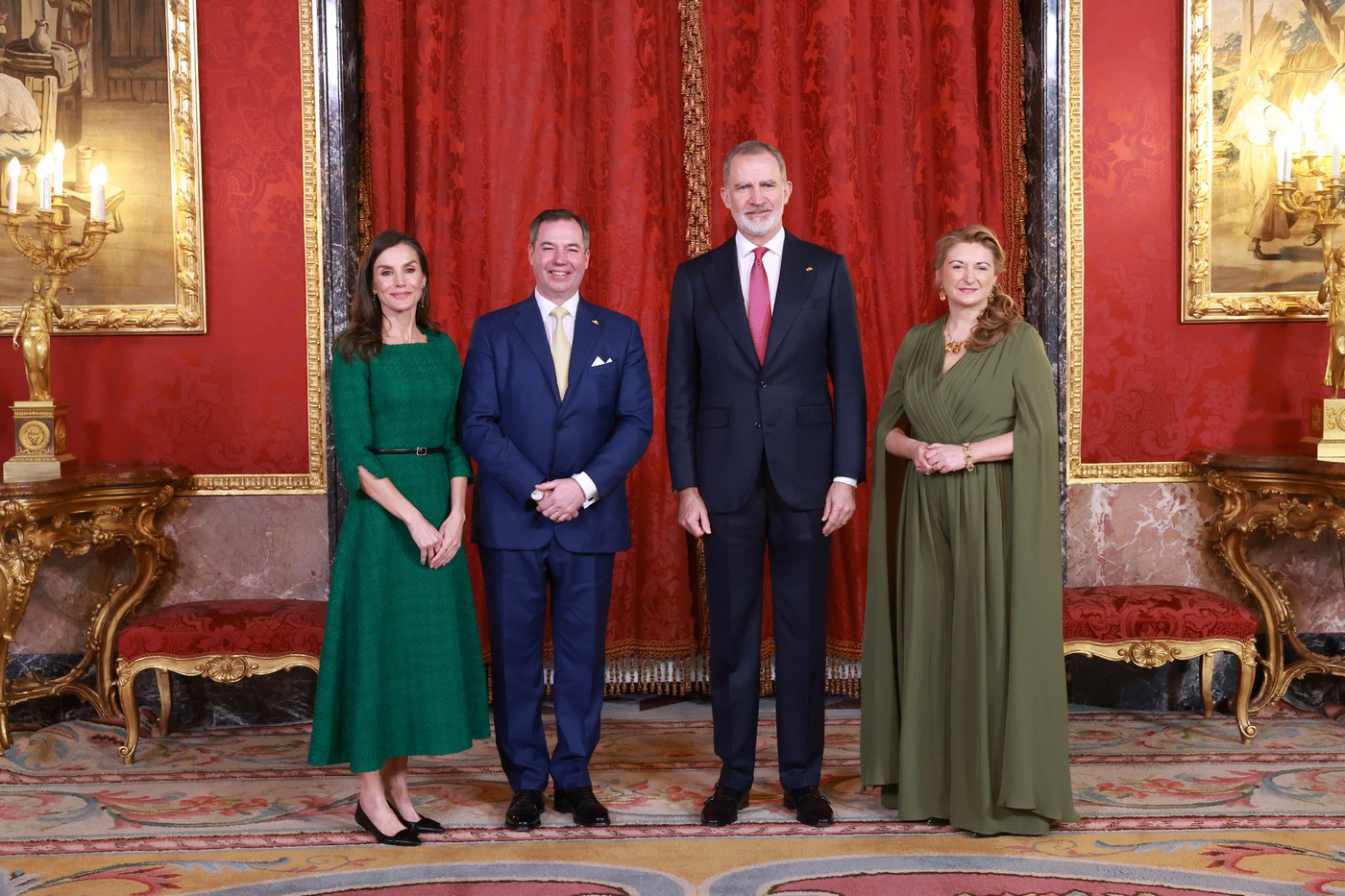
On Thursday in Madrid, Their Royal Highnesses Grand Duke Guillaume and Grand Duchess Stéphanie of Luxembourg began a two-day official visit to the Kingdom of Spain at the invitation of Their Majesties King Felipe VI and Queen Letizia of Spain.
The official visit takes place in the context of Grand Duke Guillaume’s accession to the throne on October 3, 2025, following the abdication of his father, His Royal Highness Grand Duke Henri of Luxembourg, and forms part of the established diplomatic exchanges between the Kingdom of Spain and the Grand Duchy of Luxembourg.
The visit began with an official welcoming ceremony at the Palacio Real de Madrid, where the grand ducal couple was received by Their Majesties the King and Queen.
Following the playing of the national anthems, the inspection of the guard of honour, and the presentation of the respective delegations, Their Majesties held an initial meeting with the grand ducal couple.
His Royal Highness the Grand Duke later held bilateral talks with His Majesty the King, accompanied by members of the Luxembourg delegation. Those present included the Deputy Prime Minister of the Grand Duchy of Luxembourg, Mr. Xavier Bettel, the Minister of the Economy, Mr. Lex Delles, and the Minister of Finance, Mr. Gilles Roth.
The Spanish delegation included the Minister of Foreign Affairs, European Union and Cooperation, Mr. José Manuel Albares.
In the afternoon, Their Majesties the King and Queen hosted a luncheon at the Palacio Real de Madrid in honour of the grand ducal couple.
During the luncheon, His Majesty the King delivered a speech.
In his remarks, His Majesty welcomed the grand ducal couple to Spain and recalled the visit he and Her Majesty the Queen made to Luxembourg in 2014, shortly after his proclamation, when they were received by Their Royal Highnesses Grand Duke Henri and Grand Duchess Maria Teresa of Luxembourg.
The King emphasized the longstanding ties between the Royal House of Spain and the Grand Ducal House of Luxembourg, describing the visit as a reflection of the friendship and close relationship shared by the two countries.
Referring to the historical links between the Kingdom of Spain and the Grand Duchy of Luxembourg, His Majesty noted that the two countries share centuries of intertwined history, recalling in particular the reign of Charles V, Holy Roman Emperor, who also held the title of Duke of Luxembourg, and the reign of his son, Felipe II of Spain, figures who illustrate the historical connections between the two nations.
Turning to European affairs, the King highlighted Spain’s four decades of membership in the European Union and expressed appreciation for Luxembourg’s role as a founding member of the bloc and a longstanding partner in the development of European integration.
He also underlined the close economic and social links between the two countries, noting the presence of thousands of Spanish nationals living and working in Luxembourg, as well as the contribution of Luxembourg nationals residing in Spain, reflecting the increasingly interconnected nature of the two societies.
The King further addressed the broader international context, expressing concern over ongoing global conflicts, including the situation in the Middle East and the continuing war in Ukraine, and reaffirmed Spain’s commitment to diplomacy, international cooperation, and the principles of international law.
At the end of his speech, His Majesty the King raised a toast to the friendship between the Kingdom of Spain and the Grand Duchy of Luxembourg, expressing his wishes for the prosperity of Luxembourg during the reign of His Royal Highness the Grand Duke and for continued cooperation between the two countries.
His Royal Highness the Grand Duke then delivered a speech in which he expressed his gratitude to Their Majesties for the welcome extended to him and to Her Royal Highness the Grand Duchess during their first official visit to Spain.
The Grand Duke noted that the visit was among the first official engagements he had undertaken abroad since his accession to the throne in October 2025 and described it as reflecting the longstanding relations between the Grand Ducal House of Luxembourg and the Royal House of Spain, as well as the friendship between the two countries.
Referring to the historical links between the Kingdom of Spain and the Grand Duchy of Luxembourg, the Grand Duke recalled more than five centuries of shared history, particularly the period during which Luxembourg formed part of the territories of the Spanish Crown.
He noted that this legacy remains visible in Luxembourg City, including the Spanish defensive turrets known as échauguettes espagnoles and the origins of the Palais Grand Ducal, whose reconstruction during the sixteenth century took place under Spanish administration.
The Grand Duke also referred to the close ties between the peoples of the two countries, noting the presence of nearly 10,000 Spanish nationals residing in Luxembourg, many of whom work in the European institutions, the financial sector, and emerging areas of innovation. He also highlighted the growing number of Luxembourg students who pursue their studies in Spain.
Turning to European affairs, the Grand Duke recalled Luxembourg’s support for Spain’s accession to the European Union in the 1980s, referring to remarks made by his grandfather, the late His Royal Highness Grand Duke Jean of Luxembourg, during the State Visit of Their Majesties King Juan Carlos I and Queen Sofía of Spain to the Grand Duchy of Luxembourg in 1980. He observed that Spain’s membership of the Union has since strengthened political, economic, and cultural cooperation between the two countries.
The Grand Duke further addressed the broader international context, noting the challenges facing the international order, including geopolitical tensions, the war in Ukraine, and economic uncertainty. In this context, he emphasized the importance of cooperation between the Kingdom of Spain and the Grand Duchy of Luxembourg within the framework of the European Union and other international institutions.
He also referred to the strength of the economic partnership between the two countries, noting that several members of the Luxembourg Government responsible for portfolios including the economy, finance, and energy were accompanying him on the visit.
At the end of his speech, the Grand Duke raised a toast to Their Majesties the King and Queen of Spain, to the prosperity of the people of Spain, and to the continued friendship between the Kingdom of Spain and the Grand Duchy of Luxembourg.
Later in the afternoon, the Grand Duke and members of the Grand Duchy of Luxembourg delegation met with the Prime Minister of the Kingdom of Spain, Mr. Pedro Sánchez Pérez-Castejón, at the Palacio de la Moncloa.
The meeting was followed by the signing of three memoranda of understanding between the Kingdom of Spain and the Grand Duchy of Luxembourg. The agreements concern cooperation in the fields of energy and space, as well as the establishment of regular bilateral political consultations.
In the evening, the grand ducal couple attended a reception with representatives of the economic and financial community hosted by the Embassy of the Grand Duchy of Luxembourg in Madrid.
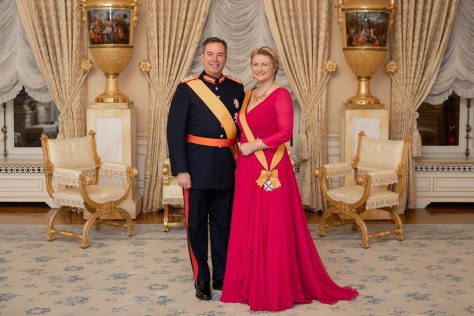
Portrait courtesy of the Maison du Grand-Duc/Kary Barthelmey
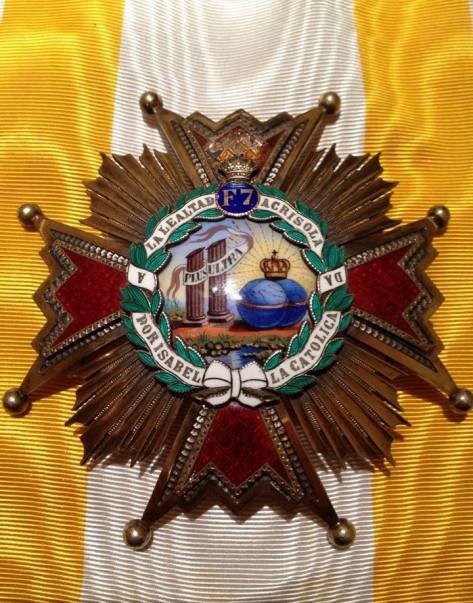
Orden de Isabel la Católica
Ahead of the official visit of Their Royal Highnesses Grand Duke Guillaume and Grand Duchess Stéphanie of Luxembourg to the Kingdom of Spain on March 5, 2026, His Majesty King Felipe VI of Spain has conferred high distinctions of the Orden de Isabel la Católica upon the Grand Ducal couple by Royal Decree.
Under Royal Decree 176/2026, His Majesty granted the Collar de la Orden de Isabel la Católica to His Royal Highness Grand Duke Guillaume of Luxembourg.
According to the Boletín Oficial del Estado, the official state gazette of Spain, the decree reads:
“Wishing to give proof of My Royal esteem to His Royal Highness Guillaume V, Grand Duke of Luxembourg, upon the proposal of the Minister of Foreign Affairs, European Union and Cooperation, and following deliberation by the Council of Ministers at its meeting of March 3, 2026, I hereby grant him the Collar de la Orden de Isabel la Católica.”
By Royal Decree 177/2026, His Majesty conferred the Gran Cruz de la Orden de Isabel la Católica upon Her Royal Highness Grand Duchess Stéphanie of Luxembourg. The decree states:
“Wishing to give proof of My Royal esteem to Her Royal Highness Stéphanie de Lannoy, Grand Duchess of Luxembourg, upon the proposal of the Minister of Foreign Affairs, European Union and Cooperation, and following deliberation by the Council of Ministers at its meeting of March 3, 2026, I hereby grant her the Gran Cruz de la Orden de Isabel la Católica.”
The Orden de Isabel la Católica was instituted on March 14, 1815, by Fernando VII of Spain under the original name Real Orden Americana de Isabel la Católica. It is currently governed by Royal Decree 2395/1998 of November 6, which approves its regulations.
The Order is intended to “reward extraordinary acts of a civil nature carried out by Spanish and foreign individuals that benefit the Nation or contribute, in a relevant manner, to fostering relations of friendship and cooperation between the Spanish Nation and the international community.”
His Majesty King Felipe VI of Spain serves as Grand Master of the Orden de Isabel la Católica, and all decorations are conferred in his name.
The official incoming visit takes place in the context of Grand Duke Guillaume of Luxembourg’s accession to the throne on October 3, 2025, following the abdication of his father, His Royal Highness Grand Duke Henri of Luxembourg, and forms part of the established diplomatic engagement between the Kingdom of Spain and the Grand Duchy of Luxembourg.
On Friday, July 1, 2022, His Majesty King Felipe VI of Spain met with 25 young leaders of the XVII Edición de La Fundación Jóvenes Líderes de La Carolina (17th Edition of the Fundacion Carolina’s Young Ibero-American Leaders Program) at Palacio de La Zarzuela in Madrid.
Organized by the Fundación Carolina and Banco Santander, the 25 young people were selected to participate in conferences, meetings and visits to institutions and companies in Madrid, Bilbao, and Brussels, for two weeks, which will allow them to carry out a deep immersion in the Spanish and European realities, which take place from June 26 through July 10, 2022.
According to the Spanish royal court, the 17th Edición de La Fundación Jóvenes Líderes de La Carolina addresses, debates, and reflects on the challenges after the pandemic in Spain, the European Union as well as in Latin America, and the Caribbean:
“…the triple ecological, productive and digital, and social transition, based on a new pact with citizens, which also incorporates future generations and their rights, and aims to reactivate the mobilization of societies within the framework of the 2030 Agenda and the Sustainable Development Goals.”
On Friday, June 24, 2022, His Majesty King Felipe VI of Spain chaired a meeting with the Board of Trustees from the Fundación COTEC at Palacio Real in Madrid.
The Board of Trustees are the highest governing body of the Fundación COTEC, which aims to make innovation a driver of economic and social development.
The mission of the Fundación COTEC is to contribute to the development of Spain by promoting innovation in business and society, raising awareness in society and business of the impact of technical change and facilitating the transfer of information, knowledge, and technology from the research and university sectors to industry.
On the evening of Thursday, May 26, 2022, His Majesty King Felipe VI of Spain attended the Foreign Policy Association’s Annual Gala Dinner held at the Harvard Club in New York City. Established in 2018, the purpose of the FPA is to “…serve as a catalyst for developing awareness, understanding, and informed opinion about US foreign policy and global issues.”
During the gala, His Majesty received the Foreign Policy Association (FPA) Medal. The award is presented to individuals who demonstrate responsible internationalism and work to expand public knowledge of international affairs.
Upon receiving the FPA Medal, His Majesty gave a speech:
“It pains me, but I cannot begin my remarks tonight without a word of profound sorrow, disgust, and condemnation in the wake of the violent attacks and killings that have that have taken place in the past days and weeks [referring to the attacks in Buffalo, NY and in Laguna Woods, CA] today out thoughts and hearts and with the 21 victims of the Texas school tragedy. So, I would like to express on behalf of the Spanish people my deepest condolences to their families, friends, to the U.S. authorities at this difficult time.
Upholding freedom, democracy, and respect for human rights and dignity involve a relentless commitment. It seems like an everlasting job, regardless of the transformations the World endures. We cannot take them for granted. Unfortunately, many events are a permanent reminder of that and, therefore, demand our current utmost and generous effort.”
 The Royal Correspondent