Category Archives: German Royals

Princess Carina of Sayn-Wittgenstein-Berleburg Gives a Lecture on the Restoration of Schloss Berleburg and German Heritage

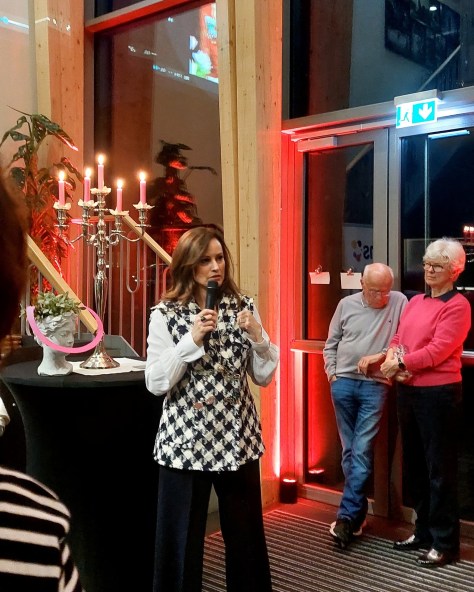
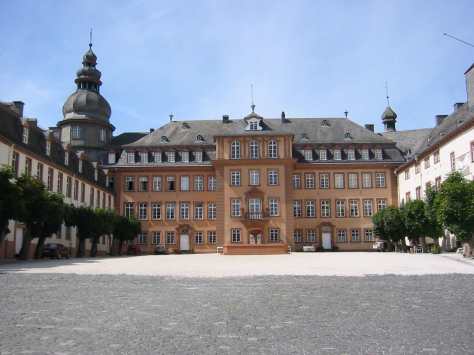
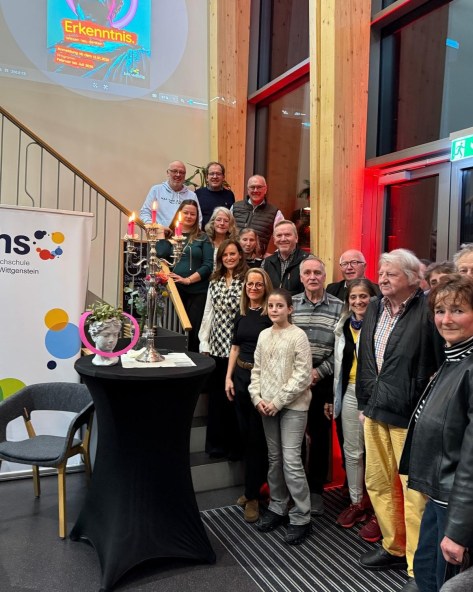
Last week, in Bad Berleburg, Her Serene Highness Princess Carina of Sayn-Wittgenstein-Berleburg delivered a public lecture on the restoration of Schloss Berleburg (Berleburg Castle), offering a detailed account of the long-term preservation of the princely family’s historic residence.

The event formed part of the Wittgensteiner Heimatstammtisch, a regional series organized by the Volkshochschule Kreis Siegen-Wittgenstein and the Wittgensteiner Heimatverein.

Speaking about her experience after moving to the castle in 2005 with her then partner, now husband, His Serene Highness Prince Gustav of Sayn-Wittgenstein-Berleburg, the Princess reflected on the condition of the residence at that time.

Although the property had not been entirely abandoned, large sections had remained inactive following the end of the Second World War. Even after the late Princess Margareta of Sayn-Wittgenstein-Berleburg took up residence, only a relatively small portion of the castle was regularly occupied.

Upon taking up residence, Princess Carina encountered a structure marked by prolonged periods of partial dormancy. Attics and storage areas contained extensive collections of furniture, rare textiles, uniforms, porcelain, and archival materials, while many of the principal rooms remained sparsely furnished. The scale of the building underscores the complexity of its restoration, with approximately 200 rooms, 350 windows, more than 1,000 brass door handles, around a dozen staircases, and over a dozen fireplaces.

With the support of her late father-in-law, His Serene Highness Prince Richard of Sayn-Wittgenstein-Berleburg, and in collaboration with Prince Gustav, she initiated a systematic program of restoration and reorganization. This work has included the recovery and identification of historical materials dating from the 17th through the 20th centuries. In doing so, she has worked alongside historians and art specialists, contributing to the documentation and preservation of the castle’s historical holdings.

The Princess also addressed the financial realities associated with maintaining a residence of this scale. Annual costs for maintenance and restoration are estimated to range between €500,000 and €1 million, with major structural works, including roofing, requiring significantly higher investment. She described the building as requiring continuous intervention, reflecting both its age and its architectural scale.

Current works at Schloss Berleburg represent the most extensive program of restoration undertaken at the property since the early 20th century. The project reflects a sustained commitment to the stewardship of cultural heritage and the preservation of one of Germany’s longstanding princely residences.

T.I.R.H.s Prince Georg Friedrich and Princess Sophie of Prussia Attend Reopening of Hohenzollern Crypt at Berlin Cathedral

Their Imperial and Royal Highnesses Prince Georg Friedrich and Princess Sophie of Prussia attended a ceremonial church service on Sunday, marking the reopening of the Hohenzollern crypt at the Berlin Cathedral following an extensive restoration project.

The service formally concluded more than six years of conservation work on the dynastic burial site of the House of Hohenzollern. Located beneath Berlin Cathedral, the crypt contains 91 coffins dating from the sixteenth to the nineteenth centuries and represents one of the most significant dynastic burial sites in Europe.

The renovation project, preceded by a lengthy planning phase, focused on structural stabilization, updated climate control systems designed to preserve historic sarcophagi, and improved accessibility for visitors.

The reopening was accompanied by a Protestant service reflecting the cathedral’s historic role as the court church of the Hohenzollern dynasty, which ruled as Kings of Prussia and, from 1871 to 1918, as German Emperors.

The reopening restores public access to a key site associated with Prussian and German dynastic history and forms part of ongoing efforts to preserve architectural and cultural heritage within the German capital.

Prince Georg Friedrich is the head of the House of Hohenzollern.

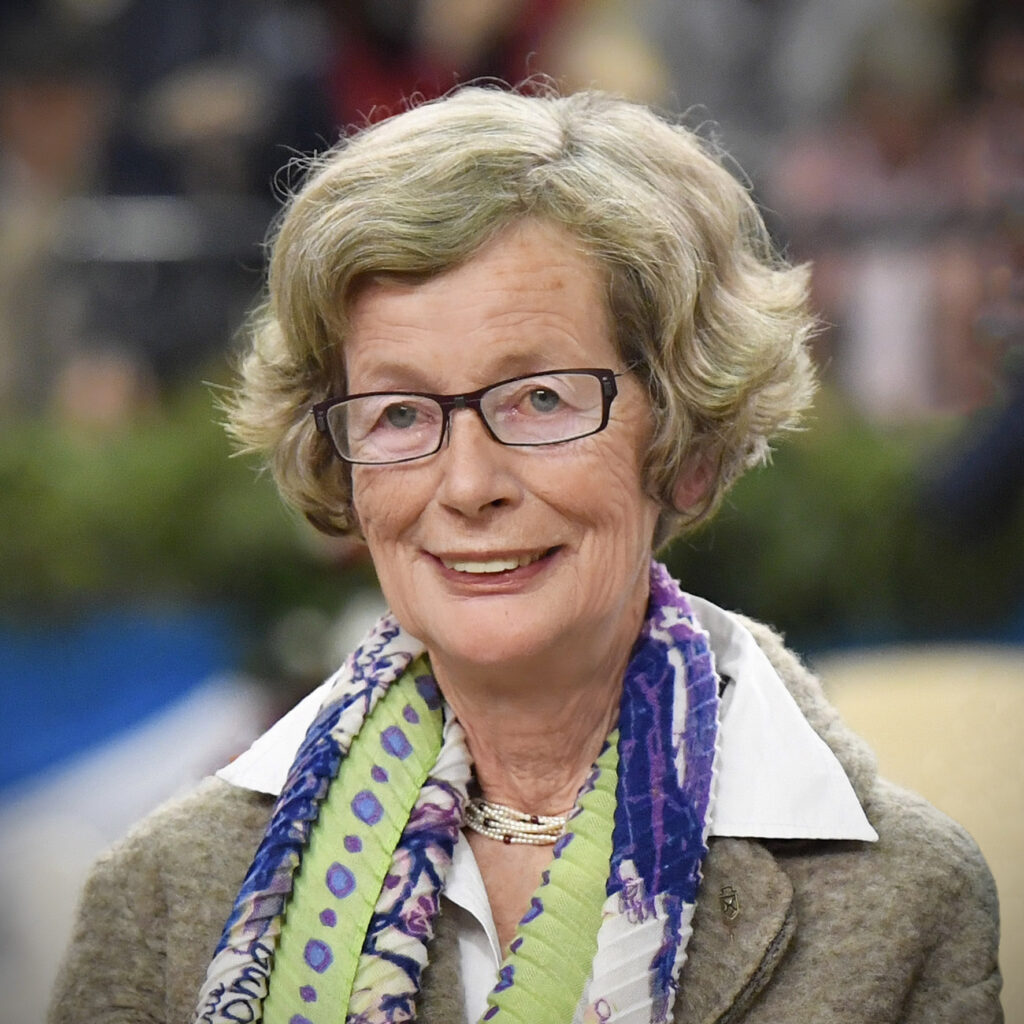
Princess Donata of Prussia, The Great-Granddaughter of Kaiser Wilhelm II, Dies at 73.

Photo courtesy of Des Hauses Hohenzollern/Britt Carlsen

The House of Hohenzollern announced this morning that Princess Donata of Prussia (Prinzessin Donata von Preußen) died on February 25, 2026, following a long illness. She was 73.

Princess Donata was born in 1952. She was a great-granddaughter of Kaiser Wilhelm II, the last German Emperor and King of Prussia. Her father, Prince Wilhelm Karl of Prussia, was a grandson of Wilhelm II and served as Herrenmeister, or Grand Master, of the German Order of Saint John. Her paternal grandfather was Prince Oskar of Prussia, the fifth son of Kaiser Wilhelm II.

According to the official statement, she pursued a career in journalism. For decades, she contributed to reporting in equestrian sport, with particular emphasis on eventing, international breeding, especially Holsteiner horses, and major championships. She served as editor in chief of “Pferd & Sport” and reported from the Olympic Games, as well as World and European Championships.

Funeral arrangements have not yet been announced.

European Royals Gather in Oettingen, Germany, for the Funeral of H.S.H. Prince Albrecht of Oettingen-Spielberg.

On Friday, November 28th, the funeral of His Serene Highness Prince Albrecht of Oettingen-Spielberg was held at Saint Jakob Church in Oettingen in Bayern, Germany. The Prince died unexpectedly on November 11 at the age of 74.

Members of European royal and grand-ducal houses were among those who traveled to Oettingen in Bayern for the funeral service. Attendees included His Royal Highness Grand Duke Guillaume of Luxembourg, His Royal Highness Prince Louis of Luxembourg, His Royal Highness Duke Franz of Bavaria and Mr. Thomas Greinwald, Their Royal Highnesses Prince Ludwig and Princess Sophie Alexandra of Bavaria, Their Royal Highnesses Prince Luitpold and Princess Katrin of Bavaria, His Royal Highness Duke Max Emanuel of Bavaria, Their Highnesses Prince Hubertus and Princess Kelly of Saxe-Coburg and Gotha, His Royal Highness Prince Christian of Hanover, His Grace The Duke of Northumberland, Ralph Percy, and Mr. Pierre Casiraghi. 

In his eulogy, Pastor Richard Hörmann described the late Prince Albrecht as a warm and approachable man who combined clarity and decisiveness in leadership with consistent kindness toward others. He noted the late prince’s lifelong curiosity, his ability to build and maintain personal connections, and the positive manner with which he carried out his responsibilities.

Born Albrecht Ernst Otto Joseph Maria Notger, Prince of Oettingen-Oettingen and Oettingen-Spielberg on February 7, 1951, in Munich, Germany, he was the son of Their Serene Highnesses Prince Alois and Princess Elisabeth (born Countess Elisabeth Gabriele zu Lynar) of Oettingen-Spielberg.

Following the death of his father, Prince Alois, on November 30, 1975, Prince Albrecht succeeded as Head of the Princely House of Oettingen-Spielberg, a role in which he served for five decades.

Throughout his life, the Prince received several orders and decorations, including the Bundesverdienstkreuz am Bande and the Bayerischer Verdienstorden. He was also a member of the Hausorden vom Heiligen Georg and of the Sovereign Order of Malta.

The late Prince Albrecht is survived by his wife, Her Serene Highness Princess Angela of Oettingen-Spielberg, and their four children: His Serene Highness Hereditary Prince Franz-Albrecht of Oettingen-Spielberg, Her Serene Highness Princess Theresa of Oettingen-Spielberg, Her Serene Highness Princess Antonia of Oettingen-Spielberg, and Her Serene Highness Princess Nora of Oettingen-Spielberg, as well as nine grandchildren.

“Ludwig II” (VIDEOS)

“In this documentary art historian, Mr. Dan Cruickshank, explores the rich aesthetic of Ludwig II – from the mock-medievalism of Neuschwanstein the iconic fairytale castle, which became the inspiration for Walt Disney’s Sleeping Beauty castle, to the rich Baroque splendor of Herrenchiemsee, Ludwig’s answer to Versailles. Dan argues that Ludwig’s castles are more than flamboyant kitsch and are, in fact, the key to unravelling the eternal enigma of Ludwig II.”